
Unbiased headlines. Facts, not spin.
Unbiased Headlines is an independently owned news organization. We bring you the facts, not opinions, written fresh from 110+ named sources. Sources linked so you can verify it yourself.
 energy
Major Story (7/10)
Event date: October 14, 2026 ·
Google Signs 20-Year Deal for 890 MW of Nuclear Uprates as DOE Offers Vistra $4.2 Billion Conditional Loan
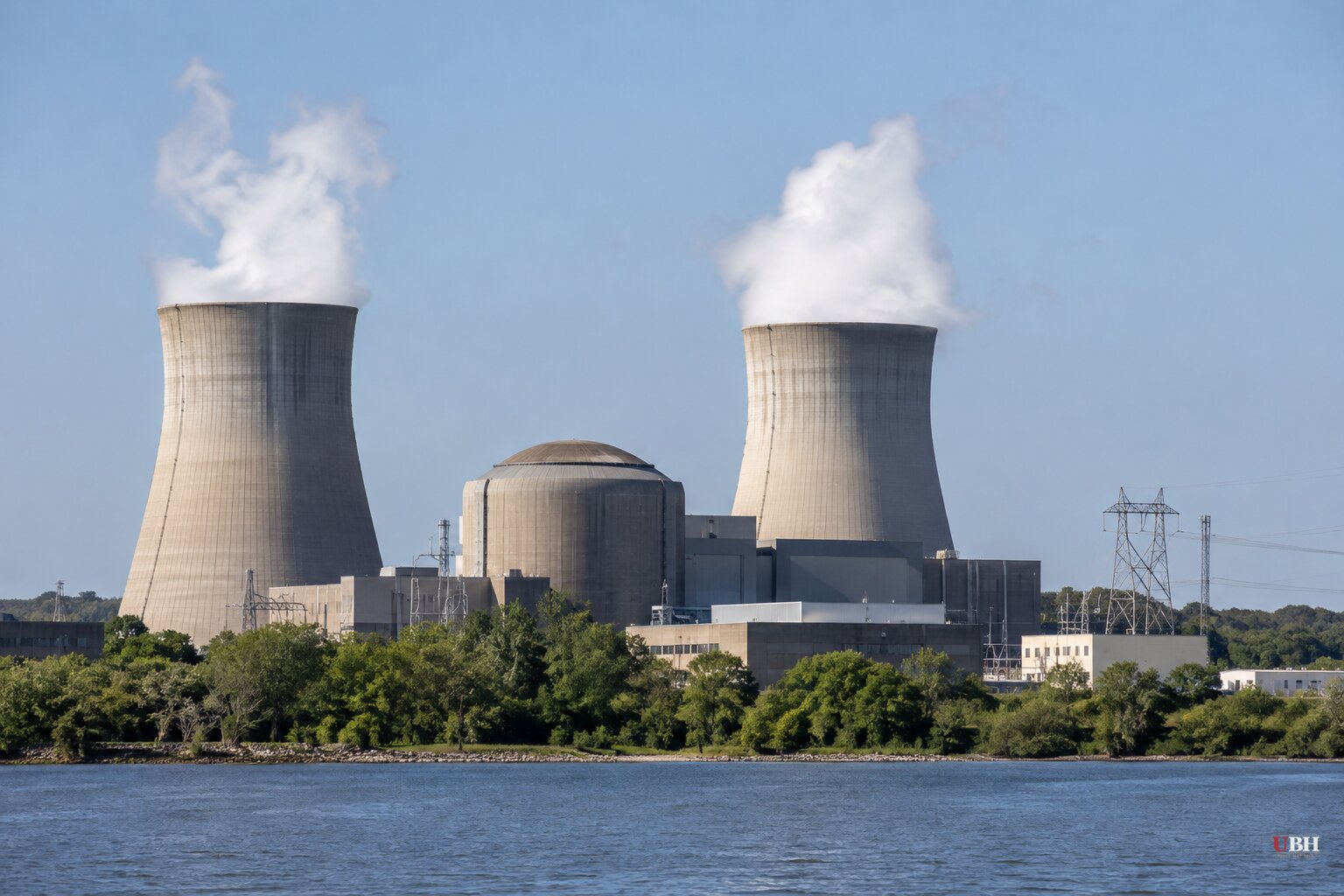
The fastest new nuclear power in America may come from reactors that already exist.
On Oct. 6, Google and Constellation Energy announced agreements covering 3,590 megawatts of supply on the PJM grid, the country's largest. Constellation, the biggest nuclear operator in the U.S., will invest more than $4.3 billion to uprate 11 reactors at six plants in Illinois, Pennsylvania and New Jersey. Google will buy the added 890 MW under a 20-year power purchase agreement. The first uprated capacity is expected in 2028.
The other 2,700 MW falls under a separate 15-year supply contract that does not specify a generation source. Constellation said the investment will create about 7,200 construction jobs and sustain roughly 4,400 existing jobs. The price Google will pay has not been disclosed.
"We are honoring our commitment to responsibly manage growth by actively investing in clean, reliable power that adds new capacity to the nation's grid," said Amanda Peterson Corio, Google's global head of energy and power.
What an uprate is
A power uprate raises the maximum output a reactor is licensed to produce. Only the Nuclear Regulatory Commission can approve it, and it will do so only if the increase can be achieved safely.
The work is physical. Operators modify instrumentation, controls and power-generation systems, replacing parts such as turbines, pumps and steam generators. Costs can run into the billions, but many upgrades can be finished in five years or less. That is far faster than a new plant.
Over the past two decades, NRC-approved uprates have added about 6 GW to the grid, roughly the output of six large reactors. Analysts cited by OilPrice.com estimate existing plants could yield another 6 to 8 GW.
Taxpayer money enters the picture
On Oct. 5, the Department of Energy's Office of Energy Dominance Financing announced a conditional commitment of up to $4.2 billion to Vistra. The money would uprate three Vistra nuclear facilities in Pennsylvania and Ohio, adding about 433 MW. According to the Climate Leadership Council's analysis, it would also help preserve 4 GW of existing nuclear generation and include options to finance future uprates.
The word "conditional" matters. A commitment is not a closed loan, and it is federal credit backed by taxpayers. Constellation's $4.3 billion, by contrast, is company capital paired with a hyperscaler customer. Amazon has also completed an agreement to uprate Constellation's Calvert Cliffs plant in Maryland, and Google has announced plans to boost output at four reactors in Georgia.
The Trump administration has said it wants to quadruple U.S. nuclear capacity by 2050 and backs these projects.
The Climate Leadership Council's Annika Harrington argues that the larger opportunity lies in existing infrastructure. The Council's analysis identified more than 500 GW of capacity that could come online through relatively modest near-term investments. Harrington counted about $16.75 billion in recent public and private spending, including $1.9 billion in DOE grid grants announced in September for 31 transmission projects, matched by $3.35 billion in private cost share.
Why the urgency
A DOE emergency order shows how tight things already are. It authorized PJM to use additional generation, including backup power, from Tuesday through Friday, Oct. 16, under Section 202(c) of the Federal Power Act. Unseasonably warm October weather coincided with scheduled maintenance at power plants and transmission facilities. PJM serves all or parts of 13 states and Washington, D.C., and Fox News Digital put the population affected at more than 60 million.
PJM spokesperson Jeff Shields said demand is growing faster than new generation can arrive. He added that unpredictable weather leaves fewer windows for maintenance and construction, creating reliability risks in seasons that used to be calm. PJM told Fox News Digital it did not expect everyday customers to be affected.
Energy Secretary Chris Wright said the order would help ensure "affordable, reliable and secure electricity." DOE spokesperson Ben Dietderich blamed Biden-era policies for higher electricity costs and a weakened power system.
The timing problem
The deal's own timeline draws criticism. ValueAdd VC's analysis points out that Google is spending at a 2026 pace, with data center and compute capital spending of up to $205 billion this year. The reactors it has contracted will not deliver added power until 2028 at the earliest, and only after a multi-year upgrade process across a dozen sites.
The same analysis argues that if AI demand plateaus before then, Google will be locked into two decades of purchases for capacity it no longer needs at the planned scale. If demand keeps climbing, it says, data centers stay power-constrained for at least two more years. Google has not publicly addressed that scenario.
The cost to consumers is also unresolved. Google says the uprate agreement will lower "energy cost burdens" for the PJM region, which it says serves 67 million people. The San Francisco Fed's president has warned that AI-driven electricity demand could extend the current energy-price shock, and Axios has reported that this is beginning to show in regional inflation data. No one has published the pricing terms that would let anyone test Google's claim.
What comes next
The scale is modest against the demand. Constellation's 890 MW and Vistra's 433 MW are each a fraction of the 6 to 8 GW analysts see as the uprate ceiling. Each plant still needs NRC sign-off before output rises. The Vistra loan remains conditional, and the first Constellation uprate is not due online until 2028.
Sources used for this briefing
7 links from 7 independent newsrooms (syndicated copies of the same report count once)
These are the sources it draws on, linked so you can verify.


