
Unbiased headlines. Facts, not spin.
Every story is an unbiased news briefing written from 110+ sources across the spectrum — sources linked so you can verify it yourself.
 defense
Low Interest (4/10)
August 8, 2026 at 07:07 PM
defense
Low Interest (4/10)
August 8, 2026 at 07:07 PM
Ukrainian War-Dead Recovery Volunteer Oleksiy Yukov Killed by Landmine, Mourned in Kyiv
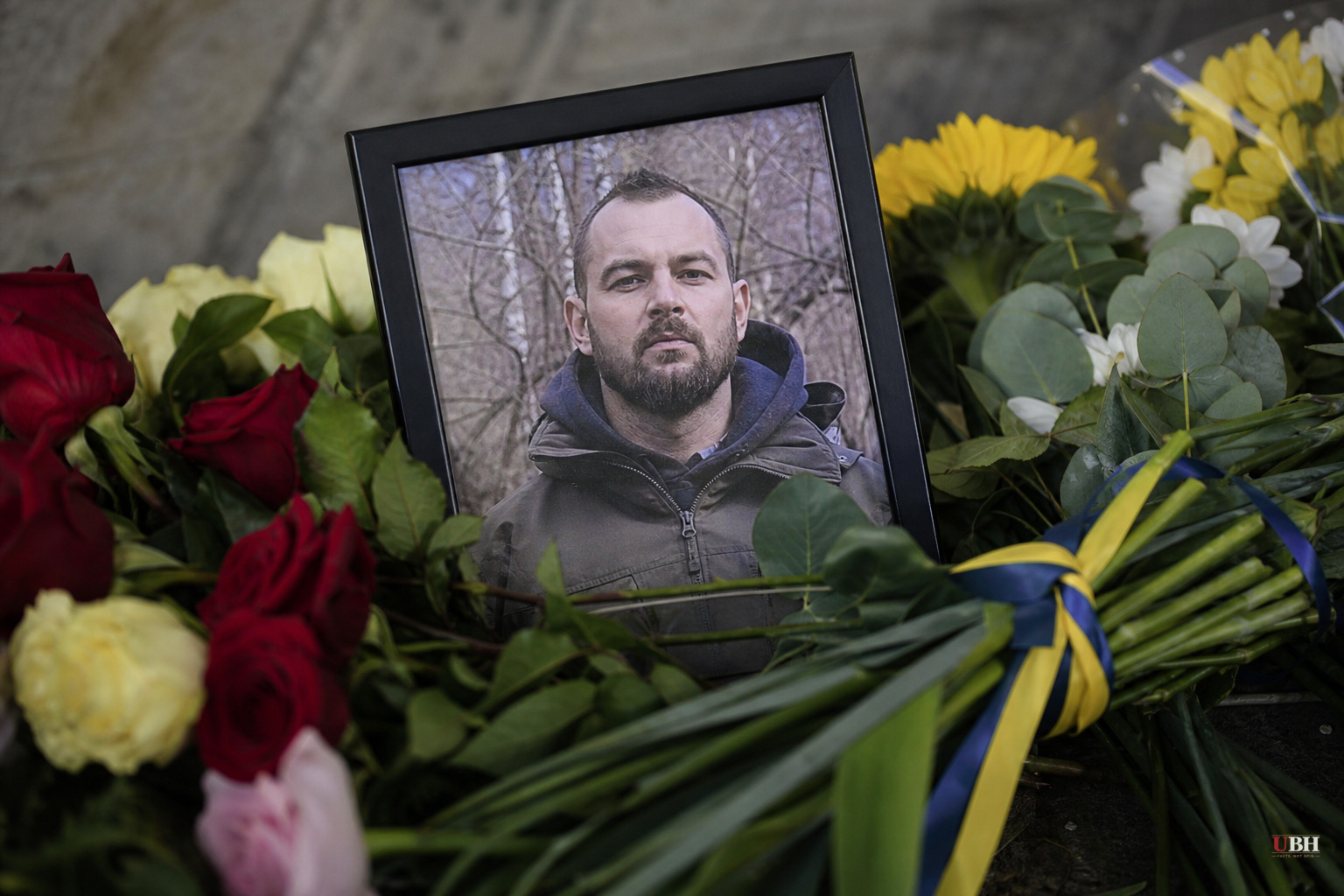
Oleksiy Yukov spent his career doing a job most people would refuse. He crawled through minefields, trenches, and shell craters to pull dead soldiers and civilians out of the ground and give their families a body to bury. On August 5, that work killed him.
Yukov, 40, stepped on a landmine while trying to exhume a body in Ukraine's eastern Donetsk region, according to a social media post by his friend Serhiy Hnezdilov, translated and published by the Kyiv Post. He died at the site.
Thousands turned out in Kyiv on Saturday for his funeral at St. Volodymyr's Cathedral, according to NPR, which cited photos from Getty Images showing Ukrainian military members carrying his coffin. Before the Kyiv service, he was mourned in his hometown of Sloviansk in Donetsk province, the region where he did much of his work and where he ultimately died.
Yukov founded a search-and-recovery unit called Platsdarm, meaning "Bridgehead," after Russia invaded and annexed Crimea in 2014, according to Ukrainska Pravda. The outlet reported that his years of work recovering remains earned him the nickname "collector of souls."
His method, as he described it to Ukrainska Pravda, was methodical and grim. Small teams would head out early each morning, survey safe areas by drone, check trenches and craters, then grid off the terrain and sweep it with probes and metal detectors. Bomb disposal experts would be called in to neutralize anything explosive. Only then would the team search for bodies.
This was not abstract or symbolic work. It was physically brutal and repeatedly nearly killed him before it did. In 2022, a mine blast cost him an eye and injured his leg, according to the Associated Press. He went back to the job anyway, before he'd even finished recovering.
Yukov didn't limit his work to Ukrainian dead. He and his team also recovered the remains of Russian soldiers killed in the fighting, along with Ukrainian civilians who died as collateral casualties of a war that has now killed hundreds of thousands of people on both sides, according to NPR. A man whose own country was invaded still made the deliberate choice to treat enemy dead with the same care as his own countrymen. It's an uncomfortable fact for anyone looking to flatten this war into pure good-versus-evil, and it says something about the discipline Yukov brought to a task that could easily have curdled into vengeance.
Speaking to Radio Free Europe/Radio Liberty months into Russia's full-scale invasion, which began in February 2022, Yukov was blunt about who started the war and who was suffering because of it. "Russia has caused tremendous grief for us," he said, according to NPR's account of the interview. "It started a war against us; it is ruining our cities and killing our people." But he added a line that cuts against easy propaganda on either side: "we remain human even in these circumstances."
Recovering bodies, regardless of uniform, is an act of insisting on humanity in a war that has produced mass graves, filtration camps, and, according to Ukrainian and international investigators, documented atrocities against civilians. Yukov wasn't a soldier. He wasn't a diplomat negotiating troop withdrawals or territorial lines. He was a volunteer who decided that no one, Ukrainian or Russian, should be left nameless in a field.
His death underscores a fact that gets lost in headlines about front lines and peace negotiations: recovery and demining work in Ukraine remains extraordinarily dangerous, years after territory changes hands. Landmines and unexploded ordnance don't respect ceasefires or shifting front lines. Ukraine's eastern regions, particularly Donetsk, remain saturated with buried explosives from years of fighting, and the people tasked with finding bodies are working in some of the most heavily mined territory in the world today.
There's no indication in current reporting of exactly how many recovery workers like Yukov have been killed doing this work since 2022, or what, if anything, changes operationally for Platsdarm now that its founder is gone. Those are open questions. What's documented is this: a man who lost an eye to a mine in 2022 kept doing the job until a mine killed him in 2026, and Ukraine buried him as a national loss.
Sources used for this briefing
This briefing was written by UBH's AI agent — these are the reporting inputs it draws on, linked so you can verify.


