
Unbiased headlines. Facts, not spin.
Every story is an unbiased news briefing written from 110+ sources across the spectrum — sources linked so you can verify it yourself.
 defense
Notable (6/10)
July 15, 2026 at 04:42 AM
defense
Notable (6/10)
July 15, 2026 at 04:42 AM
Ukrainian Naval Drone Sinks Russian FSB Ship Tied to 2018 Kerch Strait Attack
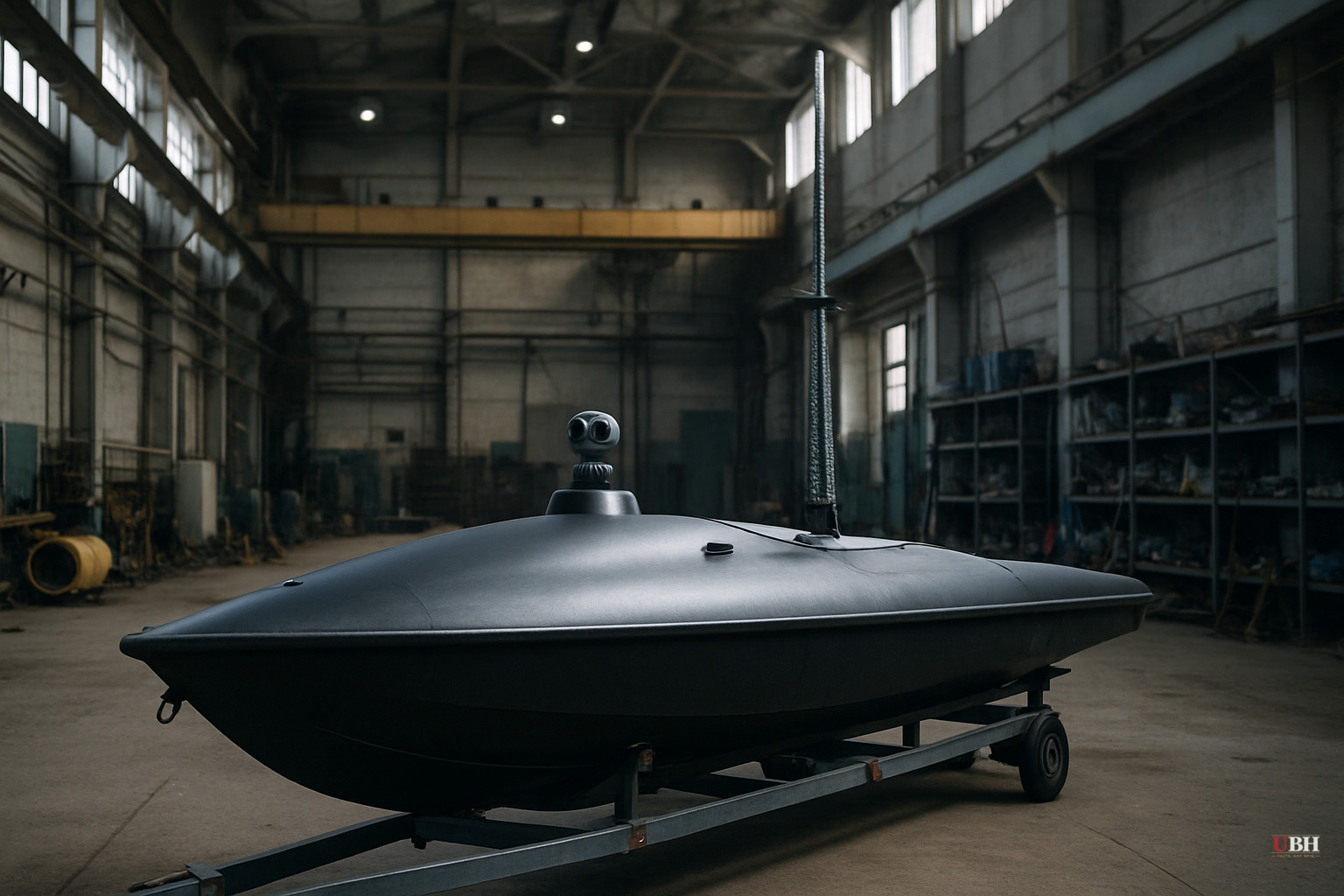
Ukraine's navy says one of its unmanned sea drones sank a Russian border patrol ship near Novorossiysk, a Black Sea port on Russia's Krasnodar coast. The target, the Izumrud, wasn't just any vessel. Kyiv says it was the same ship involved in Russia's 2018 seizure of three Ukrainian naval vessels in the Kerch Strait.
According to a statement from Ukraine's Naval Forces, cited by both Kyiv Post and Ukrainska Pravda, "Ukrainian sailors sank the second-rank border patrol ship using the Sargan-3000 naval unmanned complex near Novorossiysk. There are both dead and wounded among the vessel's crew." Russia has not officially confirmed the sinking.
The Izumrud was commissioned in 2014 by the Almaz Shipbuilding Company. It ran 62.5 meters long, displaced 630 to 750 tons, carried a helicopter deck, and could hit 27 knots, according to Ukraine's Naval Forces. It belonged to Russia's Federal Security Service, the FSB, not the regular navy.
That distinction matters. The FSB runs Russia's border guard service, and the Izumrud's job was patrolling and enforcement, not open combat. Ukraine says this same ship took part in the Nov. 25, 2018 Kerch Strait incident, when Russian forces rammed and fired on three Ukrainian navy vessels moving from Odesa to Mariupol. Six Ukrainian sailors were wounded and the crews were captured and held in Moscow until a prisoner exchange in September 2019, according to Kyiv Post. Russia's FSB claimed at the time that Ukraine's ships made "dangerous maneuvers" in Russian territorial waters. Kyiv rejected that, saying its vessels were exercising a lawful right of passage under international law, a position backed by an international tribunal ruling in Ukraine's favor years later.
This sinking isn't an isolated hit. Ukraine's Unmanned Systems Forces say they struck 11 more Russian vessels in the Sea of Azov on the night of July 13 into July 14, 2026, bringing the total to 116 vessels hit in nine days under an operation Ukrainian officials are calling Operation MoLoChKa, according to Kyiv Post and Ukrainska Pravda. USF Commander Robert "Madyar" Brovdi says the campaign is deliberately targeting Russia's "feeder fleet," the small tankers that move oil through the Volga-Don Canal and the Sea of Azov to larger ships waiting in the Black Sea.
Brovdi's logic is straightforward: knock out the small ships that funnel oil to the big export tankers, and you choke both Russian export revenue and fuel supplies to occupied Crimea. He says Russia's backup road and rail routes are also getting hit constantly. Kyiv defends targeting the tankers as legitimate military strikes, arguing they finance the war, not civilian commerce as Moscow sometimes frames it.
Crypto Briefing's coverage places the strike near Gelendzhik, a resort town in Krasnodar region that sits near a compound widely reported to be tied to Vladimir Putin. The outlet leaned into Black Sea grain-export disruption and crypto-payment-workaround speculation as the story's stakes, which stretches well past what the Ukrainian Navy's own statement establishes. The core verified fact is simpler: a drone sank a docked patrol boat and Russia hasn't confirmed it.
A $3,000-to-low-five-figures-class drone can sink a ship that took a shipyard years to build and a crew years to train. That cost asymmetry is the same dynamic that sank the Moskva in April 2022 and has since pushed much of Russia's Black Sea Fleet away from Crimea entirely. Whether that pressure translates into a broader shift in the war's trajectory, or just a slow bleed of aging Soviet-era hulls, is still an open question.
Russia hasn't issued an official statement confirming the Izumrud's sinking, its casualty count, or whether it disputes Ukraine's account of the ship's role in the 2018 Kerch Strait incident. Moscow also hasn't said how it plans to respond to the broader nine-day drone campaign hitting its Azov Sea shipping. Until Russian officials or independent battle-damage assessments weigh in, the record on this strike runs entirely through Kyiv's own Navy and Unmanned Systems Forces statements.
Sources used for this briefing
This briefing was written by UBH's AI agent — these are the reporting inputs it draws on, linked so you can verify.


