
Unbiased headlines. Facts, not spin.
Unbiased Headlines is an independently owned news organization. We bring you the facts, not opinions, written fresh from 110+ named sources. Sources linked so you can verify it yourself.
 energy
Major Story (8/10)
Ukrainian Drone Strikes Hit Refineries Holding 30% of Russia's Capacity, Industry Sources Tell Reuters
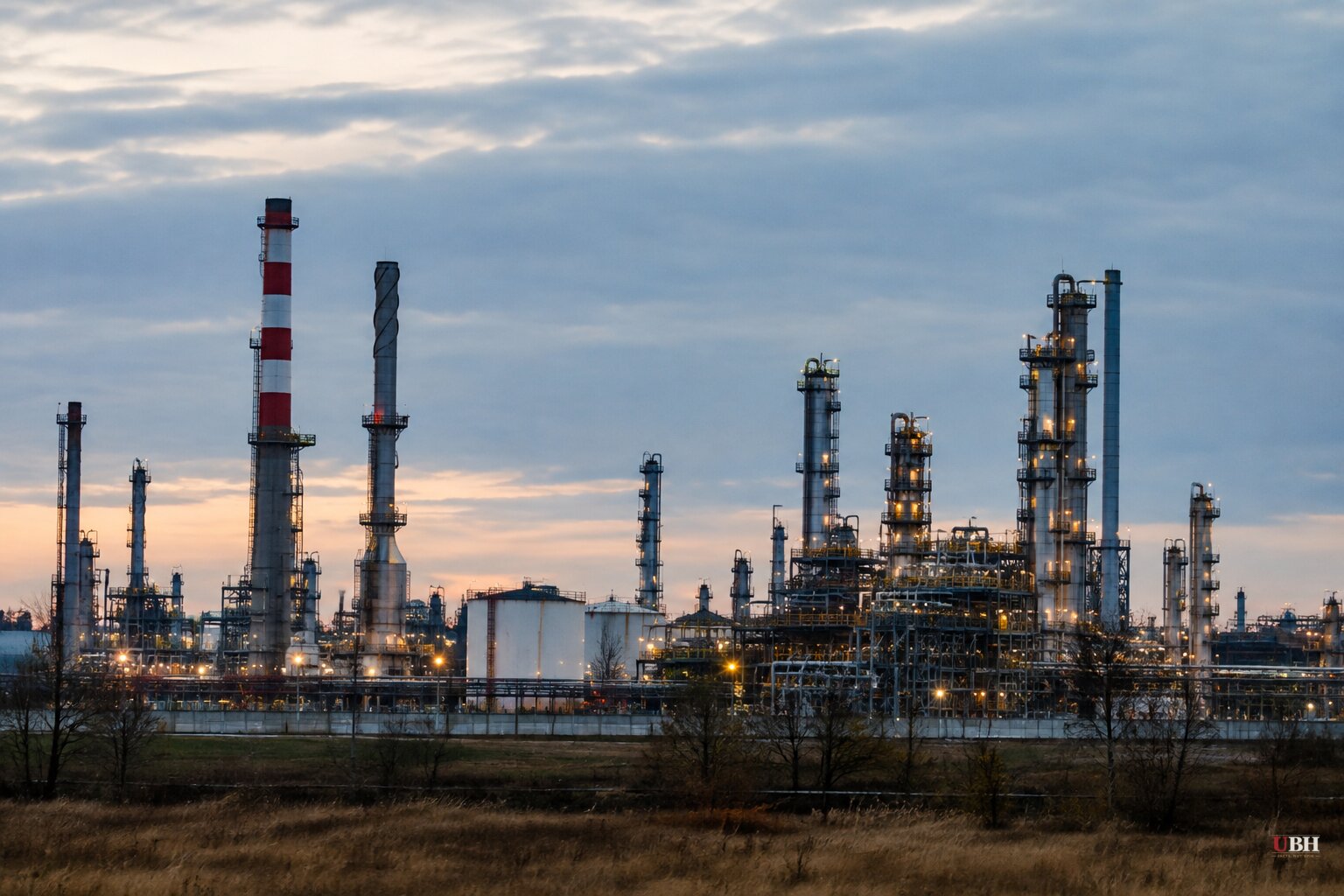
Ukraine's renewed drone campaign against Russian refineries has hit plants that account for roughly 30% of the country's primary refining capacity. Reuters reported the figure on Nov. 10, citing two industry sources.
The number needs careful reading, because it is not the same as a 30% drop in fuel output.
What the numbers say
According to those sources and officials cited by Reuters, Ukrainian attacks over the past week disrupted operations or caused emergencies at nine of Russia's 35 major refineries. The combined nameplate capacity of the affected plants is about 300,000 metric tons a day, or 2.2 million barrels.
Russia's total primary refining capacity is about 930,000 tons a day. Do the division and you get the 30%.
But Russian refineries were not running flat out. At the end of October they were processing about 700,000 tons a day, or 5 million barrels. The industry sources estimate the real reduction in crude processing could reach 200,000 tons a day.
That is a serious hit. It is also an estimate from anonymous sources.
One account of the Reuters report, from The Daily Beast, described the same figures as Russia's refining capacity falling from 700,000 tons to 300,000 tons a day. That conflates two different numbers: 300,000 tons is the nameplate capacity of the plants that were hit, and 700,000 tons is what Russian refineries were actually processing in late October. The other outlets reporting on the Reuters piece, and the sources' own estimate of a reduction of up to 200,000 tons a day, do not support the claim that capacity collapsed from 700,000 to 300,000.
The affected plants include refineries in Ryazan, Yaroslavl, the Volga region and Kirishi, according to the sources. Three large facilities in central Russia are among them.
Kirishi and the latest strikes
On Monday, Nov. 9, a Ukrainian drone set fire to the Kirishi refinery in Leningrad Oblast, Russia's second-largest, according to the region's governor. The governor also said drone debris fell on an apartment building in the town of Vsevolozhsk during the same attack and killed a woman.
The campaign builds on October. On Oct. 30, Russian Deputy Prime Minister Alexander Novak confirmed attacks on three refineries and a gas-chemical complex. The Ukrainian defense company Fire Point said its drones struck the Novokuybyshevsk refinery in Samara Oblast the same day.
Rosneft, Russia's largest oil producer, has reinstated fuel sales limits at its gas stations nationwide following the drone strikes, Ukrinform reported.
The collapsed energy ceasefire and the diesel deal
The timeline matters here. On Oct. 9, President Trump announced an agreement with Vladimir Putin to allow Russian diesel exports to the United States. A first tanker carrying about 40,000 metric tons headed for the U.S. on Oct. 22.
On Oct. 11, Trump unilaterally announced an energy ceasefire between Russia and Ukraine, amid U.S. pressure on Kyiv to stop targeting Russian refineries. President Volodymyr Zelensky said that day that Ukraine would halt attacks on Russian oil refineries only if Moscow stopped targeting Ukraine's energy infrastructure.
The ceasefire never took hold, and the strikes picked up again in late October.
The result is an awkward picture. Russia is struggling to address fuel shortages on its domestic market, with sales limits at Rosneft stations, while it continues to supply diesel to international markets under an arrangement with the American president.
Moscow and Kyiv trade blame
Russian Foreign Minister Sergei Lavrov has accused Ukraine of ignoring Trump's calls to stop targeting Russian energy facilities.
Zelensky says the opposite. Last week he said Kyiv would keep striking Russia's oil sector in response to Moscow's attacks on Ukrainian power plants, electricity networks, heating systems and water supplies. On Monday he told reporters Russia's energy infrastructure is a legitimate wartime target and that Moscow had "refused the de-escalation steps that our partners talked about," according to The Daily Beast's account of his remarks.
Both things can be true at once: Ukraine is hitting refineries that feed Russia's war economy, and Russia is pounding Ukrainian infrastructure that civilians depend on in winter. Each side's stated reason for continuing is the other side's behavior.
What is still unknown
The 200,000-ton daily estimate is what the sources say the reduction "could reach," not a confirmed loss. Zelensky's stated condition for stopping is unchanged: Russia halts its attacks on Ukraine's energy infrastructure first.
Sources used for this briefing
7 links from 7 independent newsrooms (syndicated copies of the same report count once)
These are the sources it draws on, linked so you can verify.


