
Unbiased headlines. Facts, not spin.
Unbiased Headlines is an independently owned news organization. We bring you the facts, not opinions, written fresh from 110+ named sources. Sources linked so you can verify it yourself.
 energy
Major Story (7/10)
Event date: October 11, 2026 ·
Hormuz LNG Tanker Exits Hit Wartime High in October, but Qatar Still Far Below Pre-War Levels
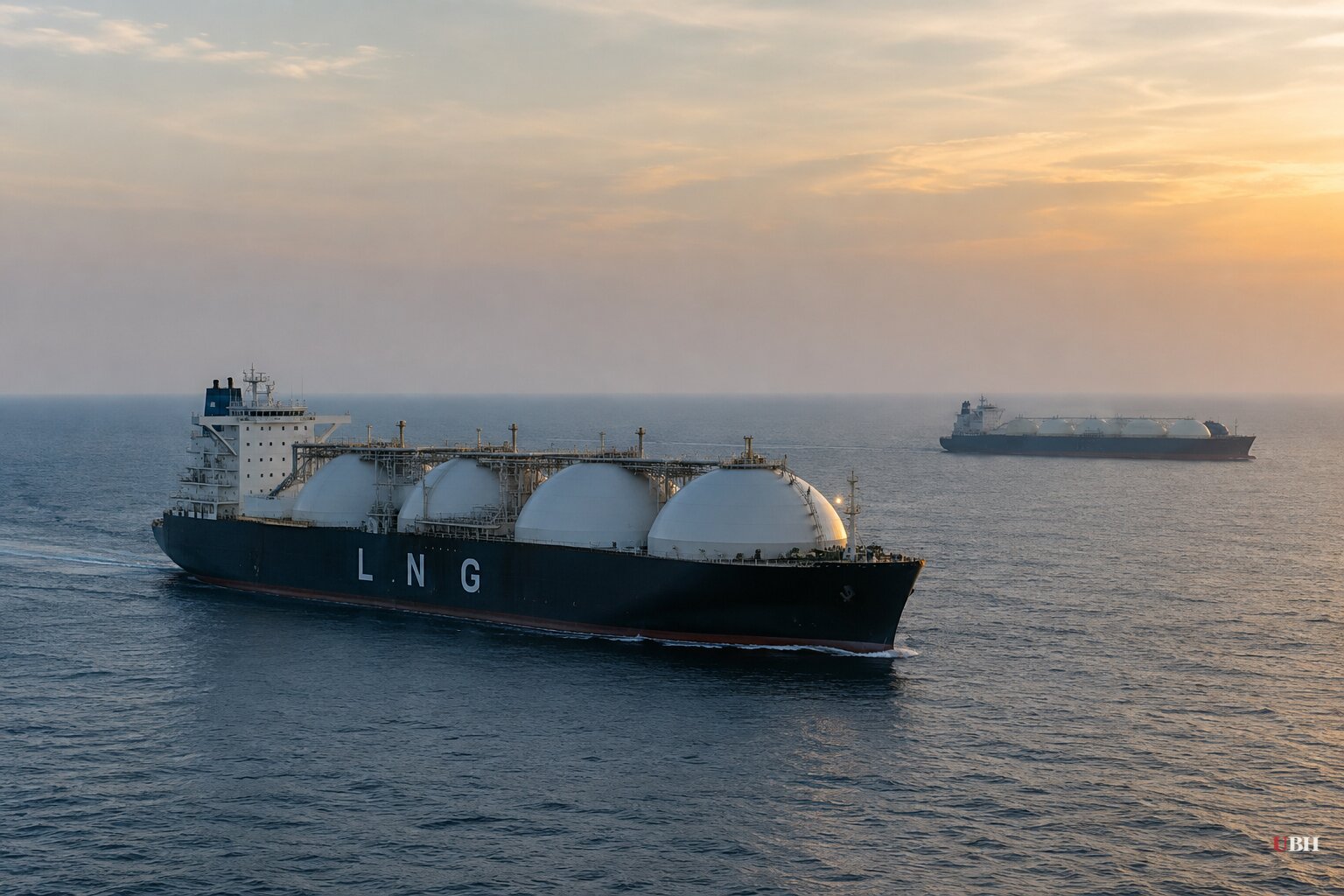
Loaded LNG tanker traffic out of the Strait of Hormuz hit its highest monthly level of the Iran war in October, vessel-tracking data from S&P Global Energy shows.
Thirty-one laden carriers exited the strait last month, up from 23 in September. That is a jump of roughly 35%. Twenty-three of the October vessels loaded at Qatar's Ras Laffan terminal and eight at Das Island in the United Arab Emirates.
It is the best month since the conflict disrupted shipping in February. It is not a return to normal.
Qatar lags, the UAE has recovered
The recovery is lopsided. "We are looking at UAE back to pre-war transit levels and Qatar at over 30% of pre-war Hormuz transits," said Eric Yep, a senior principal analyst at S&P Global Energy.
Kpler's cargo-loading data shows the same split. Combined LNG loadings rose from 27 cargoes in September to 42 in October.
Ras Laffan loaded 35 cargoes in October, topping 2.7 million tonnes. That is its highest monthly volume since the war started. In February, Qatar exported nearly 6.2 million tonnes, so October's loadings were a little under half of that.
Das Island loaded seven cargoes in October, unchanged from September, according to Kpler.
Tanker transits and cargo loadings are different measures. That is why the Qatari figures read as "over 30%" in one dataset and closer to 44% by tonnage in another. Both point the same direction: up, but well short of February.
Ship-to-ship transfers fill the gaps
Some Qatari cargoes are changing hands after they clear the strait. Kpler identified two vessels that loaded at Ras Laffan and then transferred their LNG near Oman's Sohar anchorage.
The SC Prestige passed its cargo to the BW ENN Crystal Sky, which is bound for South Korea. The Al Mafyar moved its LNG to the Shandong Redwood and the Ejnan. Both delivered to Pakistan.
Oil is moving, but fewer ships are doing it
The broader oil picture shows how much of the flow has been rerouted. Kpler reported total oil flows from the region reached 24.5 million barrels per day in the week ending Oct. 18. That is slightly above the 24.4 million bpd average from Feb. 22, just before the conflict.
That total includes barrels moved around Hormuz, including via the Red Sea. It excludes Iranian exports, which Kpler says have dropped to near zero under the U.S. naval blockade. Vortexa put the figure lower, at about 18 million bpd, which is still only slightly below the pre-war average.
Ship counts tell a different story. Kpler said more than 100 vessels a day used to transit the strait, while only about 20 were known to have completed the passage over a ten-day stretch in October. Many ships run with transponders off to avoid being targeted, so counts are hard to pin down.
U.S. Central Command offered a far higher number. CENTCOM said about 400 merchant ships passed through the strait in the week before its Oct. 20 statement.
Open or closed: the two sides disagree
The dispute over the strait's status has not been settled. Iran's Islamic Revolutionary Guard Corps insists Hormuz is "closed." CENTCOM says it is "open."
Bloomberg News has reported that large tankers are traveling in convoys and transferring cargo to other vessels after they exit the threatened area. That would explain how large volumes move with relatively few transits. The International Energy Agency has said the UAE has been especially effective at keeping oil moving.
CENTCOM also said 138 commercial vessels had been redirected by U.S. forces to enforce the blockade against Iran.
Diplomacy is moving slowly
President Donald Trump met Qatar's prime minister, Sheikh Mohammed bin Abdulrahman Al-Thani, at the White House on Monday, Nov. 9. Qatar is a key mediator, and its LNG is the commodity most directly at stake.
Secretary of State Marco Rubio told reporters Sunday, "I wouldn't say we're on the verge of a breakthrough." He described Iran's demands as unrealistic.
Iranian President Masoud Pezeshkian said Monday that Tehran favors negotiation. "We can negotiate with dignity and resolve the issue with dignity," he said, according to an Iranian presidential statement carried by Anadolu Agency. He also said Iran would not surrender to coercion.
In a CBS "60 Minutes" interview aired Sunday, Trump said he saw no reason to escalate the war and maintained that the strait is open.
Axios reported Nov. 9 that mediators are discussing a two-day proposal. The U.S. would lift its naval blockade and release some frozen Iranian funds. Tehran would take steps toward renewed nuclear inspections and reopen the strait before broader talks resume. Washington has not accepted the proposal, and significant differences remain.
What the numbers leave open
October shows LNG can leave the Gulf in larger volumes under convoy and transfer arrangements. It does not show the strait functioning as it did in February.
Qatar's loadings sit well under its February level, and the gap is the number to watch in November's data. Whether it narrows may depend on whether the blockade-for-reopening proposal moves past the mediators' table.
Sources used for this briefing
7 links from 7 independent newsrooms (syndicated copies of the same report count once)
These are the sources it draws on, linked so you can verify.


