
Unbiased headlines. Facts, not spin.
Unbiased Headlines is an independently owned news organization. We bring you the facts, not opinions, written fresh from 110+ named sources. Sources linked so you can verify it yourself.
 energy
Major Story (8/10)
Event date: September 11, 2026 ·
Gas Falls Below $4 a Gallon for First Time Since July 20, AAA Says, Still Far Above a Year Ago
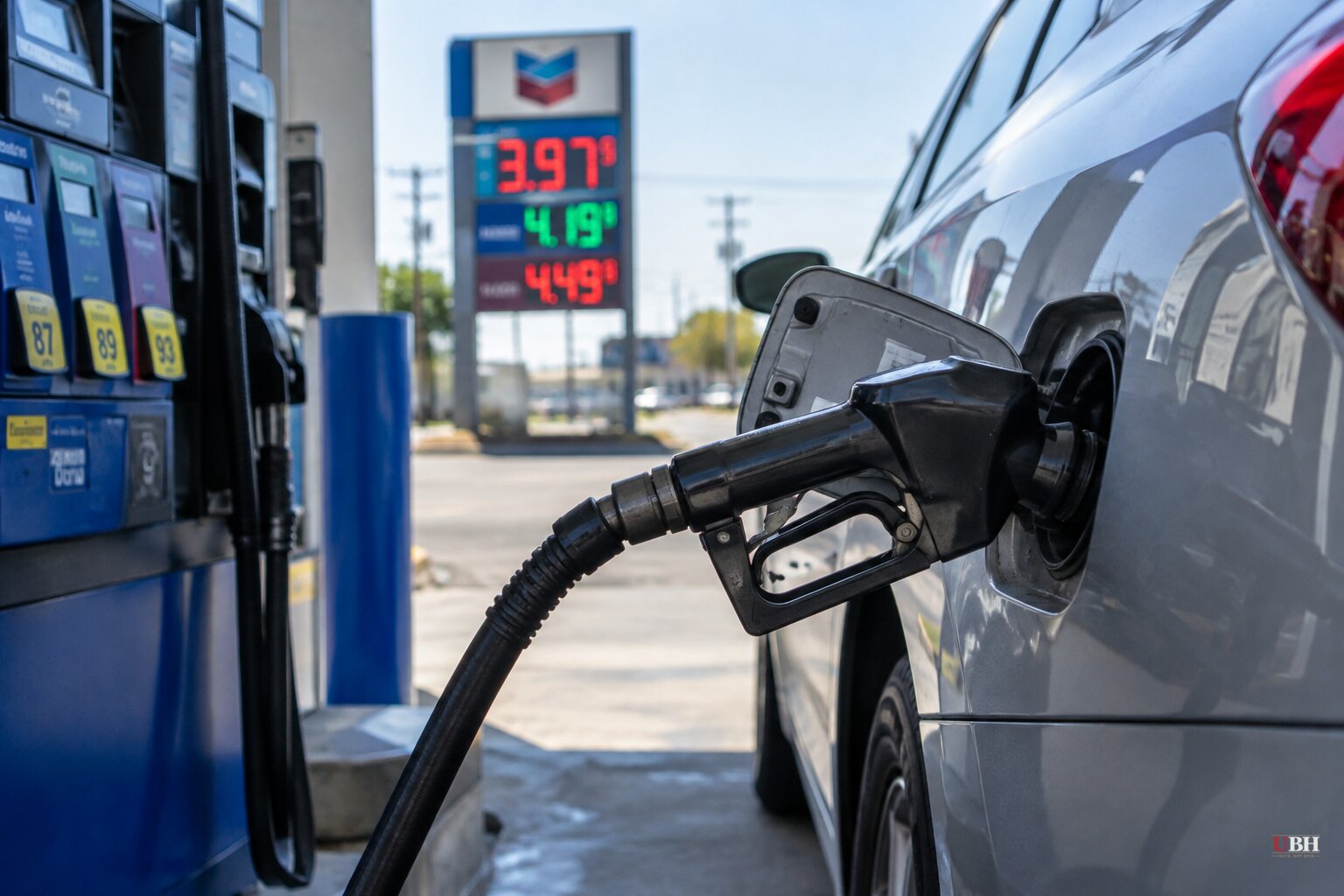
Since the U.S. and Israel launched the Iran war on Feb. 28, gasoline has climbed more than 30%, and on Tuesday, Nov. 10, the national average finally slipped under $4 a gallon.
AAA put the price of regular at $3.9788, the first sub-$4 reading since July 20. Earlier this year the average hit $4.56. It was $4.15 on Election Day, Nov. 3, and $4.29 on Oct. 23.
Still, relief is relative. A year ago the average was $3.07, according to AAA data, as the Washington Post reported. GasBuddy's weekly figures show a similar gap: a national average of $3.96, down 15.9 cents in a week and 39.3 cents in a month, but 92.2 cents higher than a year ago.
Diesel is the holdout
Diesel has barely budged. AAA has the national average at $6.16, against $3.74 a year ago. GasBuddy's number is $6.186, down only 9.5 cents on the week.
Diesel matters to anyone moving freight or farming. NBC News noted that diesel increases can quickly spill over into inflation on grocery and department store shelves, because the fuel is critical for transporting goods.
Oil did the heavy lifting
Brent crude futures fell 13% last week, the biggest weekly percentage drop since April 2020, per NBC News. Prices slid another 5% Monday to their lowest since Aug. 31, and briefly dipped under $90 a barrel on Tuesday. CBS News had Brent futures at $91.12 on Tuesday morning, and the Washington Post reported $89 a barrel. U.S. benchmark WTI was in the mid-$80s.
On Oct. 23, Brent futures traded at $116.13 a barrel, according to the Epoch Times. Tuesday's level is roughly $25 below that.
The slide began after President Trump told NBC News last week that he did not plan to attack Iran. On Monday he told reporters at the White House, "Iran militarily is effectively over," adding, "We're just keeping it the status quo." He said talks have "positive momentum" and a "good chance" of ending the war, while insisting the U.S. is "locked and loaded."
ING commodities strategists said in a note that with Democrats gaining ground in Congress, "there will likely be more scrutiny over the war, while funding it could become more difficult." Vice President JD Vance wrote after the election, "The reason we lost is the war."
Politics or the calendar?
Not everyone agrees the election moved pump prices. GasBuddy's Patrick De Haan called that idea "a myth."
De Haan said gas prices have fallen in the 30 days before the midterms every year since 2006 except 2010. "It's typically seasonal: refiners finish maintenance and ramp up output just as demand fades with cooler weather," he said.
The winter-blend switch also helps. Federal rules require summer blend from June 1 to Sept. 15, and AAA says winter blend and lower demand typically shave 10 to 30 cents off a gallon.
De Haan did give some credit to supply, noting more oil is moving through the Strait of Hormuz. He expects prices to stay under $4 in coming weeks and to ease into Thanksgiving.
CBS News, for its part, reported that global oil costs, the main factor determining prices at the pump, have also dipped amid hopes that the midterm elections could open the door to a deal between the U.S. and Iran to end the war. Both factors are in play, and no one has put a number on how much each contributed.
The political bill
Trump promised sub-$2 gas on the 2024 campaign trail. On Election Day he told Fox News, "The inflation is solved," citing a $10 oil drop and what he called "total control" of Hormuz through a Navy blockade. The national average that day was a record for an Election Day, De Haan noted in a social media post. The 2022 midterm week figure was about $3.80, per the Energy Information Administration.
A CNN analysis of AAA data found the average price during Trump's second term had edged past the Biden-era average, $3.473 to $3.471.
The White House has pointed to its own actions. Spokesperson Taylor Rogers said the administration is releasing oil from the Strategic Petroleum Reserve, temporarily waiving the Jones Act, allowing red-dyed diesel for highway use, and working to boost U.S. refining capacity.
What could reverse it
The risk is still on the table. NBC News reported, citing sources, that Trump was briefed Friday on a narrow window for a possible new military campaign against Iran. Those officials said no decision has been made.
ING's team told NBC that "how all this plays out is still highly uncertain," and that in its assessment, "the degree and speed to which the oil market has sold off seems to be overdone." On Oct. 23, ING's Warren Patterson and Ewa Manthey wrote that "re-escalation seems the most likely path" and that even without it, a geopolitical risk premium would likely linger.
Citi analysts noted that the period before the new Democratic Congress is seated on Jan. 3 is a "lame duck" window, one that "could see either accelerated dealmaking or renewed escalation."
Shipping through Hormuz also remains risky. The U.S. military is coordinating with Saudi oil tankers on crossings, according to OilPrice.com. Over the next few weeks, whether Trump's "status quo" holds will matter, because a new strike order would test the sub-$90 levels Brent briefly touched.
Sources used for this briefing
8 links from 8 independent newsrooms (syndicated copies of the same report count once)
These are the sources it draws on, linked so you can verify.


