
Unbiased headlines. Facts, not spin.
Unbiased Headlines is an independently owned news organization. We bring you the facts, not opinions, written fresh from 110+ named sources. Sources linked so you can verify it yourself.
 energy
Major Story (7/10)
Global Fossil CO2 Emissions Projected to Fall 0.4% in 2026, Researchers Tie Drop Largely to Iran War Oil Shock
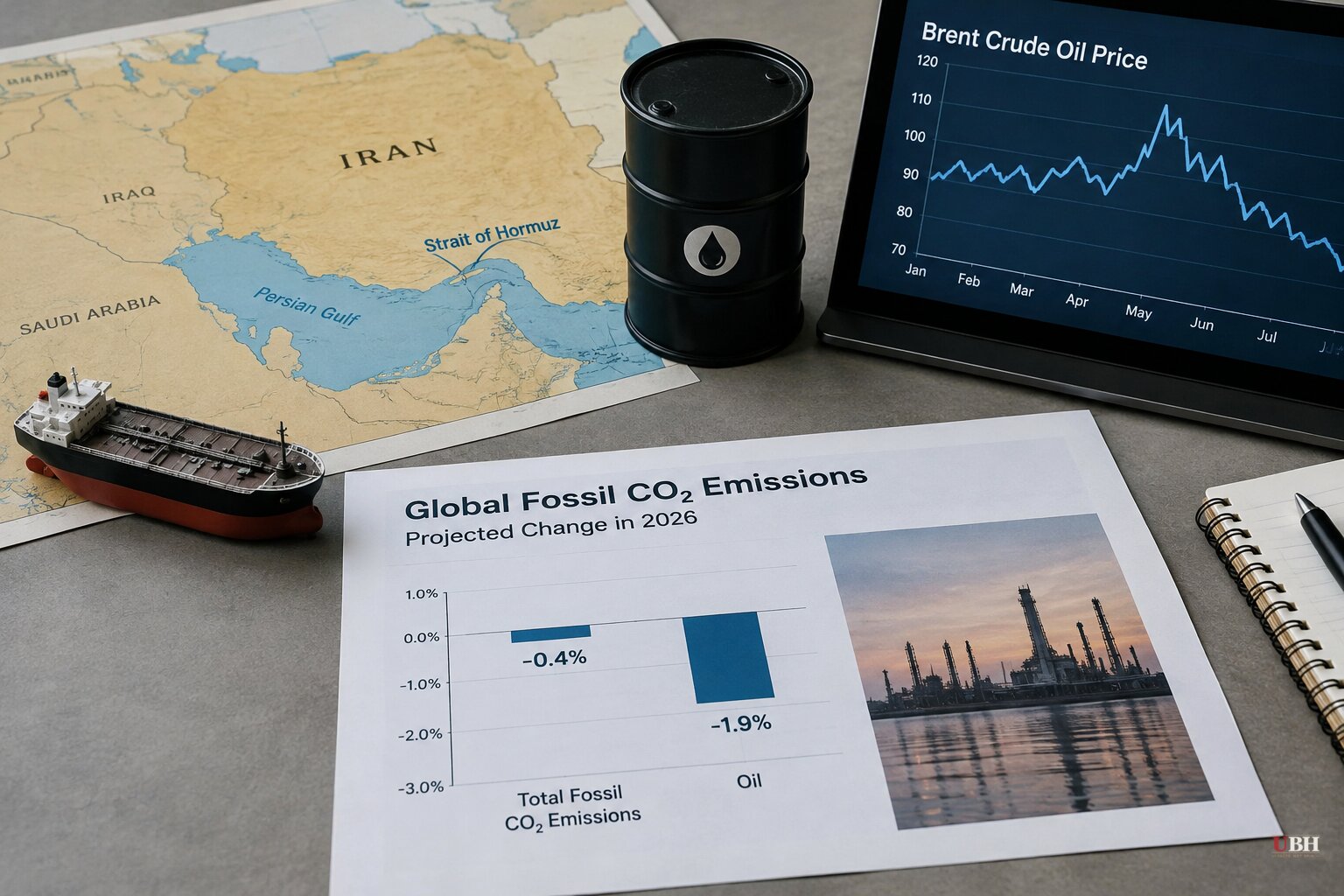
Since COP31 opened Monday, Nov. 9, in Antalya, Turkey, delegates have been arguing over how fast the world is cutting emissions. On day two, Tuesday, Nov. 10, the Global Carbon Project put a number on it: fossil fuel CO2 emissions are projected to fall 0.4% in 2026.
That is the first dip after years of growth. From 2019 to 2025, fossil emissions rose an average of 0.8% a year.
The scientists behind the number are not celebrating.
What the numbers show
The Global Carbon Budget is an annual assessment by more than 140 scientists. It puts fossil CO2 at about 38.2 billion metric tons for 2026.
By fuel, oil emissions are projected to drop 1.9%, natural gas 0.3%, and coal to rise 0.6%.
By country:
- EU: down 1.5%, the steepest fall among the major emitters.
- United States: down 1.3%. The drop comes mainly from coal, which spiked in 2025 on high natural gas prices and a cold spell.
- Japan: down 1%.
- China: down 0.9%, driven by a steep decline in oil emissions and strong growth in renewable power. China still produces 32% of global fossil emissions.
- India: up 4.4%, above its 3.5% average annual growth over the past decade.
- Rest of the world: down 0.7%, largely from lower oil use.
The U.S. coal decline could reverse. The Trump administration has put hundreds of millions of dollars toward reviving the coal industry and repealed emissions standards for coal and gas power plants.
The Iran war is the main driver, researchers say
The war in Iran has effectively closed the Strait of Hormuz, a key shipping route for petroleum, and pushed up global gasoline and oil prices. Researchers say that price shock explains most of the oil decline.
"It's downwards which sounds good, but this is largely driven by the war in Iran, what's happened in the Strait of Hormuz," said Glen Peters of the CICERO Center for International Climate Research in Norway. "So in a way, a little bit of good news, but for the wrong reasons."
Peters said the team is confident because of the timing and the type of fuel involved. A structural shift would show oil emissions rising to a peak and then declining slowly. This year, he said, "oil emissions are going up and then suddenly BANG, down 2%."
Pierre Friedlingstein, who directs the Global Carbon Budget Office at the University of Exeter and led the study, said the decline is "encouraging." He added that "a reduction driven partly by geopolitical shocks is not a sustainable climate solution." Mike O'Sullivan, also at Exeter, called it a short-term shock rather than a systemic peak.
This is only the third annual decline of the 21st century. The other two followed the 2009 global recession and the 2020 pandemic. Peters said that after those shocks, "we seem to go back to where we were before."
Total emissions still rising
The fossil drop is offset by land use. Emissions from land-use change, including deforestation and peat fires, are projected to rise to 5.1 billion metric tons. Researchers point to human-ignited peat fires and El Niño-driven wildfire risk in Southeast Asia and South America.
Total CO2 emissions from all sources are projected at 43.3 billion tonnes in 2026, up from 42.8 billion in 2025.
Atmospheric CO2 is set to reach 427.7 ppm, 54% above pre-industrial levels. The remaining carbon budget for a chance of holding warming to 1.5°C is now 150 billion tonnes, less than four years at current emission rates.
The report also finds the land carbon sink has recovered from its weakening during the 2023-2024 El Niño. Renewed El Niño conditions are expected to affect carbon uptake in the coming year.
Not everyone reads it as a fluke
Outside experts split on what the dip means. Niklas Höhne, co-founder of Germany's NewClimate Institute, said "permanent shifts are happening," citing fast growth in electric cars and trucks, especially in Asia. He believes the global emissions peak is near or already here.
Peters' team does not go that far. Peters said that "a drop in emissions in one year is not a peak unless it is driven by structural change." The report credits solar, wind and electric vehicles with increasingly offsetting growth in energy demand, but says clean energy is not expanding fast enough to drive a sustained decline.
What comes next at COP31
UN Climate Change chief Simon Stiell opened the summit Nov. 9 by saying nations face a choice: "electric or shock." He called clean energy a cure for planet-heating pollution and "spiraling household costs" amid the fossil fuel cost crisis.
Today's theme is energy and transport, and the push is for countries to agree to a big increase in the share of energy delivered as electricity. Leaders from more than 90 countries are due to arrive Wednesday, Nov. 11. The heads of the United States and China are not among those attending.
Whether a pledge on electrification emerges will be the first test of whether the 2026 dip becomes policy or just a price spike. Oil prices will decide the rest. If the Strait of Hormuz reopens and prices fall, the researchers' own reading is that emissions resume climbing.
Sources used for this briefing
8 links from 8 independent newsrooms (syndicated copies of the same report count once)
These are the sources it draws on, linked so you can verify.


