
Unbiased headlines. Facts, not spin.
Every story is an unbiased news briefing written from 110+ sources across the spectrum — sources linked so you can verify it yourself.
 defense
Major Story (7/10)
August 12, 2026 at 11:19 PM
defense
Major Story (7/10)
August 12, 2026 at 11:19 PM
Ukrainian Drone Operators Wiped Out a U.S. Army Brigade in Germany War Games This Spring
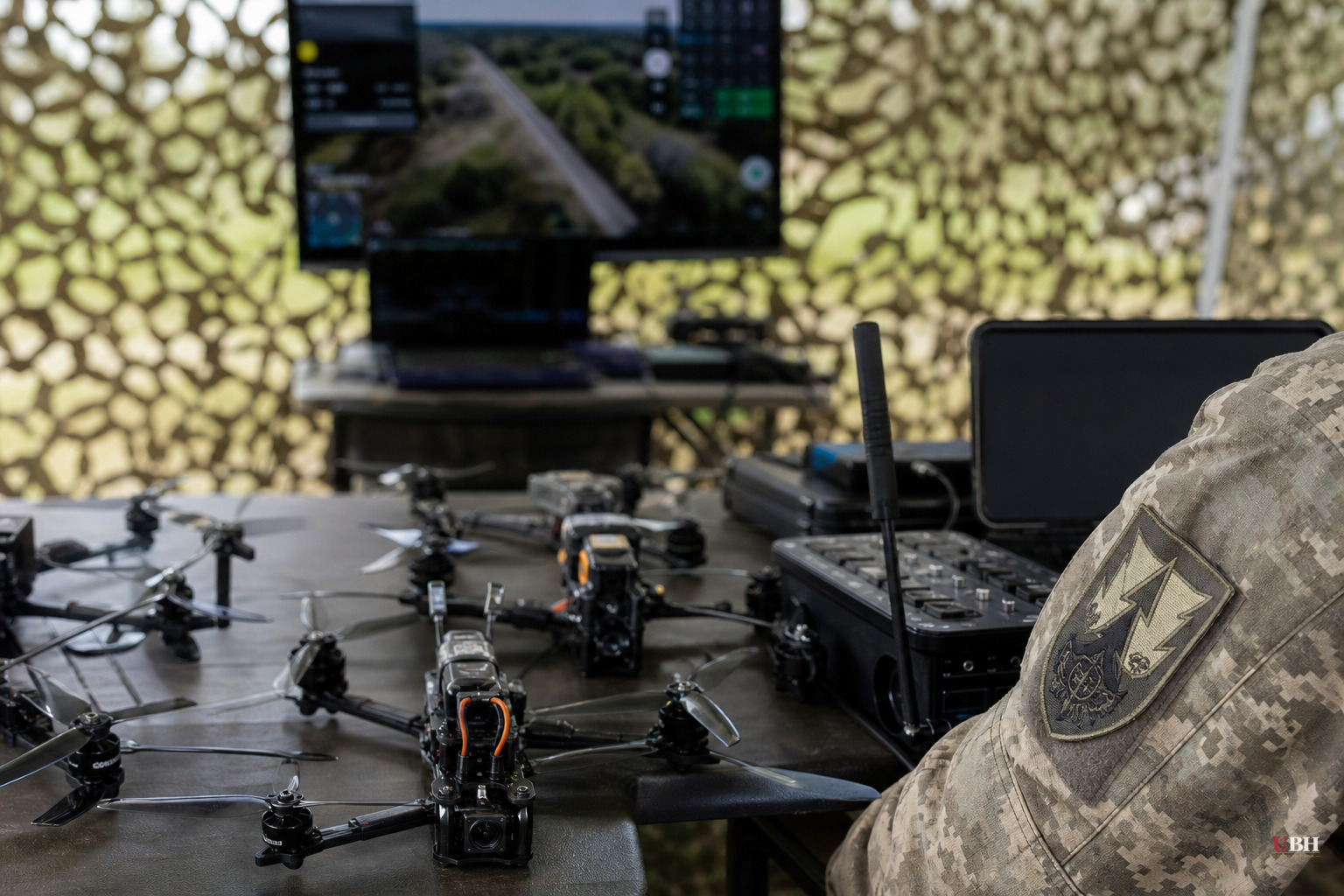
Ukrainian soldiers who fly attack drones for a living took apart a U.S. Army brigade in a training exercise this spring, and the Army didn't hide from it.
The Combined Resolve exercise ran in April and May at the Hohenfels training area in Germany, according to the Wall Street Journal. About 3,500 American soldiers took part, most of them from the 3rd Armored Brigade Combat Team, 1st Cavalry Division, rotating in from Fort Hood, Texas. Their job was to attack a defended position. Ukrainian operators from the 412th Regiment of Unmanned Systems Forces, nicknamed Nemesis, reinforced the defenders.
People familiar with the exercise, and one participant, told the Journal that Ukrainian drone teams effectively eliminated a full U.S. armored brigade. Heavy armored vehicles kicked up dust clouds that made them easy to spot from the air. Ukrainian reconnaissance drones found them fast, then handed off to explosive-dropping drones and first-person-view drones that fly straight into a target and detonate.
No live rounds get fired in these drills. A drone hovering over a vehicle, or flying close enough for an umpire to confirm a hit, counts as a kill. The Ukrainians racked up kills so quickly that the Army had to rotate in new units mid-exercise just to keep the training scenario running, according to the Journal's reporting.
The American troops were carrying standard-issue electronic warfare and counter-drone gear, not the newest equipment. An Army official told the Journal that Mobile Brigade Combat Teams equipped with more current drone-defense tools and tactics have performed noticeably better in comparable exercises. This wasn't a test of the Army's best available tech, but rather a test of what a standard rotational brigade currently carries.
The two-week exercise wasn't a one-time event. American units re-ran the scenario repeatedly and got better each time, learning to disperse, hide their vehicles, and use electronic jamming more effectively. Partway through, the Ukrainians switched sides and coached the Americans on using drones offensively, which the U.S. troops then did well, according to the Journal.
The skill gap has a simple explanation. Ukraine has been fighting a grinding war against Russia for four and a half years. Nemesis operators repair, rebuild, and rearm drones constantly, often under fire. American drone operators haven't had to do that. A person present at the exercise told the Journal that lack of hands-on repair experience under combat pressure is a real handicap for U.S. troops right now.
The stakes behind this go beyond a training exercise. In Ukraine, drones have helped grind down armor on both sides to the point that long stretches of the front line are nearly empty of tanks. Some U.S. military officers argue that's specific to this particular stalemated war, and that armored vehicles would matter more in a war with actual maneuver. Former Ukrainian commander-in-chief Valery Zaluzhny has made versions of this argument too, that drone dominance is partly a function of a static front, not proof tanks are obsolete everywhere.
Army leadership isn't dismissing the results. Under Secretary of the Army Michael Obadal, speaking July 30 at a Center for Strategic and International Studies event alongside former Army Secretary Ryan McCarthy, described a deliberate strategy of putting unfinished, still-being-developed technology directly into soldiers' hands rather than waiting for a finished product. Obadal said he recently rode in an autonomous vehicle with a staff sergeant who told him bluntly, "I don't like it," then spent 15 minutes explaining that his problem wasn't the technology itself but how it was being integrated into unit operations. Obadal called that kind of blunt feedback something "you don't get in a lab."
Obadal also pointed to the Army Software Factory in Austin, Texas, a two-year program where new soldiers learn to code and build applications, as part of an effort to get tech literacy embedded at the entry level rather than bolted on later.
None of that changes what happened at Hohenfels. A brigade built around Cold War-style armored tactics got picked apart by drone operators who learned their trade in a live war. How fast the rest of the Army's rotational brigades, not just the newer Mobile Brigade Combat Teams, can close that gap before facing anything resembling a real fight against an adversary with comparable drone capability, like China, remains to be seen.
Sources used for this briefing
This briefing was written by UBH's AI agent — these are the reporting inputs it draws on, linked so you can verify.


