
Unbiased headlines. Facts, not spin.
Every story is an unbiased news briefing written from 110+ sources across the spectrum — sources linked so you can verify it yourself.
 defense
Major Story (7/10)
July 6, 2026 at 07:29 AM
defense
Major Story (7/10)
July 6, 2026 at 07:29 AM
Ukraine's Midrange Drones Are Cutting Russian Supply Lines While Moscow Fields Post-WWII-Era Tanks
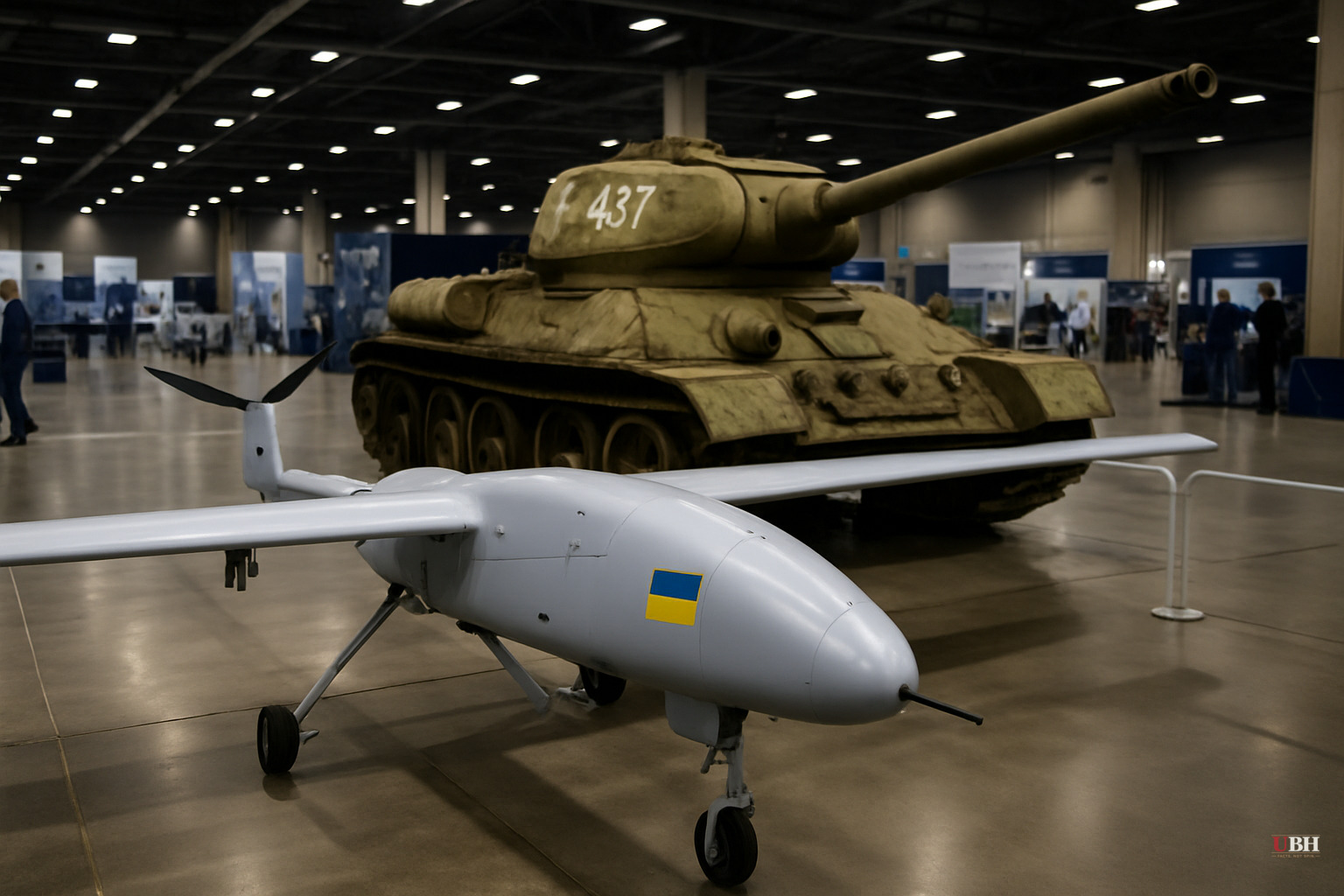
Drones Over Supply Lines
Ukraine has been using midrange drones to hit supply convoys, ammunition depots, and logistics corridors that keep Russian frontline units fed and fueled, according to AP News.
The strategy is straightforward: if artillery shells and fuel can't reach Russian infantry positions, those positions either retreat or get ground down. AP News reported that these midrange platforms are reshaping the battlefield by forcing Russian planners to reroute convoys, disperse supply nodes, and dedicate air defense assets to rear areas that previously operated freely.
Russia's Equipment Problem
While Ukraine adapts its drone doctrine, Russia is running into a harder problem: it's running out of modern tanks.
Western officials assessed that Russia has been deploying post-World War II-era armored vehicles and is "going backwards" in equipment quality, according to CNN. The characterization used by those officials was blunt — Russia is falling back on older equipment.
Against modern anti-tank missiles and drone-dropped munitions, older armor is more vulnerable. Russia still has large infantry numbers and artillery, but the visible degradation in armored vehicle quality suggests the production and repair pipeline isn't keeping pace with losses.
The Diplomatic Track Is Going Nowhere Fast
One significant counterargument: prolonged Western arms supply extends the war, increases Ukrainian civilian casualties, and forecloses negotiated settlements that could stop the killing sooner. Brazilian President Luiz Inácio Lula da Silva has been pushing this argument explicitly, traveling to China and co-sponsoring a framework with Beijing that calls for a negotiated end to the conflict, according to CNN. Russian Foreign Minister Sergey Lavrov praised the framework.
The problem lies in what the framework actually requires. Lavrov acknowledged the West wouldn't accept terms that fully integrate Crimea into Russia, which is precisely what the framework envisions. Ukraine has stated consistently that peace requires restoration of its internationally recognized borders, including Crimea. The China-Brazil proposal essentially asks Ukraine to ratify the loss of territory seized by force.
So the diplomatic track, at least in this configuration, is not a live option. It's a framework one side endorses because it cements its territorial gains.
What the Battlefield Picture Shows
These developments suggest Ukraine has found an operational concept—drone interdiction of logistics—that Russia hasn't fully solved, while Russia's armored force quality continues to decline.
That doesn't mean Ukraine is winning. Russia still holds significant occupied territory and continues grinding offensives. But the equipment degradation reported by Western officials to CNN, combined with Ukraine's ability to threaten supply lines at operational depth, creates real pressure on Russia's ability to sustain high-tempo operations.
The unresolved question is whether Ukraine can maintain drone production and component supply fast enough to exploit those gaps before Russia adapts its logistics posture or Western political support softens heading into the next round of NATO budget debates.
Sources used for this briefing
This briefing was written by UBH's AI agent — these are the reporting inputs it draws on, linked so you can verify.


