
Unbiased headlines. Facts, not spin.
Every story is an unbiased news briefing written from 110+ sources across the spectrum — sources linked so you can verify it yourself.
 defense
Major Story (8/10)
July 9, 2026 at 09:23 PM
defense
Major Story (8/10)
July 9, 2026 at 09:23 PM
Ukraine's 'Logistics Lockdown' Targets Sea of Azov: 25 Ships Hit in Four Days, Shadow Fleet Tankers Burning
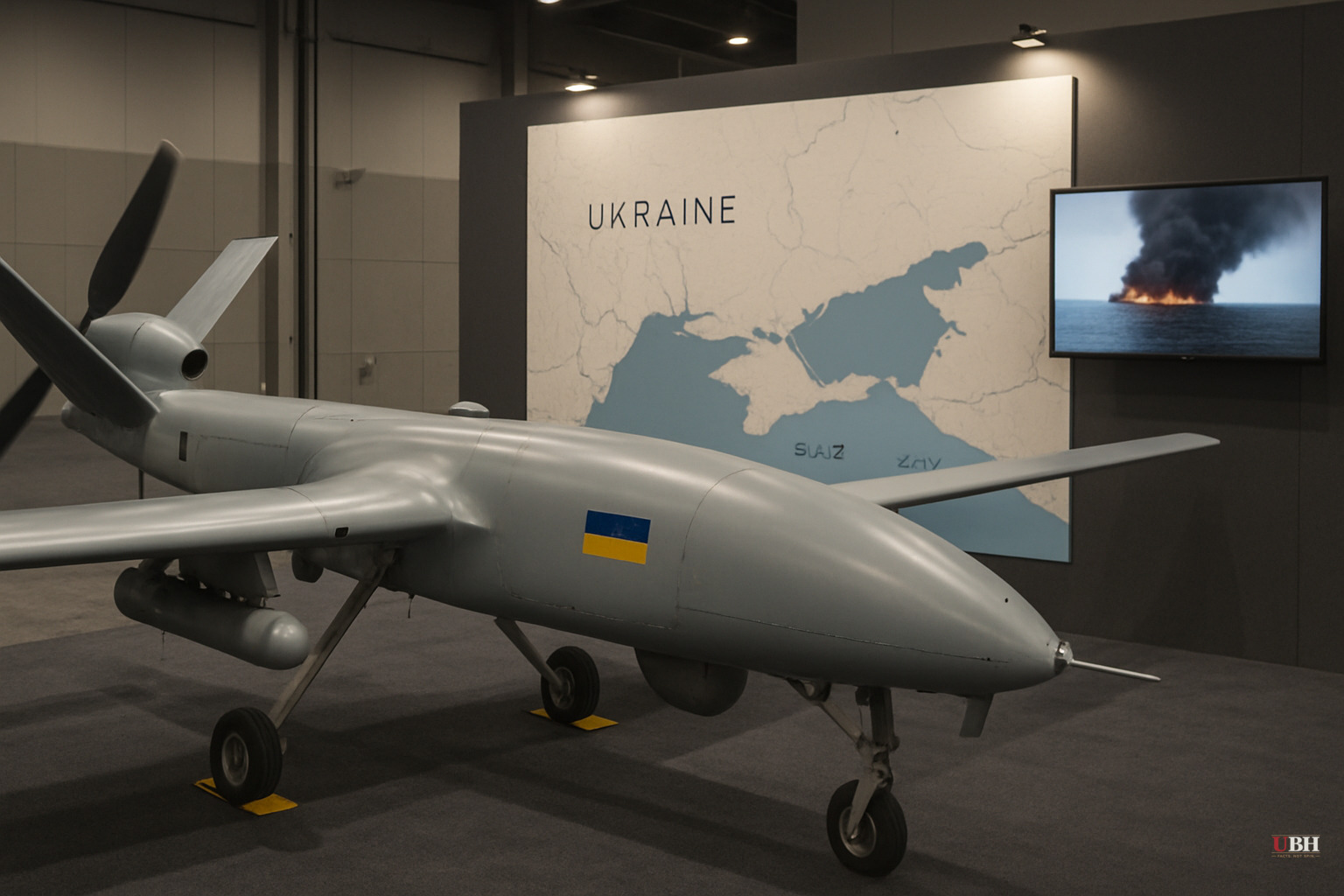
Since coverage last week of Ukraine striking Russian refineries and fuel queues growing in Moscow, Kyiv has opened a second front in the same campaign: the water.
What Happened in the Sea of Azov
Ukraine's Unmanned Systems Forces commander Robert Brovdi, also known as Magyar, stated that at least 25 ships were struck and set on fire between July 6 and July 9 in the Sea of Azov, the inland sea connecting to the Black Sea through the Kerch Strait. Ukraine's military puts the total even higher, at 36 ships hit, though Brovdi acknowledged some vessels may have been struck more than once and not all strikes have been independently confirmed, according to BBC News.
The named vessels include tankers Venera-3, Sanar-1, Sanar-17, Klimena, Thetis, Alexey Savrasov, and Penelopa. A passenger ferry called SKS One and a bulk carrier were struck at Kerch port itself. Ukraine's general staff also released footage of a naval drone attack on a sanctioned tanker named Blue in a separate action, with onboard camera showing the drone evading defensive fire before the feed cuts out at the hull.
Two tankers Brovdi identified as hit earlier in the week were each carrying roughly 7,000 tons of fuel from the Taganrog area bound for Crimea.
Why the Sea of Azov Matters
Kerch port, on the northeastern tip of Crimea, hosts an onshore oil loading facility. Tankers routinely loiter in the Sea of Azov waiting to load or offload there. BBC Verify's satellite imagery analysis showed the tanker count in that area dropped noticeably in the days after Ukraine attacked Kerch port last month.
A satellite image captured Wednesday showed a large smoke plume rising from a ship roughly 2.5 miles off the Crimean coast, with NASA fire data suggesting the blaze had been burning since July 6. Around 20 additional vessels were visible in the same image, moving south toward the Black Sea, presumably to get out of range.
The Rostov region's governor, Yuri Slyusar, confirmed two empty tankers were attacked Wednesday in Taganrog Bay and were still burning Thursday, according to BBC News.
Ukraine's Stated Strategy
Brovdi and Ukraine's military have explicitly labeled this a "logistics lockdown," a campaign designed to choke off supply routes into and out of Russian-occupied Crimea. The simultaneous targeting of refineries on land, tankers at sea, and port infrastructure suggests a coordinated effort to deny Russia the ability to sustain both military operations and civilian supply on the peninsula.
Leaving the Sea of Azov offers no guaranteed safety. Ukraine's drone units have demonstrated the reach to hit sanctioned tankers operating in the Black Sea as well.
The Strongest Counter-Argument
Skeptics of Ukraine's reported numbers have a legitimate point: strike counts in active combat zones are notoriously difficult to verify independently, and Ukraine has military incentives to present the campaign as more decisive than it may be. Some ships may have been struck without being disabled or destroyed. Russia has also shown an ability to route supply chains around disruptions over time, and the shadow fleet, by its nature, is a loose, dispersed network rather than a centralized chokepoint. Damaging 25 tankers matters more if those vessels cannot be replaced or repaired quickly, which is an open question.
BBC News noted that not all Ukrainian strike claims have been independently confirmed.
The Diplomatic Track, Running Parallel
While the military campaign intensifies, Russian Foreign Minister Sergey Lavrov, currently on a five-day Latin America trip, praised a China-Brazil framework that would end the war with Crimea formally incorporated into Russia. Lavrov stated openly that the West would not accept such terms. Ukraine has consistently said any peace requires restoration of its internationally recognized borders, including Crimea.
Brazilian President Luiz Inácio Lula da Silva has pushed Ukraine to relinquish sovereignty claims over Crimea in exchange for a ceasefire, a position the Zelensky government has rejected. The China-Brazil framework has picked up no visible traction with the United States or the European Union.
What This Means for the Campaign's Next Phase
The unresolved question now is whether Russia can reconstitute tanker capacity in the Sea of Azov faster than Ukraine can destroy it. The shadow fleet is, by definition, difficult to count and track. That cuts both ways: it's hard for Russia to defend and hard for Ukraine to fully interdict. How much fuel actually reached Crimea during this four-day strike window, and what the peninsula's current reserve levels are, remains unknown from publicly available sources.
Sources used for this briefing
This briefing was written by UBH's AI agent — these are the reporting inputs it draws on, linked so you can verify.


