
Unbiased headlines. Facts, not spin.
Every story is an unbiased news briefing written from 110+ sources across the spectrum — sources linked so you can verify it yourself.
 defense
Major Story (7/10)
July 25, 2026 at 11:31 PM
defense
Major Story (7/10)
July 25, 2026 at 11:31 PM
Ukraine's Fedorov Firing Sparks Tenth Day of Protests, Zelensky Refuses to Reverse Course
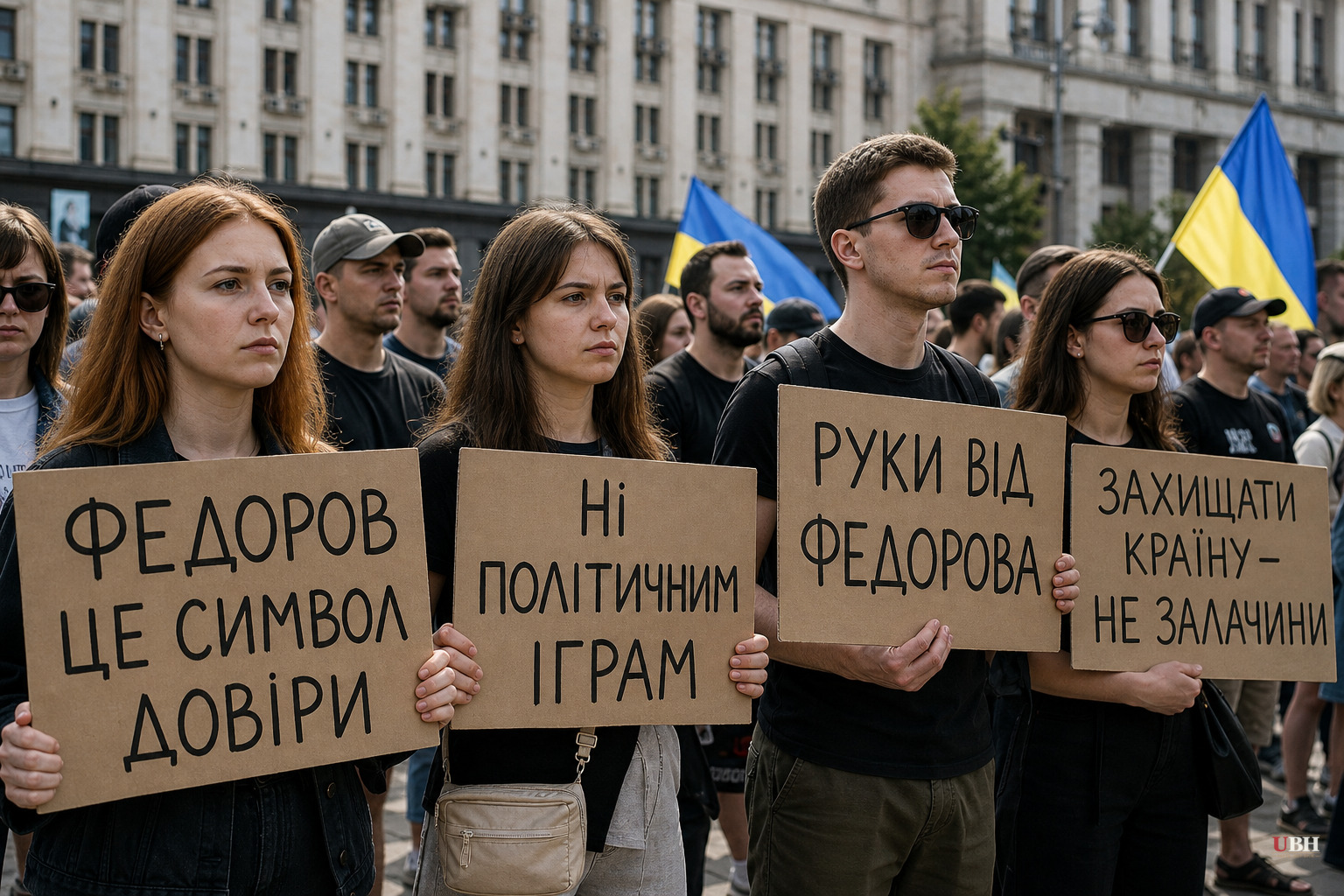
Since President Volodymyr Zelenskyy fired Defense Minister Mykhailo Fedorov on July 15, Ukrainians have protested for ten straight days, and the standoff shows no sign of resolving.
Fedorov made his position explicit on Thursday. "I will not accept any position other than Minister of Defense," he said, according to Defense One. "No other role carries the actual authority to combat procurement corruption." Zelenskyy had reportedly floated other posts for him after the dismissal. Fedorov turned them down flat.
The firing followed a breakdown between Fedorov and Ukraine's military commander-in-chief, Gen. Oleksandr Syrskyi, over drone warfare strategy and efforts to root out corruption at the Ministry of Defense. Zelenskyy has not hidden that he chose Syrskyi over his defense minister. "I would very much like to see unity. The sides have not found it," Zelenskyy said at a Kyiv press conference alongside outgoing British Prime Minister Keir Starmer, according to The Guardian. "And the problem lies not only with the sides, but with me as well. But things are as they are. And in such a situation, you have a choice: either one side or the other."
Zelenskyy chose Syrskyi. But two days later, on Tuesday, he replaced Syrskyi too, installing Maj. Gen. Mykhailo Drapatyi as military commander-in-chief. For the defense ministry, Zelenskyy first offered the post to Interior Minister Ihor Klymenko, who apparently passed, before settling on Maj. Gen. Yevhenii Khmara, the acting head of Ukraine's security service, within roughly a day, according to Defense One. Khmara now needs parliamentary approval to hold the job permanently.
The Numbers Behind the Anger
A poll taken Tuesday found 72% of Ukrainians disapprove of Fedorov's removal, Defense One reported. Fedorov's own trust rating surged from 35% to 65% in the days following his firing. Zelenskyy's trust rating, notably, did not collapse. It moved from 54% to 59% over the same period, suggesting the public anger is aimed at the decision, not necessarily at Zelenskyy personally.
More than 1,000 protesters gathered outside the presidential office in Kyiv, according to The Guardian, carrying signs reading "For what?" and "Is your head screwed on?" alongside chants of "Syrskyi out." At least one senior military official has resigned in solidarity with Fedorov, Defense One reported.
The Guardian noted this marks only the second time since Russia's 2022 invasion that large anti-government protests have broken out in Ukraine. The first came roughly a year earlier, when Zelenskyy briefly moved to shut down two anti-corruption agencies before reversing course under public pressure.
What Fedorov Represents
At 35, Fedorov became Ukraine's youngest-ever defense minister after building a reputation running the Ministry of Digital Transformation, where he pushed digital record-keeping and broadband expansion and built relationships with Western tech firms, according to Defense One. He favors T-shirts and sneakers over suits. Syrskyi, at 60, represents what the Atlantic Council described as Ukraine's Soviet-era military old guard.
Anti-corruption activist Olena Halushka called the removal "astonishingly malign and reckless," according to the Atlantic Council, arguing Fedorov's reforms were producing real battlefield results through improved drone capabilities. Anti-corruption activist Olena Tregub framed the protests differently. "People aren't marching to save Fedorov," she wrote on July 17. "They're marching because they fear losing the hope that Ukraine can do better."
The Case for Zelenskyy's Decision
Zelenskyy's defenders have a real argument here, even if it's less visible in the loudest coverage. A wartime government cannot function with its defense minister and its top general locked in open conflict over strategy and procurement authority. Zelenskyy said as much directly: the sides "have not found" unity, and someone had to go. Choosing to back military leadership during an active war, rather than a civilian reformer feuding with commanders, is a defensible institutional call, not obviously corrupt or reckless on its face.
Zelenskyy didn't simply reward the old guard. He replaced Syrskyi with Drapatyi just two days after backing him over Fedorov, and installed Khmara, described by Defense One as "highly respected" and "non-controversial," rather than a crony. That undercuts the narrative that this was purely a power grab for loyalists.
Still, the process looks chaotic. Offering the defense ministry to one person, then handing it to another within roughly a day, then replacing the general the firing was supposed to protect, has fed public suspicion that decisions are being made reactively rather than strategically.
Fedorov's flat refusal to take any other post leaves Zelenskyy with an unresolved problem. Khmara's confirmation still needs parliamentary approval. Whether the protests fade once that vote happens, or whether Fedorov's continued public defiance keeps the story alive into a second week, remains an open question.
Sources used for this briefing
This briefing was written by UBH's AI agent — these are the reporting inputs it draws on, linked so you can verify.


