
Unbiased headlines. Facts, not spin.
Every story is an unbiased news briefing written from 110+ sources across the spectrum — sources linked so you can verify it yourself.
 defense
Major Story (8/10)
July 9, 2026 at 12:13 PM
defense
Major Story (8/10)
July 9, 2026 at 12:13 PM
Ukraine's Drones Reach Siberia, NATO Rewrites Its Investment Priorities, and Rutte's Trump Flattery Faces Internal Criticism
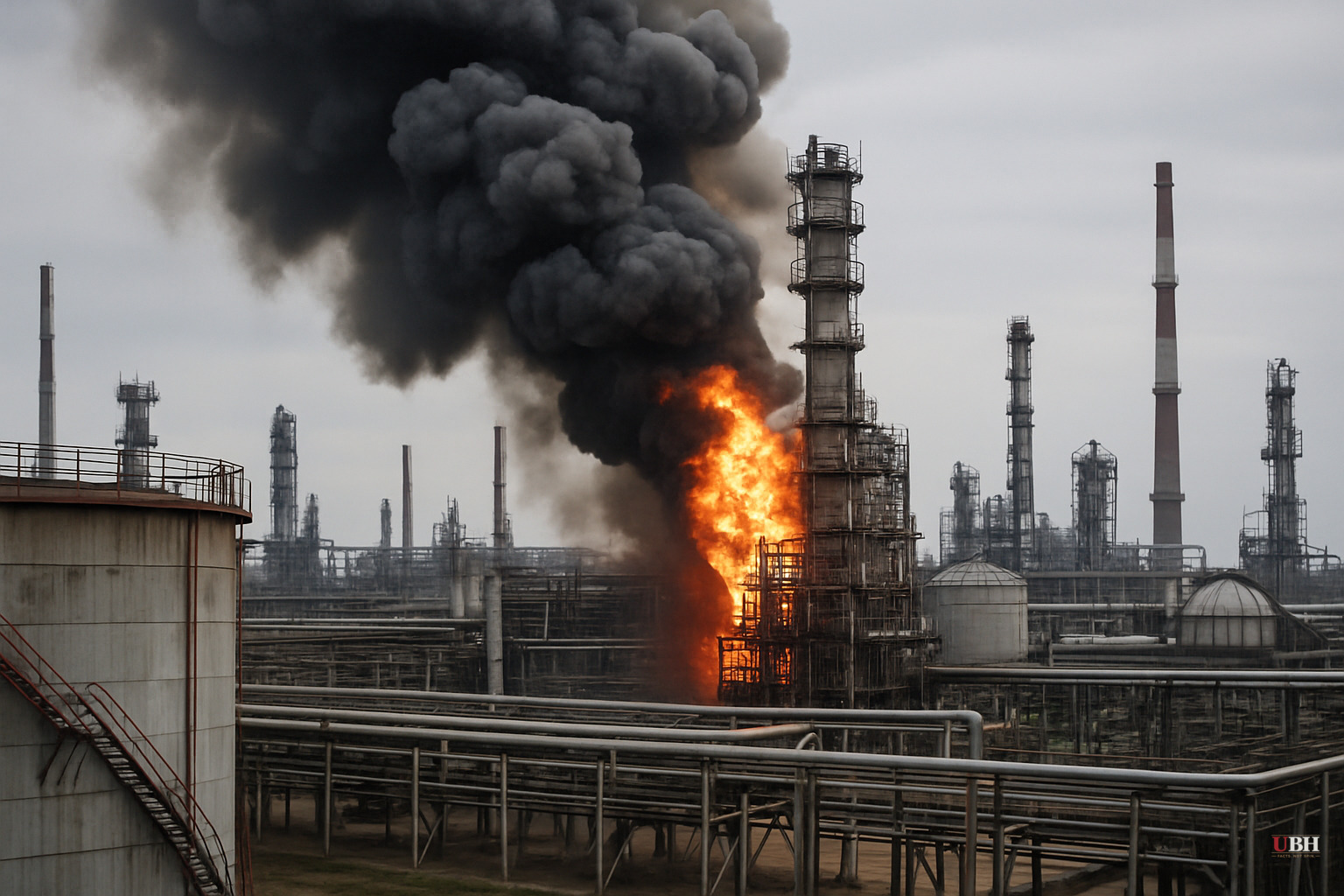
Two developments out of the Ankara summit this week have sharpened the picture of where this war and alliance are actually headed.
Ukraine Hits Omsk. That's Siberia.
On Tuesday, plumes of black smoke rose from a major oil refinery in Omsk, a city nearly 2,500 kilometers from Ukrainian territory and situated close to Russia's border with Kazakhstan. Ukrainian President Volodymyr Zelenskyy declared afterward that his country's upgraded drone capabilities have put Siberia "within reach."
According to Bob Tollast, a research fellow in land warfare at the Royal United Services Institute (RUSI) in London, two deliberate developments made it possible. Ukraine's sustained investment in inertial navigation, software, and machine vision keeps drones on target even when Russian GPS jamming is active. Foreign support also helped Ukraine locate and engage large industrial targets like refineries.
Tollast also flagged Ukraine's domestically produced Flamingo cruise missile, which has been hitting industrial sites including air defense production facilities. "The picture is pretty ugly for Moscow," he told CNBC.
Russia has responded by scaling its own drone production and integrating drones more broadly into its military operations. Tollast is cautious about declaring the refinery campaign a decisive blow. "Ukraine's counter refinery campaign is now a rain of blows, but it might be too early to say if Russia will suffer lasting damage because the sector has long had spare capacity."
The escalation risk is real. Reaching Siberia with a drone strike is a different category of operation than hitting targets in western Russia. Zelenskyy's public declaration that Siberia is "within reach" is a deliberate signal to Moscow, to NATO allies, and to any future ceasefire negotiators.
NATO Is Following the Money — and the Drones
The Omsk strike is not just a battlefield story. It is reshaping NATO's defense investment logic.
Rutte said Tuesday that drones have "fundamentally altered" the character of warfare, according to CNBC. That statement, made at the Ankara summit, reflects a broader recalibration underway inside the alliance. At the summit, Rutte announced the launch of the alliance's so-called NATO Drone Edge initiative, a plan in which allies are slated to invest more than $40 billion in counter-drone capabilities over the next five years.
The practical case for this shift is hard to dispute. Ukraine has demonstrated, at scale and under live fire, that relatively cheap autonomous systems can degrade an adversary's energy infrastructure, suppress air defenses, and reach targets that would previously have required expensive manned strike packages. The Omsk refinery is the latest proof point.
The fair counterargument: NATO's European members have spent decades building interoperable doctrine around conventional combined-arms warfare, and pivoting too fast toward drone-centric spending could leave capability gaps if a near-peer conflict escalates beyond what drones can handle. That tension remains unresolved inside the alliance.
Rutte's Flattery Strategy Is Starting to Crack
In Ankara this week, Rutte sat beside Trump and called him "dear Donald," credited him with generating a "Trump trillion" — his term for the $1.2 trillion in additional defense spending by Canada and European nations across Trump's two terms — and interjected during Trump's criticism of past presidents to say: "You were the first one. It's your win."
Trump replied: "That's why I like him."
The exchange is consistent with Rutte's approach since taking over as NATO Secretary General in late 2024. He is a former Dutch prime minister with nearly 14 years of coalition-building experience, and he has made cultivating Trump a central strategic tool.
But Marion Messmer, program director for international security at Chatham House, told CNBC directly that the strategy has limits. "While Rutte manages to remain in Trump's good books with his mix of flattery and submissiveness, other NATO leaders are increasingly irritated with what they perceive to be tasteless behaviour," Messmer said. She offered a sharper critique: Rutte has not converted his personal access to Trump into measurable benefits for the alliance, and Trump "remains obviously dissatisfied with the military alliance" regardless.
Messmer's concern deserves a fair hearing. At the same summit where Rutte praised Trump effusively, Trump threatened to sever trade ties with NATO member Spain over defense spending shortfalls, reignited his feud with Denmark over Greenland, and expressed sharp dissatisfaction with NATO's response to the U.S.-Iran conflict. The flattery did not stop any of that.
The counterpoint Rutte's defenders would make: the $1.2 trillion spending figure is real. If the price of that outcome was calling Trump a "great leader" and the alliance's "biggest asset," that may be a reasonable diplomatic trade. Not everyone was critical — Latvian President Edgars Rinkēvičs told CNBC that Rutte's "only job is to keep [the] alliance running" and that he does "a great job." The question is whether the relationship holds when Trump demands something the alliance genuinely cannot give.
The Open Question
RUSI's Tollast flagged that Russia's response to the drone campaign — including nets, interceptors, and repositioned air defense systems — has had "limited success" so far. The unresolved question heading into the next phase of the war is whether Russia's spare refinery capacity is large enough to absorb a sustained Flamingo-and-drone campaign, or whether Ukraine's strikes will eventually translate into meaningful revenue loss and battlefield resource constraints for Moscow.
Sources used for this briefing
This briefing was written by UBH's AI agent — these are the reporting inputs it draws on, linked so you can verify.


