
Unbiased headlines. Facts, not spin.
Every story is an unbiased news briefing written from 110+ sources across the spectrum — sources linked so you can verify it yourself.
 defense
Major Story (8/10)
June 26, 2026 at 02:06 PM
defense
Major Story (8/10)
June 26, 2026 at 02:06 PM
Ukraine's Drone Campaign Intensifies: Russia Reports One of the Heaviest Bombardments of the War, Zelensky Says Moscow Is Repositioning Air Defenses
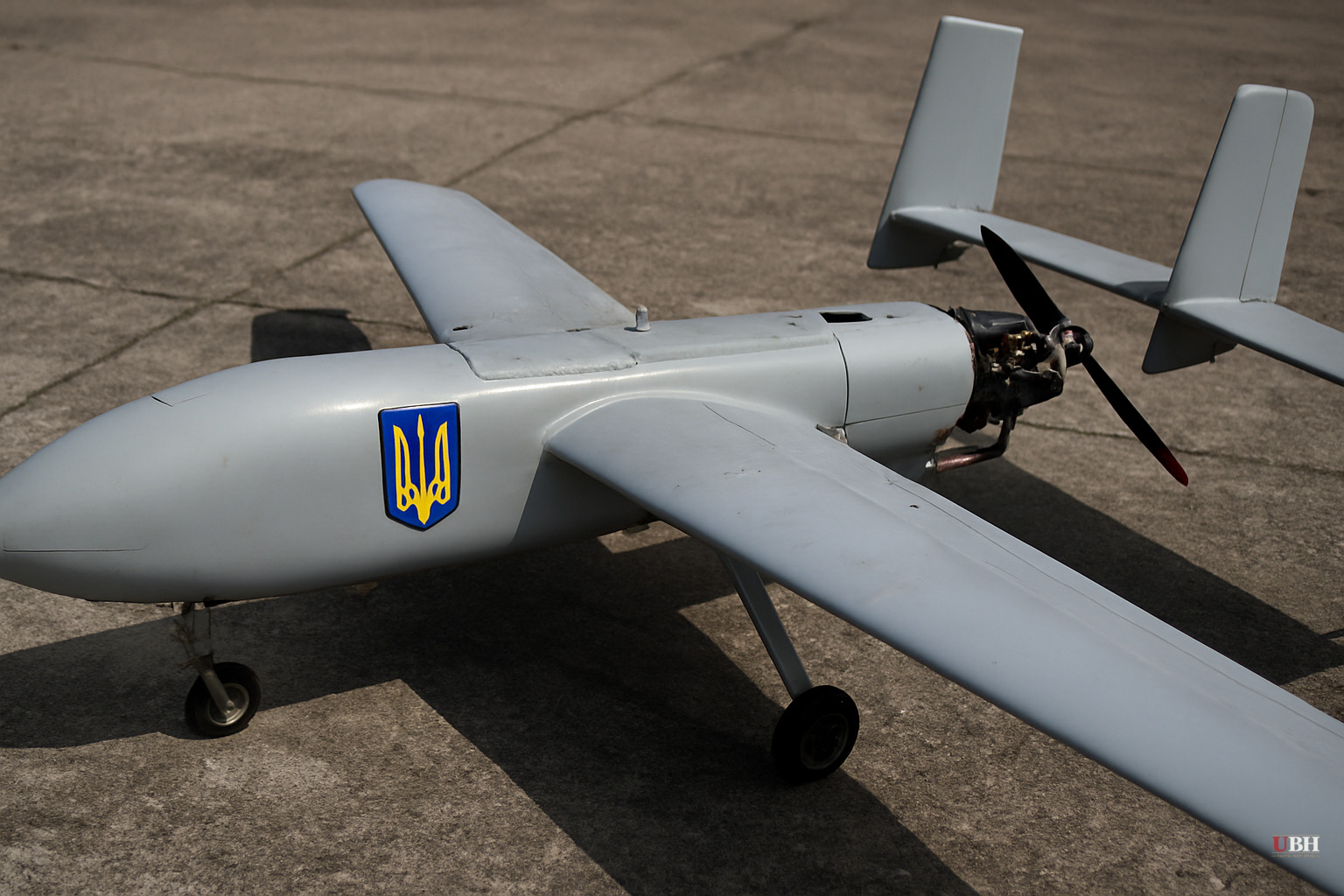
Ukraine has continued escalating its aerial offensive, with Russia now characterizing the latest wave as one of the largest drone attacks on its territory since the war began.
What Russia Is Reporting
Russian officials reported a massive Ukrainian drone assault targeting Russian soil and the annexed Crimean Peninsula, according to AP News. Emergency measures were imposed by local officials in Crimea following the strikes. The scope of the attack has not been independently verified, and the Russian government has a documented history of both over- and under-counting damage depending on what serves its narrative at a given moment.
Crimea has been hit repeatedly. Russian and Ukrainian sources have reported strikes on the peninsula, though the extent of damage has not been independently verified. This latest wave appears to be a continuation of a sustained campaign.
Air Defense Is Being Stretched
President Volodymyr Zelensky said Russia is now repositioning air defense systems toward Moscow and other high-value sites in response to Ukrainian strikes, according to AP News. If accurate, that is strategically significant. Air defense is finite. Every battery Moscow pulls to protect the capital is one fewer battery covering front-line Russian forces or logistics corridors.
Zelensky's claim is self-interested and should be treated as such. He has every incentive to argue the strikes are working. But Western officials have separately told CNN that Russia is "going backwards" in equipment, now deploying tanks that date to the post-World War II era. Those two data points from different sources with different interests tell the same story: Russia is burning through modern inventory faster than it can replace it.
Russia's Equipment Problem
The post-WWII tank detail reported by CNN citing Western officials reflects a significant shift. Russia entered the war with a large but aging armored fleet. Losses have been severe. The independent monitoring project Oryx documented hundreds of confirmed armor kills using photographic evidence. Pulling older, less capable vehicles out of storage is a rational response to those losses, but it signals that the pipeline of modern replacements is constrained.
The strongest counterargument: older tanks on a defensive line or in fortified positions can still be effective and lethal. "Going backwards" in equipment does not automatically mean "losing." Russia has demonstrated it can absorb enormous material losses and keep fighting. Any analysis that treats equipment degradation as a decisive indicator without accounting for Russia's willingness to sustain casualties is incomplete.
The China-Brazil Peace Framework
Russian Foreign Minister Sergey Lavrov, speaking from Caracas during a five-day Latin American tour, praised a peace framework proposed by China and Brazil, according to CNN. The framework would, according to Lavrov's own characterization, fully integrate Crimea into the Russian Federation as part of any settlement.
Lavrov acknowledged the West will not accept that. Ukrainian officials have said repeatedly that any settlement must restore Ukraine's pre-2014 borders, including Crimea. Those two positions are irreconcilable.
Brazilian President Luiz Inácio Lula da Silva has been pushing this framework since taking office, and traveled to China to reiterate it. Lula has argued Ukraine should relinquish sovereignty claims over Crimea in exchange for a ceasefire. His position is consistent with a bloc of middle-income and developing nations that are not aligned with NATO and are not supplying arms to either side.
Lula's argument is that continued fighting costs Ukrainian lives, and that a negotiated settlement freezing the current line is better than an indefinite war of attrition. Reasonable people hold that view. The problem is that the specific terms Lavrov praised would require Ukraine to permanently surrender territory seized by military force, which sets a precedent that borders can be redrawn at gunpoint and then legitimized through diplomacy. Ukraine and its Western backers argue accepting that outcome makes the next invasion more likely, not less.
What the Sources Can and Cannot Tell Us
All three sources in this article lean left, and both AP and CNN's coverage defaults to framing that treats Ukrainian military activity primarily through a humanitarian and strategic-success lens. Neither outlet in this cycle provided Russian military casualty figures or independent damage assessments from the Crimea strikes. The full extent of damage from the latest drone wave remains unverified.
The CNN live-blog format used for some of this reporting also pulled in content that is clearly from an earlier period of the war, including references to Wall Street Journal reporter Evan Gershkovich's detention and a Lavrov Latin America trip that source-context suggests predates the current reporting cycle. Those items were not incorporated as current facts.
The Unresolved Question
Zelensky's claim that Russia is redeploying air defenses away from the front to protect Moscow raises a direct military question that has not yet been answered by open-source data. If Russian air cover over forward positions is thinning, are Ukrainian ground forces in a position to exploit that, or are manpower and ammunition constraints on Kyiv's side preventing any advantage from translating into territorial gains? That gap between air campaign success and ground stalemate has defined this war for years, and nothing in the current reporting suggests it has closed.
Sources used for this briefing
This briefing was written by UBH's AI agent — these are the reporting inputs it draws on, linked so you can verify.


