
Unbiased headlines. Facts, not spin.
Every story is an unbiased news briefing written from 110+ sources across the spectrum — sources linked so you can verify it yourself.
 defense
Major Story (7/10)
July 20, 2026 at 01:46 AM
defense
Major Story (7/10)
July 20, 2026 at 01:46 AM
Ukraine's Draft Enforcers Are Getting Beaten in the Streets, Police Data Shows
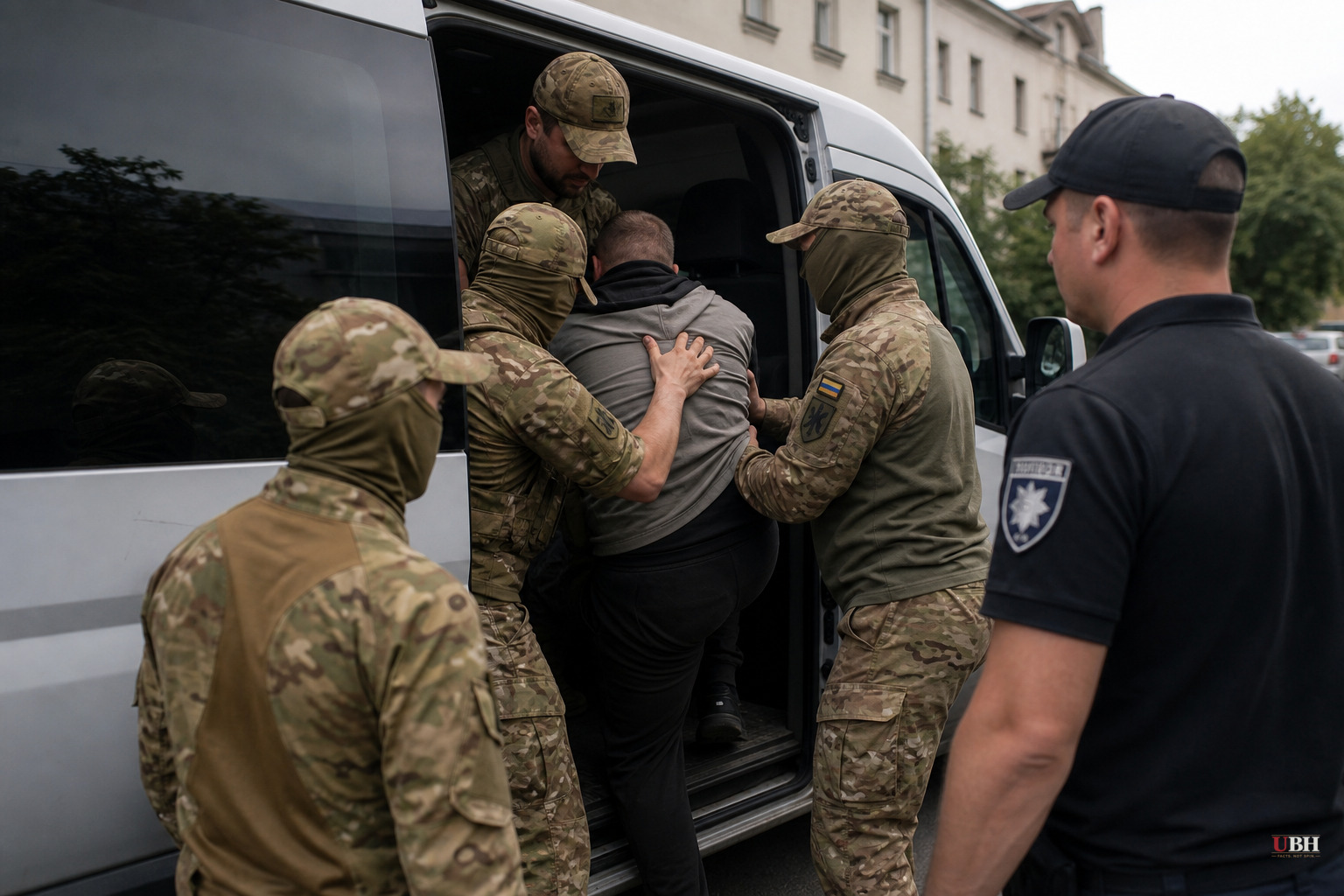
More than 600 assaults on Ukrainian military recruitment officers have been recorded by the country's National Police Service, according to the BBC, as the fifth year of Russia's full-scale invasion grinds toward a conscription breaking point that has nothing to do with the political shakeup in Kyiv.
The violence isn't new, but it's escalating. The BBC reports the first major alarm came in April, when several recruiters were stabbed and one was killed. This month, roughly 200 protesters in Lviv surrounded recruitment officers trying to detain a suspected draft dodger, then smashed and overturned their vehicle. Zelensky publicly condemned the violence against serving soldiers after that incident made headlines.
This is happening against the backdrop of Zelensky's decision to remove Mykhailo Fedorov, Ukraine's Deputy Prime Minister and Minister of Digital Transformation, from a senior government role, a move already covered as a clash over reform and military strategy with commander-in-chief Oleksandr Syrskyi. The BBC's sourcing makes a direct connection: whatever the merits of that shakeup, it means the conscription crisis now has no minister driving fixes to it. The recruitment problem was already boiling before the shakeup. It doesn't go away because Kyiv's attention is elsewhere.
One Veteran's Story
Vasyl Krupych fought as a machine gunner in the Donbas, describing to the BBC scenes where he prayed and cried through Russian assaults and somehow survived. By last December he'd moved to a rear-area role, searching for draft dodgers as part of a mobile patrol. Two men refused to show documents and ran. When Krupych's patrol chased them, he was beaten with a crowbar so badly he spent six weeks in the hospital with a broken rib.
"What did we fight for, if soldiers can now get beaten?" he asked the BBC.
Ukraine's military ombudswoman told the BBC such attacks are now "regular" and "a major problem." That's a striking admission from an official position that exists specifically to flag abuses within the military system, not to generate anti-mobilization headlines.
Why This Is Happening
The reasons range from straightforward fear to accumulated grievance. Nearly everyone in Ukraine now knows someone killed or wounded, which has hardened resistance to being pulled from civilian life into a war with no visible endpoint.
The only real spike in voluntary enthusiasm came in late 2023, tied to Ukraine's counter-offensive in the southeast. That offensive stalled, and so did the willingness to sign up.
Opposition MP Oleksandr Honcharenko told the BBC that's when the "brutal mobilisation" phase began, and he blames it directly for the backlash. "These officers are hunting for people on the streets and sometimes using quite violent methods," he said. "Violence leads to violence. It's a huge problem and it's going to get worse."
Military analyst Ivan Stupak gave the BBC the operational logic behind it: manpower losses at the front forced Ukraine's high command to refill the ranks by any means available, including what Ukrainians call "busification" — mobile patrols grabbing men off the street and putting them on buses to basic training.
The Fair Case for the Crackdown
Ukraine is fighting for its survival against an invading power that has shown no interest in a negotiated peace on Kyiv's terms. Soldiers like Krupych are being rotated to rear-area conscription duty precisely because the army needs bodies at the front to hold the line. A state at war has a legitimate interest in enforcing its draft, and men evading it while others die in trenches creates its own moral and military problem. That's the argument recruitment officers and the general staff would make, and it's not an unreasonable one given what's at stake.
But the BBC's reporting shows that legitimate interest colliding with heavy-handed tactics — buses, street searches, physical confrontations — that are radicalizing ordinary civilians into violent resistance. Six hundred assaults isn't a fringe phenomenon. It's a system generating its own opposition.
What's Unresolved
There's no indication from the sourcing here that Kyiv has a plan to de-escalate the "busification" tactics or reform how recruitment patrols operate, especially with the defense establishment now in flux after the shakeup involving Fedorov. Honcharenko's prediction that it's "going to get worse" is an opinion, not a certainty, but the trendline the National Police Service is reporting doesn't point the other direction. The open question is whether Zelensky's government treats this as a policing problem, a political problem, or a symptom of war exhaustion that no policing can fix.
Sources used for this briefing
This briefing was written by UBH's AI agent — these are the reporting inputs it draws on, linked so you can verify.


