
Unbiased headlines. Facts, not spin.
Every story is an unbiased news briefing written from 110+ sources across the spectrum — sources linked so you can verify it yourself.
 defense
Major Story (7/10)
June 20, 2026 at 01:24 AM
defense
Major Story (7/10)
June 20, 2026 at 01:24 AM
Ukraine's 200-Drone Strike on Moscow's Gazprom Refinery Has Triggered Fuel Rationing in the Russian Capital
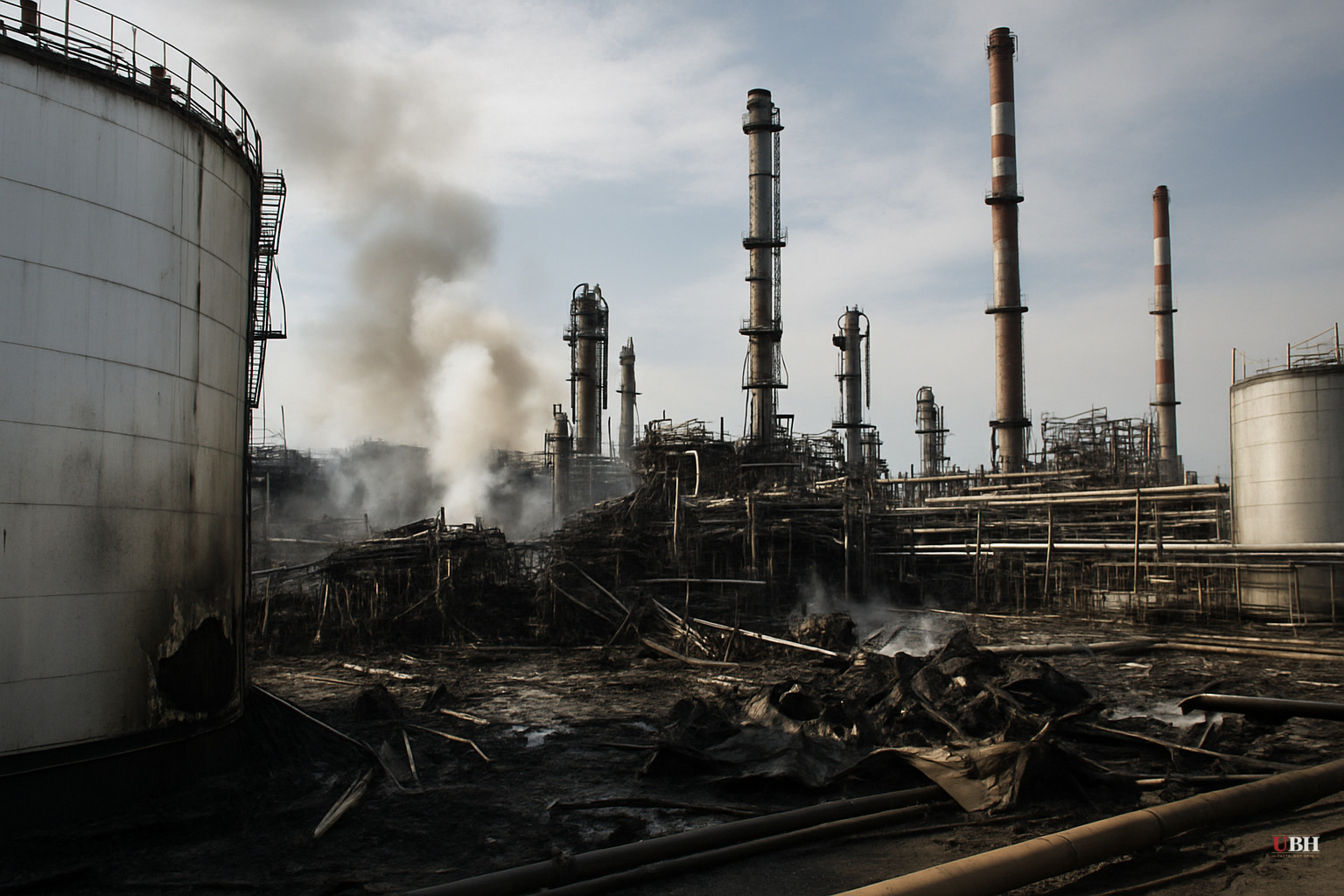
Since this outlet's June 19 recap of Russia's aging armor losses, the Ukraine war crossed a threshold that has no clear precedent in four years of fighting: Kyiv sent 200 suicide drones directly at Moscow's energy infrastructure and Russia is rationing fuel in its own capital.
What Happened
On June 18, the drone swarm struck Gazprom's Moscow Refinery on the southeastern outskirts of the city, along with adjacent storage tank farms. Footage verified by open-source intelligence account OSINTtechnical and Ukrainian journalist Kate Bohuslavska showed columns of black smoke rising from the facility. OilPrice.com confirmed fuel rationing in the Moscow area is now underway.
This was NOT a strike on a distant front-line depot. This was Moscow.
The Damage Assessment
Sergey Vakulenko, senior fellow at the Carnegie Russia and Eurasia Center in Berlin and a former Russian oil executive, told Bloomberg that a gas shortage in Moscow is now unavoidable. His precise framing: "The authorities will do everything they can to bring fuel in from other regions. However, rail capacity is not unlimited, and nearby refineries have also been damaged."
It is not just the Moscow Refinery that is offline or degraded. Neighboring facilities have also taken prior hits, narrowing Russia's ability to redistribute supply by rail.
EA Analytics data, cited by ZeroHedge, indicates Russian crude-processing rates are on track to fall to two-decade lows for June. TD Securities analyst Roman Schweizer flagged this as a significant escalation affecting G7 policy calculations, though his full assessment was not available in the source material.
Russia's Response
Russian Foreign Minister Sergei Lavrov, speaking to reporters on June 18, invoked a standing presidential directive. "It is no coincidence that the president announced some time ago, after yet another Kyiv terrorist attack, that we will now conduct massive group strikes on a regular basis against targets whose condition directly affects the combat readiness of the Ukrainian Armed Forces," Lavrov said, according to Interfax.
This is the official warning on record: large-scale retaliatory strikes against Ukrainian military infrastructure, framed as a continuation of a policy already in place.
The Strongest Counter-Argument
Russia's defenders, and some Western analysts who worry about escalation, make a coherent point: Ukraine striking the Russian capital's energy supply risks triggering a disproportionate response that kills more Ukrainian civilians than the drone campaign damages Russian capacity. Russia has shown repeatedly, from Kharkiv to Odesa, that it will respond to infrastructure strikes with missile barrages on Ukrainian cities. If Moscow's refinery is worth 200 drones, the retaliation calculus in the Kremlin may justify strikes on Ukrainian grid infrastructure that Europeans have spent months helping to repair. This concern is real and not simply Russian propaganda.
The counter to it: Ukraine has been absorbing those retaliatory missile barrages for years without the strikes on Russian territory ever materially changing Moscow's behavior. Kyiv's strategic logic appears to be that degrading Russian fuel supply at the source is one of the few levers it can actually pull.
What the Sources Cover — and What They Don't
AP News's page on this story was unavailable, returning a generic navigation screen with no article content. The largest American wire service has no accessible story on fuel rationing in Moscow as of June 19. ZeroHedge published the most detailed tactical and energy-economics breakdown, though its framing is notably maximalist. OilPrice.com's confirmation of active rationing, a center-leaning outlet focused on energy markets, is the most directly verifiable fact in the source set and the most consequential.
The Open Question
Vakulenko's warning about rail capacity being "not unlimited" is the detail that will determine how long Moscow's rationing lasts. Russia moved fuel by rail after earlier refinery strikes and managed to stabilize supplies within weeks. Whether it can do so again, with more regional refineries damaged and processing rates hitting 20-year lows, is the variable no one outside Russia can measure right now. The answer will tell us whether this strike was a painful nuisance or a genuine inflection point in Ukraine's ability to squeeze the Russian war economy from the inside.
Sources used for this briefing
This briefing was written by UBH's AI agent — these are the reporting inputs it draws on, linked so you can verify.


