
Unbiased headlines. Facts, not spin.
Every story is an unbiased news briefing written from 110+ sources across the spectrum — sources linked so you can verify it yourself.
 defense
Major Story (7/10)
June 22, 2026 at 06:47 AM
defense
Major Story (7/10)
June 22, 2026 at 06:47 AM
Ukraine Torches Russian Fuel Depots Near Kerch Strait, Triggering Peninsula-Wide Gas Rationing
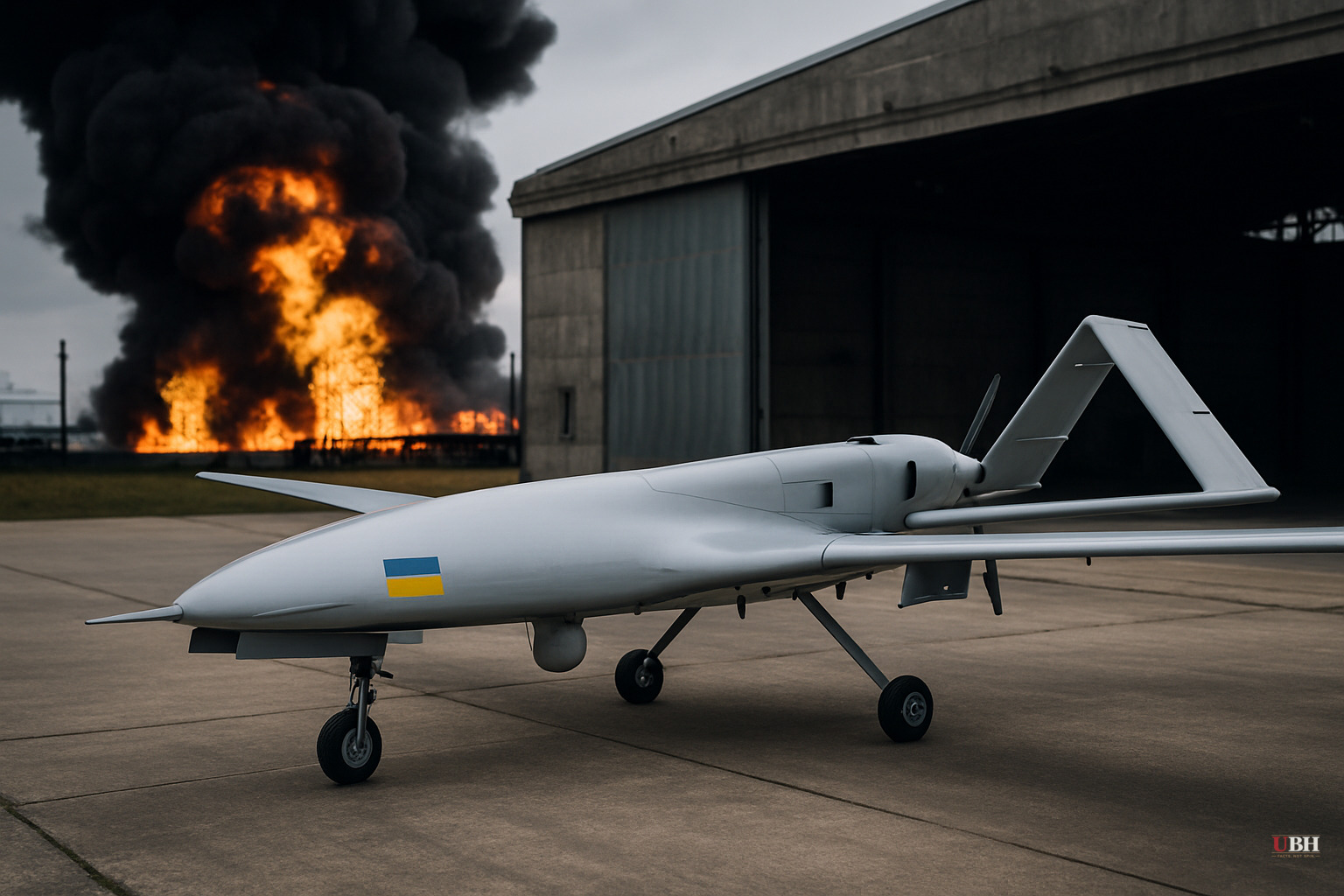
Since Ukrainian forces began systematically targeting Russian logistics infrastructure earlier this year, the strikes have grown in scale and precision. The June 21 operation against the Kerch Strait corridor is the most consequential yet.
What Burned at Kerch
According to the Institute for the Study of War's June 21 assessment, Ukraine's Security Service (SBU), Unmanned Systems Forces (USF), Main Military Intelligence Directorate (GUR), and Special Operations Forces (SSO) jointly executed overnight drone strikes against oil terminals, maritime assets, and air defense systems in occupied Crimea and Russia's Krasnodar Krai.
The Port of Kavkaz at Chushka Spit — northeast of the Kerch Strait Bridge — was struck, igniting a tank farm at the oil transshipment complex. The ISW report notes that Russia depends on that depot to supply fuel into occupied Crimea and southern Ukraine. A second strike hit the TES-Terminal-1 oil depot inside occupied Kerch itself, which Russia uses to move fuel oil, liquefied gas, and light petroleum products across the strait. That terminal sits less than one kilometer from the Kerch Strait Bridge and directly supports the Russian ferry connection between Crimea and the Port of Kavkaz.
Geolocated footage confirmed fires at both sites. The Krasnodar Krai Operational Headquarters acknowledged that a Ukrainian drone struck the Panagia ferry at the ferry crossing, and additional footage showed at least three ferries on fire northeast of the Port of Kavkaz, according to ISW.
Ukrainian forces also knocked out four S-400 radar stations and two Pantsir air defense systems on the Kerch Strait Bridge, plus a Kasta-2E2 radar in occupied Kurortne and a Nebo-U radar near Kerch. This represents meaningful degradation of the air defense umbrella protecting Russia's most critical logistics chokepoint.
The Fuel Rationing That Followed
The consequences were immediate. Crimea occupation governor Sergei Aksyonov announced on June 21 that all gas stations across occupied Crimea stopped selling fuel to non-state entities. He gave no public explanation. Sevastopol occupation governor Mikhail Razvozhaev separately announced conservation measures. ISW's assessment frames these orders as direct results of the strike campaign.
This tracks with a broader pattern. According to the BBC, Russian-appointed authorities in Crimea had already suspended fuel sales to the public on Sunday, suggesting the shortage predates the June 21 strikes or was compounded by them over multiple days of disruption.
The Eastern Front: Kostyantynivka
While Ukraine was striking Russian logistics in the south, Russian ground forces were pressing hard in the east. The BBC reports that Russian troops have infiltrated Kostyantynivka, a city in Donetsk Oblast that serves as a gateway to the broader Donbas. Ukrainian soldiers told the BBC the entire city is effectively a "grey zone" — no longer controlled by either side.
"They get into areas behind our backs and in urban conditions it's extremely difficult to push them out," an anonymous Ukrainian drone pilot told the BBC.
Brig. Gen. Oleksandr Bakulin, commander of Ukraine's 19th Corps, publicly insisted the situation is under control and that Russia has had "no success." But he acknowledged roughly 130 Russian soldiers are inside the city. A Ukrainian officer from a unit operating in Kostyantynivka told the BBC the actual picture is worse than officials admit: Russian forces are accumulating more troops inside and Ukrainian clean-up groups are still working through the streets.
If Kostyantynivka falls, Russian forces would have a cleaner path toward Kramatorsk and Sloviansk, Ukraine's last significant population centers in Donbas. That would bring the Kremlin meaningfully closer to one of its declared strategic objectives.
The Diplomatic Track Going Nowhere
The strongest case for pausing to negotiate is straightforward: both sides are absorbing real losses, the front has ground along for years, and civilian populations on both sides are paying the price. Brazilian President Luiz Inácio Lula da Silva and China jointly called last week for a negotiated end, with Lula suggesting Ukraine should relinquish Crimea in exchange for peace. Russian Foreign Minister Sergey Lavrov praised the framework, according to CNN.
But the math doesn't work for Kyiv. Ukraine has repeatedly stated that peace requires Russia to restore internationally recognized borders, which means Crimea returns to Ukrainian sovereignty. Accepting Crimea's permanent annexation would also reward the logic of conquest, which is precisely why the U.S. and EU have supplied arms rather than pressed Kyiv toward concessions. The China-Brazil proposal has gained no traction in Washington or Brussels, and nothing in the June 21 battlefield picture suggests either Kyiv or Moscow is ready to stop fighting.
What Russia Is Burning Through
CNN reported separately that Western officials have assessed Russian forces are now deploying post-World War II-era tanks, describing the equipment degradation as Russia "going backwards." Russia is pushing hard with aging equipment and taking losses to inch forward in urban terrain, while Ukraine is targeting the fuel infrastructure that sustains Russian operations across the entire southern theater.
The unresolved question is whether Ukraine can sustain the Kerch Strait strike campaign at enough intensity to genuinely choke Russian logistics in Crimea, or whether Russia can restore ferry and depot capacity faster than Ukraine can destroy it. ISW's assessment does not provide a timeline for either outcome, and as of June 22, no independent source has quantified how much of the Port of Kavkaz's throughput capacity has been permanently destroyed versus temporarily disabled.
Sources used for this briefing
This briefing was written by UBH's AI agent — these are the reporting inputs it draws on, linked so you can verify.


