
Unbiased headlines. Facts, not spin.
Every story is an unbiased news briefing written from 110+ sources across the spectrum — sources linked so you can verify it yourself.
 defense
Major Story (7/10)
June 30, 2026 at 01:58 PM
defense
Major Story (7/10)
June 30, 2026 at 01:58 PM
Ukraine Strikes Moscow Twice in Eight Days, Killing an Infant. Putin Calls It Terrorism.
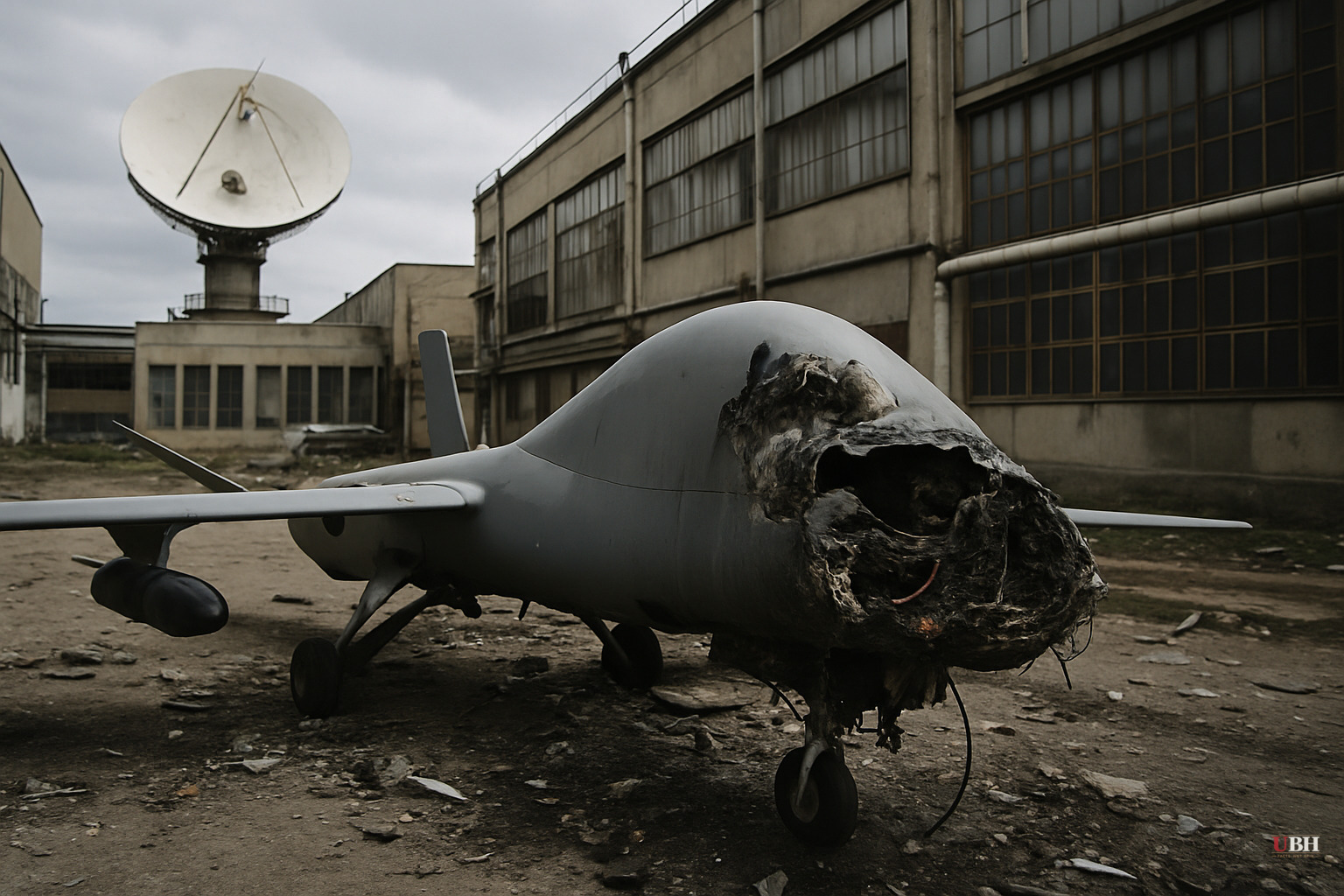
Since Ukraine announced its 40-day compellence campaign last week, Kyiv has now hit the Moscow region twice — and the second strike drew blood.
A drone crashed into a residential home in Yegoryevsk, southeast of Moscow, early Tuesday, trapping people under rubble. Moscow region Governor Andrey Vorobyov confirmed on his Telegram channel that rescue workers pulled out two adults and two children, but a six-month-old infant died on the way to hospital.
Kremlin spokesman Dmitry Peskov responded Tuesday, telling journalists that "civilians are suffering, children are dying" — framing the attacks as Ukrainian terrorism against Russian noncombatants.
What Ukraine Says It Hit
President Volodymyr Zelensky said Ukraine struck the Dubna Satellite Communications Centre, located roughly 500 kilometers north of the Ukrainian border. According to Zelensky, the facility is used for intelligence gathering and coordination of Russian armed forces operating in Ukraine.
Russia has NOT confirmed the communications center was struck. Vorobyov acknowledged only that a drone hit an "administrative building" in Dubna, with no reported casualties at that site.
This was the second hit on the Dubna center in nine days. The Ukrainian military claimed a strike on the same facility on June 22. Russian state agency TASS reported that attack involved a "massive drone attack" but said communications and television broadcasts were unaffected and no staff were injured.
The Scale of the Attack
Moscow Mayor Sergey Sobyanin posted 11 separate Telegram updates over roughly two hours starting around 4:00 a.m. on June 30, reporting drones intercepted in waves. He confirmed emergency services were working sites where debris fell.
Rosaviatsiya, Russia's Federal Air Transport Agency, imposed temporary flight restrictions on arrivals and departures at Domodedovo and Zhukovsky airports as of 7:00 a.m.
Sobyanin said air defenses downed more than 60 drones over Moscow. The Russian Ministry of Defense claimed 419 drones were intercepted or destroyed nationwide. Ukrainian Telegram channel Exilenova+ posted video of drones flying over the city and reported explosions and a fire in Yegoryevsk, plus "two strikes" in Dubna.
Russian authorities did NOT disclose how many drones reached their targets.
Dubna's Strategic Value
The town of Dubna hosts two significant defense-industrial facilities: the Kronshtadt plant, which manufactures drones, and the State Machine Building Design Bureau Raduga, part of the Tactical Missile Armament Corporation. Raduga produces the Kh-101, Kh-555, Kh-69, and Kh-59MK cruise missiles Russia has used against Ukrainian civilian infrastructure. Both facilities have been targeted in prior drone attacks, according to Ukrainian outlet Ukrainska Pravda.
Putin's Position
Two days before the strikes, on June 28, Putin addressed the United Russia Party Congress — where the party formally claimed the title of "the president's party" for the first time since 2007. Putin insisted Ukraine is "retreating along the entire frontline" and that Russia has the resources and will to win militarily. He did NOT explicitly mention the drone campaign against Russian territory or the fuel shortages currently affecting Russians across the country.
The Institute for the Study of War assessed in its June 28 campaign review that Putin's speech was an attempt to project inevitability of Russian victory at a moment when Russia's battlefield performance has been declining through 2026. ISW analysts described the Kremlin's framing as rhetorical pressure aimed at convincing Ukraine and the West to concede before any military conclusion is actually reached.
The Strongest Counterargument
Critics of Ukraine's deep-strike campaign — including some European officials and peace advocates — argue that targeting infrastructure near Moscow, particularly with drone technology that cannot guarantee precision in residential areas, is producing civilian casualties that undermine Ukraine's legal and moral standing. A dead infant is not a combatant. The Yegoryevsk strike hit a home, not a military facility. If Kyiv is going to hold Russia accountable for attacking Ukrainian civilians, those critics argue, it cannot conduct operations with foreseeable civilian spillover and call it purely legitimate military action.
That concern is real and not automatically bad faith. It exists in a context: Russia has launched hundreds of drone and missile attacks against Ukrainian cities since 2022, killing thousands of civilians. Ukraine's drone campaign is targeting defense-industrial nodes and military coordination infrastructure — and the Dubna communications center, if accurately described by Zelensky, is a legitimate military objective under the laws of armed conflict. Civilian harm from debris or missed drones is legally and morally distinguishable from deliberate attacks on apartment buildings, though both produce dead children.
The Diplomatic Track
Russian Foreign Minister Sergey Lavrov, currently on a Latin America trip that includes stops in Venezuela, Cuba, Nicaragua, and Brazil, praised a China-Brazil framework for ending the conflict — one that would integrate Crimea into Russia permanently. Lavrov acknowledged the West won't accept those terms. Ukraine has stated consistently that any peace requires restoration of its 1991 borders, including Crimea. Brazilian President Luiz Inácio Lula da Silva has suggested Ukraine should relinquish Crimea in exchange for a ceasefire.
Those positions are still far apart. Neither side is at the table.
As of June 30, it remains unclear whether Zelensky's 40-day compellence campaign produces any movement toward negotiations, or whether Russia absorbs the strikes, adjusts its air defenses, and continues grinding forward on the frontlines while the civilian toll on both sides keeps climbing.
Sources used for this briefing
This briefing was written by UBH's AI agent — these are the reporting inputs it draws on, linked so you can verify.


