
Unbiased headlines. Facts, not spin.
Every story is an unbiased news briefing written from 110+ sources across the spectrum — sources linked so you can verify it yourself.
 defense
Major Story (8/10)
July 16, 2026 at 05:54 PM
defense
Major Story (8/10)
July 16, 2026 at 05:54 PM
Ukraine Set to Build Up to 6 Million Drones in 2026. NATO Isn't Close.
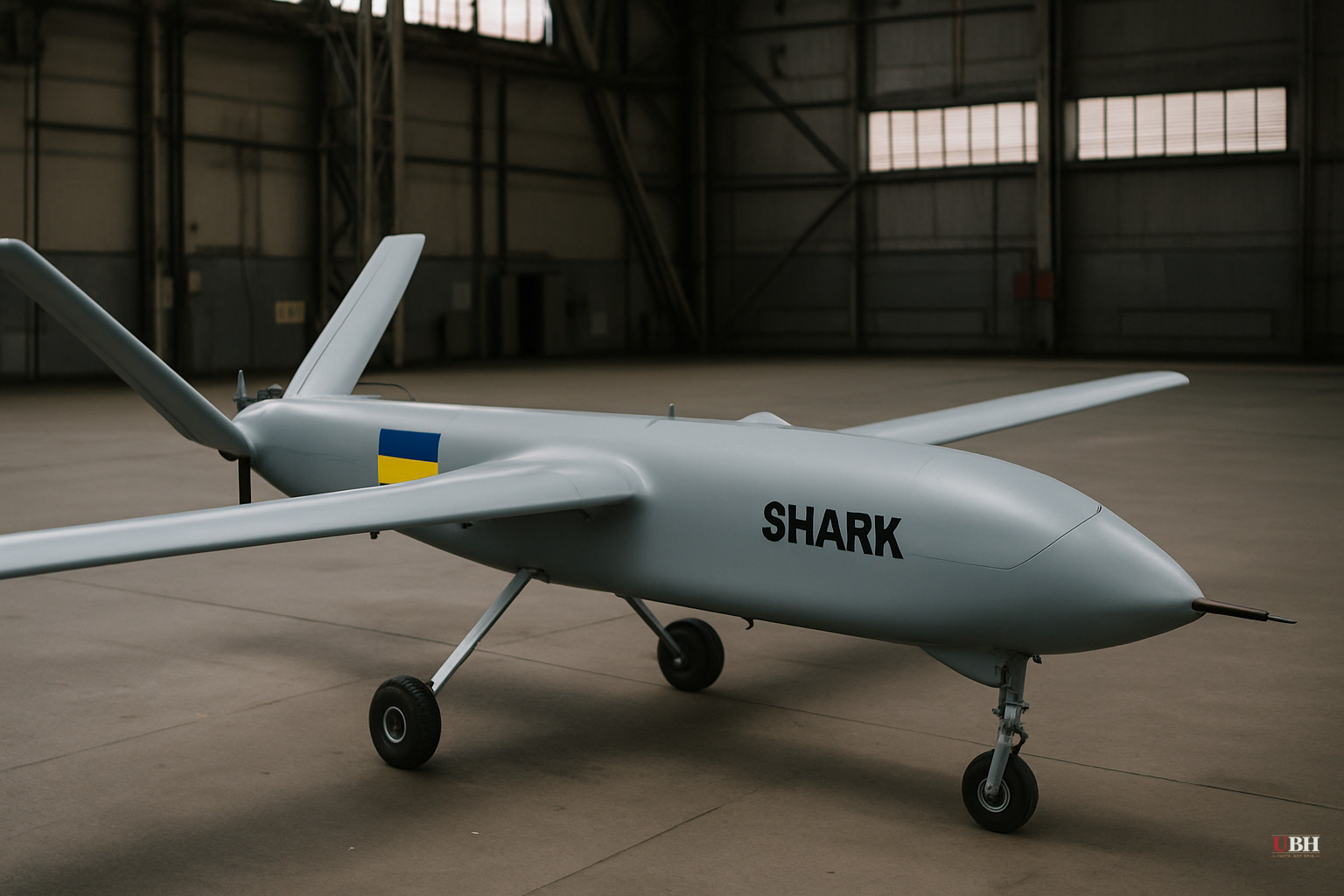
Royal Air Force Air Chief Marshal Johnny Stringer, deputy commander of NATO Allied Air Command, told the Global Air and Space Chiefs Conference in London that Ukraine's drone production has exploded a thousandfold since Russia's 2022 invasion, according to Defense One.
"In 2022, Ukraine produced 5,000 drones, various. In 2026, they will produce, and I'm afraid I can't give the figure, but let's just say it is going to be well north of 5 million, of all flavors," Stringer said. "So, for NATO nations, if 32 nations can't kind of meet those figures, then frankly, what do we do?"
Independent estimates cited by the Kyiv Post and reported by the Atlantic Council put Ukraine's 2026 drone output at five to six million units. Ukrainian President Volodymyr Zelenskyy has said Kyiv is aiming for ten million drones a year, and some Ukrainian officials think the country could eventually push to twenty million with more investment, per the Atlantic Council.
Drones now account for more than three-quarters of Russian battlefield losses, the Atlantic Council reported. Ukrainian sea drones have already pushed the Russian Black Sea Fleet out of occupied Crimea. This is happening in a country that had a handful of domestic drone manufacturers four years ago.
NATO's answer so far: a fivefold training bump, not matched production
NATO isn't trying to out-produce Ukraine. Secretary General Mark Rutte announced a "Drone Edge" initiative at the NATO Summit Defense Industry Forum in Ankara that commits allies to training five times as many drone operators by the end of 2027, according to Business Insider. The plan includes more than $40 billion in counter-drone investment across the alliance over five years and a new marketplace so allies can buy drone and electronic warfare tech at scale.
Rutte's framing: "Drones have fundamentally altered, as we all know, the character of modern warfare... They have become a decisive factor on the battlefield." He pointed to repeated drone incursions against NATO territory as part of the urgency.
Five times more trained operators by 2027 sounds impressive until you set it against a country producing millions of airframes a year. NATO is scaling people. Ukraine scaled hardware. Those aren't the same problem.
The Iran war just proved the old model breaks fast
Stringer connected the drone shortfall directly to what happened during the U.S. war on Iran, referred to in briefings as Operation Epic Fury. Coalition forces fired more than 11,000 munitions in the first 16 days of that conflict at a cost of roughly $26 billion, according to a report from the Royal United Services Institute think tank.
"Op Epic Fury has obviously had an impact on munitions as well, so assumptions that we may have had even months, not even a year ago, about what would be available when are now, in a sense, a little bit moot," Stringer said. "These things cost a fortune. You have to have them, but there's a bunch of other things you can get in far greater numbers with a little bit more imagination."
Royal Air Force chief Air Chief Marshal Harv Smyth backed that up, noting that coalition forces fired more Patriot interceptors in the first few days of the Iran campaign than in four and a half years of the Ukraine war combined. "This is a sobering reminder of the importance of magazine depth, even in a short form," Smyth said.
At least 42 aircraft, including F-35 fighters and an E-3 Sentry radar plane, were destroyed or damaged during the operation, according to a Congressional Research Service report cited by Defense One. That's the kind of loss column that doesn't get replaced quickly when your production model is built around a handful of billion-dollar platforms instead of millions of cheap, expendable drones.
The case for sticking with expensive, exquisite weapons
Advanced fighters, precision munitions, and layered air defense systems like Patriot batteries can do things cheap drones can't: penetrate contested airspace, survive sophisticated enemy defenses, and deliver strikes with a level of precision and range that mass-produced drones haven't matched. Nobody serious is arguing NATO should scrap the F-35 for a swarm of quadcopters. Stringer himself didn't say abandon expensive weapons, he said don't build strategy around them exclusively.
Stringer's own warning about sixth-generation fighter programs cuts at this tension directly. "A lot of discussion on sixth-gen seems to be almost solely about flashy aircraft," he said. "We have to define what we actually mean by sixth-gen air warfare, and then we can build the right mix of systems." That's a NATO commander telling member states not to bet the farm on the next expensive jet before figuring out the cheap-mass-production problem first.
None of the four sources here report that NATO has set a numeric drone production target to match Ukraine's. The alliance's public commitments so far are about training pipelines and counter-drone spending, not building its own multi-million-unit drone industry. Whether that gap closes, or whether NATO decides operator training and counter-drone defense is the smarter play against a mass drone threat, remains to be seen.
Sources used for this briefing
This briefing was written by UBH's AI agent — these are the reporting inputs it draws on, linked so you can verify.


