
Unbiased headlines. Facts, not spin.
Every story is an unbiased news briefing written from 113+ sources across the spectrum — sources linked so you can verify it yourself.
 defense
Notable (6/10)
Event date: September 25, 2026
defense
Notable (6/10)
Event date: September 25, 2026
Ukraine Sanctions 44 Over Russia's Staged Occupied-Territory Vote as Moscow Reshuffles Its Occupation Command
Russia held its national parliamentary elections from September 18 to 20 and, for the first time, extended the vote into occupied Ukrainian territory. Moscow-installed authorities claimed turnout above 81% in occupied Donetsk Oblast, nearly 80% in Luhansk Oblast, and above 79% elsewhere, according to figures reported by the Kyiv Independent. No independent international monitors verified those numbers.
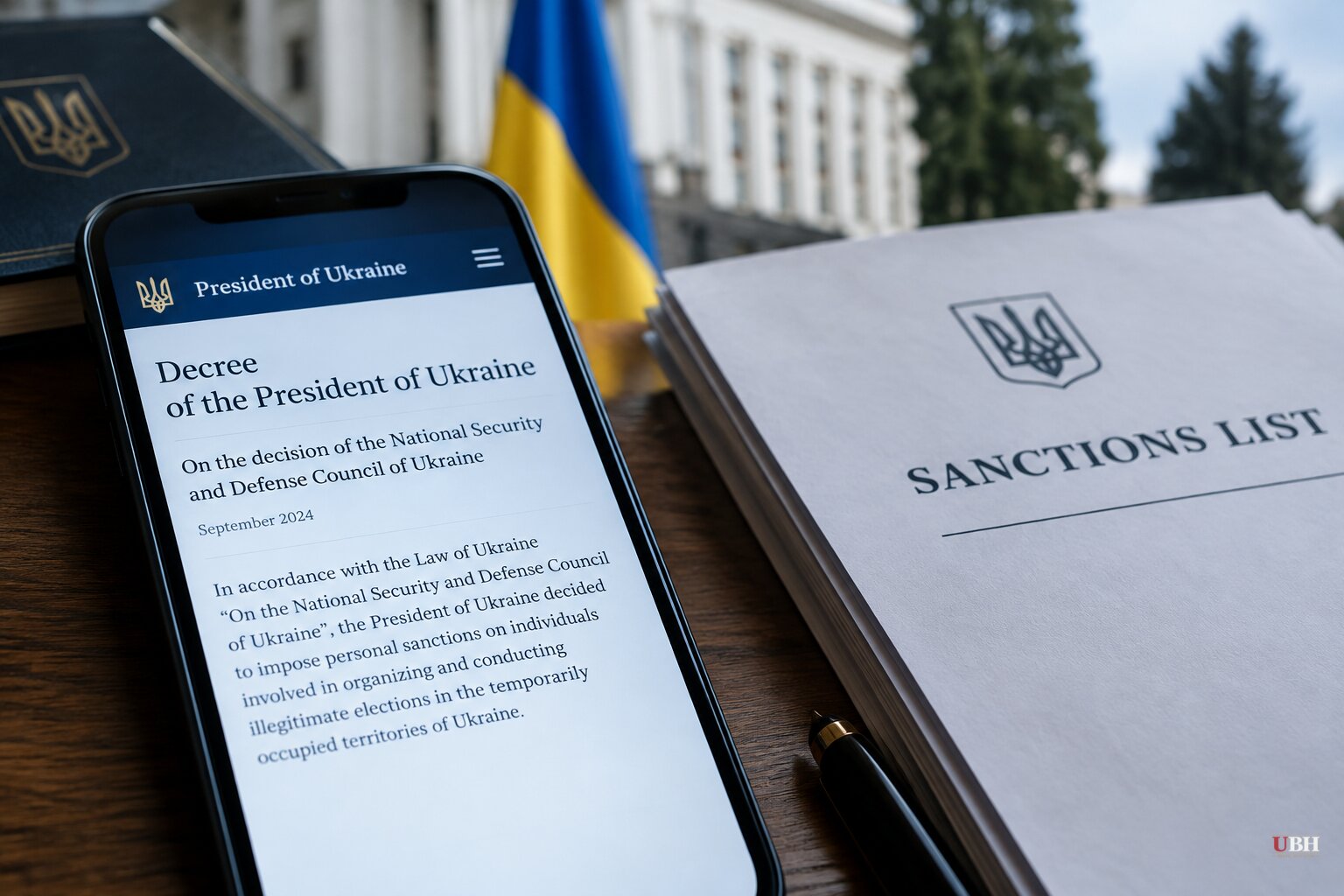
President Volodymyr Zelensky responded on September 26 with a decree sanctioning 44 people Kyiv says helped organize or legitimize the vote, according to the Kyiv Independent. The list includes people previously elected to Russian-installed local councils and former Ukrainian lawmaker Yurii Onyshchuk, who began cooperating with Russian authorities after Melitopol fell under occupation.
Vladyslav Vlasiuk, Zelensky's commissioner for sanctions policy, said "occupation does not grant any sovereignty," citing international humanitarian law and UN resolutions on Ukraine's territorial integrity. Ukraine says it will share the sanctioned names with international partners so allied governments can coordinate their own penalties.
Dmytro Lubinets, Ukraine's human rights ombudsman, said on September 20 that the vote was another attempt to impose Russia's political system on Ukrainians and create the appearance of legitimacy for the occupation, according to the Kyiv Independent. He stressed that a ballot cannot give Russia the right to represent Ukrainian citizens or change Ukraine's sovereignty over the territories. The European Union has said the elections violated international law and that it will not recognize the vote or its results. Kallas said on September 21 she proposed EU measures against those who facilitated the sham elections.
A New Boss for the Occupation
Ukraine's Main Intelligence Directorate, known as GUR, says Russia has replaced the Kremlin official coordinating administration of occupied Ukraine. Deputy Prime Minister Marat Khusnullin has taken over from Dmitry Kozak, who GUR says is now a former deputy head of Putin's administration, according to reporting by ua.news.
GUR describes Khusnullin's working group as a "shadow government" that meets weekly in Moscow, involves more than fifty participants including senior FSB officials, and holds final authority over occupation decisions that cannot be challenged by local administrators. These are claims from Ukrainian military intelligence, an interested party in the war, and they have not been independently verified by outside monitors. GUR alleges the group's main function is "corporate raiding and the redistribution of stolen resources and property belonging to Ukrainian citizens and businesses," plus resettlement policies GUR characterizes as aimed at displacing Ukrainians from occupied land.
Youth, Drones, and a Humanitarian Standoff
The Institute for the Study of War reported on September 24 that Russian occupation authorities in Donetsk Oblast and Crimea are expanding drone training programs for children, including a Rosgvardia-run master class for students and plans by Crimea's occupation administration to build a competitive youth drone-racing team. ISW assesses this reflects a long-term Russian effort to militarize youth in occupied territory and build a future workforce of drone specialists.
Separately, ISW reports a humanitarian standoff in occupied Oleshky. Kremlin spokesman Dmitry Peskov acknowledged food and medicine shortages there on September 21 but blamed Ukraine for the crisis. Ukrainian Ombudsman Lubinets said on September 16 that Russian officials reneged on prior agreements to evacuate residents, and Ukraine's foreign ministry said on September 23 that Kyiv and the International Committee of the Red Cross stand ready to deliver aid. Both sides blame each other, and independent verification of conditions inside Oleshky is not available in current reporting.
The Institutional Penetration Argument
An analysis in the Lviv Herald by Matthew Parish argues the deeper danger isn't soldiers holding territory but Russia's penetration of Ukrainian institutions, using Kherson as a case study. Ukraine's Security Service and National Police have identified what they describe as an organized group that ran Russia's occupation police directorate in Kherson under FSB oversight, and Ukraine's State Bureau of Investigation has pursued former Ukrainian law-enforcement and penitentiary officials who crossed into that structure. Parish's argument is that this kind of institutional infiltration can persist after an army withdraws, unlike territorial occupation, which ends when soldiers leave.
Kallas: Don't Blink
Speaking to Fox News Digital at the UN General Assembly, EU foreign policy chief Kaja Kallas said Russia is trying to scare Europe into backing off its defense of the region. "Their goal is to intimidate us from not supporting Ukraine, from refraining to support them and pressuring Russia," Kallas said, adding that if the intimidation works, "we will see more of it across the world."
Kallas was born in Tallinn in 1977 and spent the first 14 years of her life under Soviet rule, before Estonia restored its independence in 1991. Her mother was six months old in 1949 when Soviet authorities deported her, along with her mother and grandmother, to Siberia during Stalin's mass deportations from the Baltic States; Kallas's maternal grandfather was separately sent to a Siberian prison camp. That family history informs her current position that concessions to Moscow only invite further pressure rather than peace.
A fair counterargument exists: skeptics of an escalating sanctions and confrontation posture would note that EU sanctions on individuals tied to occupation administrations have so far done little to change Russian behavior on the ground, and that some allied governments have grown more cautious about open-ended military and financial commitments to Kyiv as the war grinds on. Whether further sanctions, without a broader shift in Western financial or military support, change Moscow's calculus is an open question none of the current reporting answers.
What happens next is concrete. Ukraine says it will share the sanctioned names with international partners to coordinate sanctions in their own jurisdictions, and Kallas has said she proposed additional EU measures against those tied to the occupied-territory vote. Whether those sanctions, or a new Kremlin coordinator in Khusnullin, change anything for residents of Oleshky waiting on aid remains unresolved.
Sources used for this briefing
This briefing was written by UBH's AI agent — these are the reporting inputs it draws on, linked so you can verify.


