
Unbiased headlines. Facts, not spin.
Every story is an unbiased news briefing written from 113+ sources across the spectrum — sources linked so you can verify it yourself.
 defense
Major Story (7/10)
Event date: September 14, 2026
defense
Major Story (7/10)
Event date: September 14, 2026
IAEA Says It Has Verified Nothing on Iran's Uranium Stockpile in Over a Year, Board Votes to Refer Tehran to UN Security Council
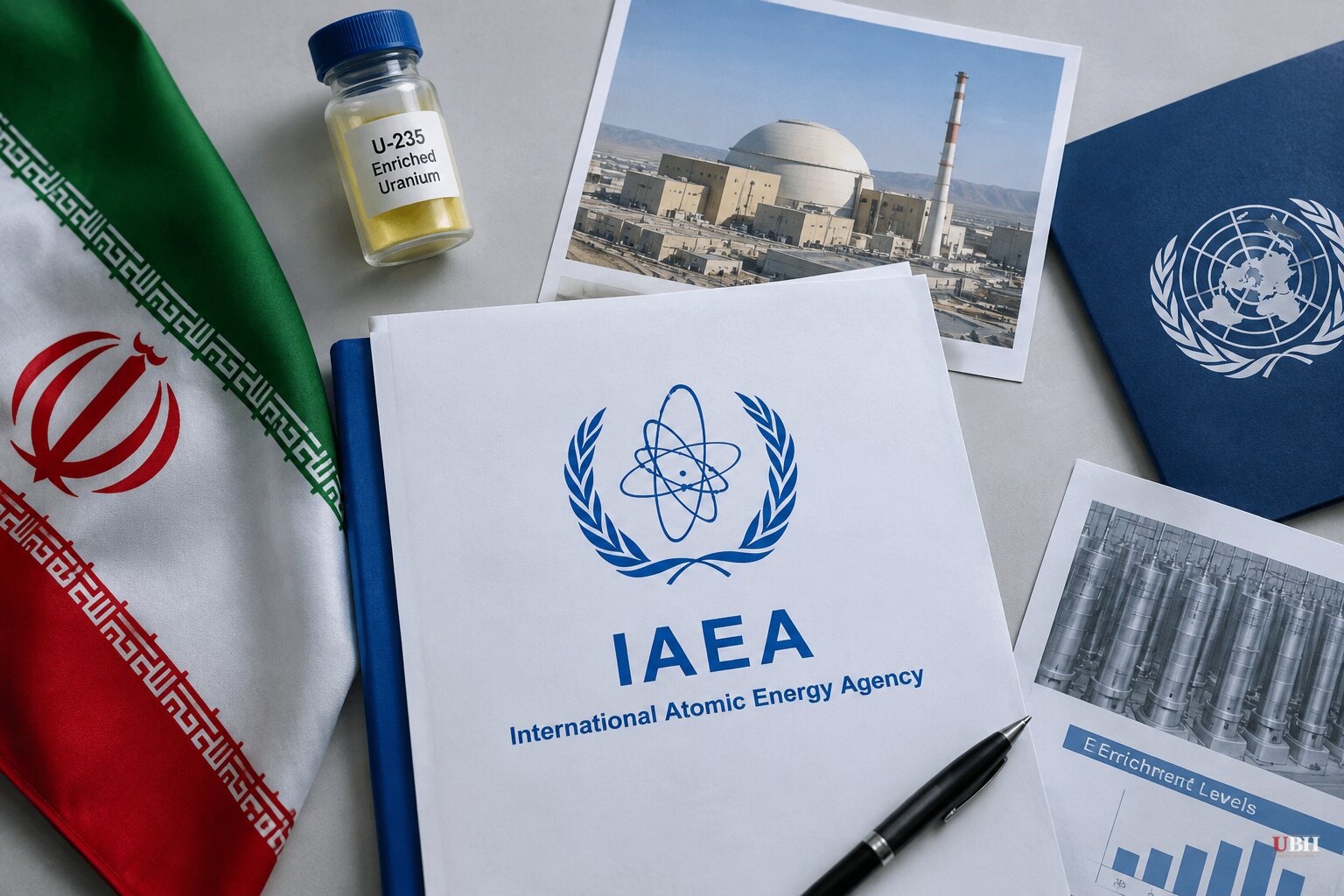
The world has effectively no idea what Iran is doing with roughly 440 kilograms of uranium enriched to 60% purity, a short technical step from weapons grade. That's according to Director General Rafael Grossi of the International Atomic Energy Agency, who told the agency's General Conference in Vienna earlier this month that inspectors have conducted almost no in-field verification in Iran for more than six months, with the lone exception of a check at the Bushehr power plant in June.
Grossi said the IAEA pulled its inspectors after renewed attacks on Iran in late February. The agency has now gone more than a year without "continuity of knowledge" about Iran's declared stockpiles of low- and highly enriched uranium at facilities damaged in the June 2025 US and Israeli strikes. Grossi called that gap "a matter of serious proliferation concern" that "needs to be addressed with the utmost urgency."
A History of Stonewalling
This isn't a new pattern. CNN reviewed more than a decade of UN documents and interviewed multiple former officials who described Iran systematically obstructing IAEA inspectors after the US withdrew from the 2015 nuclear deal, including disabling monitoring cameras and subjecting inspectors to what the agency called "excessively invasive physical searches."
One former US diplomat, granted anonymity by CNN to discuss the matter freely, said Iran was "playing rope-a-dope and consistently making it hard for the IAEA to get access, presenting information that was laughably not true or plausible." CNN also reported that the IAEA itself sometimes downplayed problems for political reasons, wanting to avoid confrontation with Tehran.
James Acton, who heads the Carnegie Endowment for International Peace's nuclear policy division, told CNN he sees a coin-flip chance Iran gets a bomb within three years, even if diplomacy eventually produces a new deal. His view: the technical and political damage from years of partial compliance can't simply be undone by a signature on paper.
Security Council Referral, Again
The IAEA's 35-member Board of Governors voted to report Iran to the UN Security Council, with 23 governors in favor and Russia, China and Niger voting against, according to CNN. The move follows a June 2025 board resolution that had already declared Iran non-compliant with its safeguards obligations, days before the US struck Iranian nuclear sites in Operation Midnight Hammer.
Iran was last referred to the Security Council in 2006, a move that set off a cascade of sanctions against Tehran. Whether this referral produces anything similar is unclear, given that Russia and China, both permanent Security Council members with veto power, voted against sending Iran back there in the first place.
Pezeshkian's Opening, and His Argument
Iranian President Masoud Pezeshkian used interviews on the sidelines of the UN General Assembly this month to say Tehran is willing to let IAEA inspectors return, but only as part of a negotiated arrangement. "If they want to come and carry out inspections, we can reach agreements and settle the parameters of this issue within the framework of broader negotiations," he told CBS.
Pezeshkian also made a point worth stating plainly: he argued that Iran's nuclear facilities were already under one of the IAEA's most extensive inspection regimes before the US and Israel struck them in June 2025, and he questioned why sites under active international monitoring were bombed at all. That's a fair question for anyone weighing whether military strikes or continued inspections better serve nonproliferation goals, and the sources here don't resolve it either way.
Pezeshkian denied Iran is building a weapon, citing what he described as a religious prohibition, and said even officials who wanted a bomb would have no right to build one under Islamic law, according to en.lb.ua's account of his CBS interview. He also said Tehran won't accept limits on peaceful nuclear technology and reiterated Iran's willingness to revive an interim memorandum of understanding reached earlier this year through Pakistani mediation, contingent on Washington returning to its own commitments.
No agreement exists yet on when inspectors would return or which sites they'd be allowed into. Khaama Press reported the IAEA says talks on the practical details are continuing.
The Broader Fight Isn't Over
None of this is happening in isolation from an active shooting conflict. The UN's Independent International Fact-Finding Mission on Iran, chaired by Sara Hossain, called on "all parties" to halt hostilities and comply with international law, saying strikes are "yet another devastating reminder of the human cost of the conflict between the United States and Israel and Iran." Iran International also reported rising Hormuz shipping tensions, a claimed Houthi attack on Saudi Arabia, Saudi emergency alerts and talks between Riyadh and the head of US Central Command.
Whether Iran's 60%-enriched stockpile has grown, shrunk, moved, or sat untouched since inspectors lost access remains unverifiable. That's the design flaw critics of Tehran point to constantly, and it's also the exact thing Pezeshkian says he's ready to fix if the terms are right.
The unresolved question is whether the Security Council referral leads anywhere given Moscow and Beijing's opposition, and whether Washington and Tehran can turn Pezeshkian's UNGA remarks into an actual inspection agreement before the IAEA's uranium-tracking gap stretches even further past its current one-year mark.
Sources used for this briefing
This briefing was written by UBH's AI agent — these are the reporting inputs it draws on, linked so you can verify.


