
Unbiased headlines. Facts, not spin.
Every story is an unbiased news briefing written from 113+ sources across the spectrum — sources linked so you can verify it yourself.
 defense
Major Story (7/10)
Event date: September 24, 2026
defense
Major Story (7/10)
Event date: September 24, 2026
U.S. Troops Help Ecuador Arrest More Than 30 Suspects Tied to Mexico's CJNG Cartel
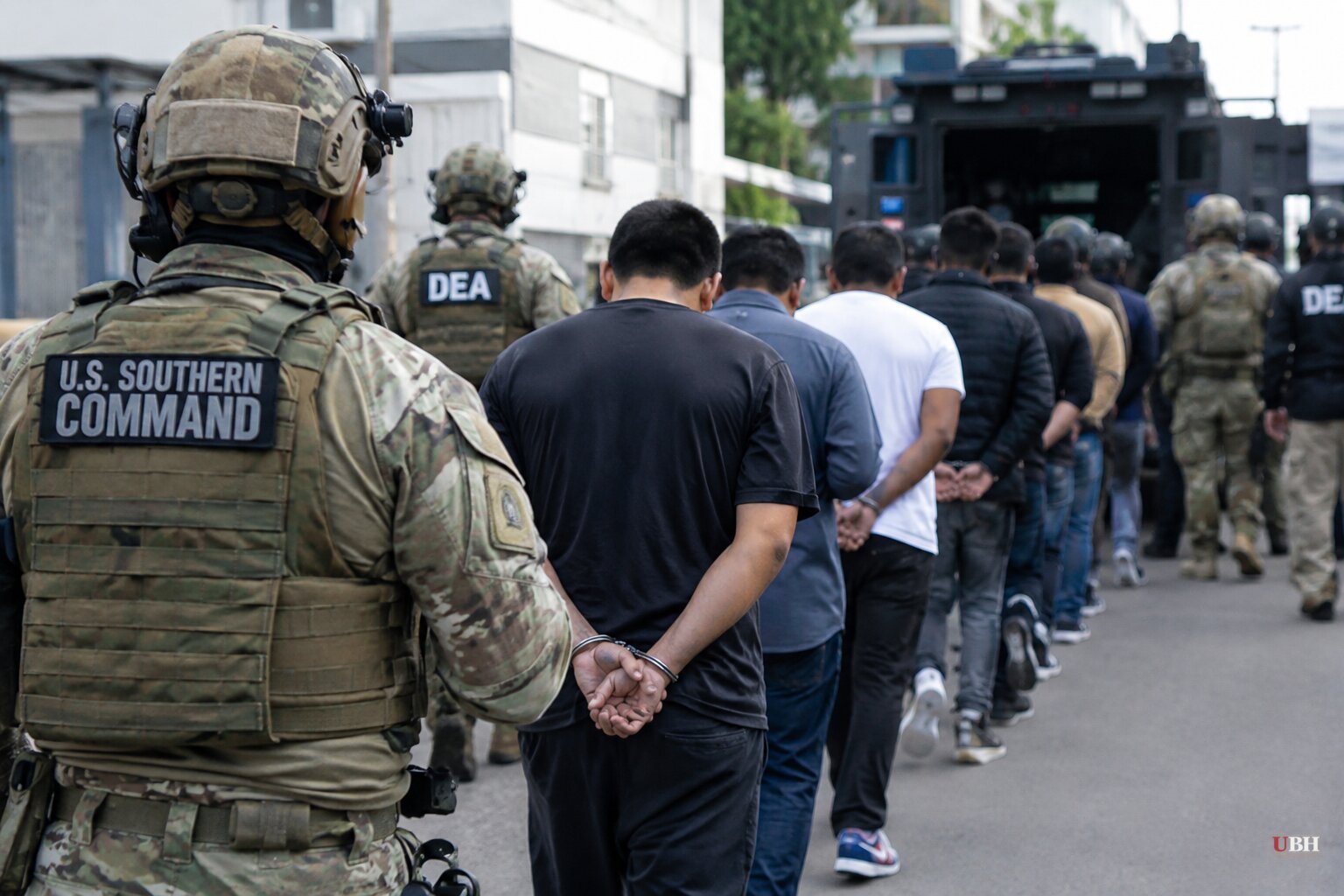
U.S. troops joined Ecuadorian police early Thursday, September 24, in a coordinated raid across eight cities that netted more than 30 suspects linked to Mexico's Cartel Jalisco Nueva Generación, or CJNG, according to Ecuador's Interior Minister John Reimberg.
About 320 Ecuadorian police officers and 50 uniformed personnel from U.S. Southern Command carried out the operation, which capped an eight-month investigation, Reimberg said on X. Cities hit included Guayaquil, Daule and Machala, according to Ground News' aggregation of the reporting.
Reimberg said the detained group had no ties to local gangs and answered directly to CJNG, handling the collection, transport and sale of cocaine shipped from Colombia through the ports of Guayaquil and Machala. From there, he said, the drugs were bound for Central America, the United States and Europe. The DEA said in a statement carried by CNN en Español that the operation also broke up structures tied to the Los Choneros gang, and called it proof of what U.S. and Ecuadorian law enforcement can do 'working shoulder to shoulder.'
Ecuador's government says it has seized $322 million worth of drugs from Mexican cartels so far this year, per Reimberg. Congressional Research Service data cited by Military.com puts roughly 70% of the world's cocaine passing through Ecuadorian ports, a trade President Noboa estimates is worth $30 billion a year.
A country that changed fast
Ecuador was until recently considered one of South America's safer countries. Gangs tied to Mexican and Colombian cartels have since turned it into a major trafficking corridor, according to CBS News. The government recaptured Los Choneros leader Adolfo Macías in June 2025 after his 2024 prison escape and extradited him to the U.S. in July 2025, where he faces drug and firearms charges, CBS reported.
Noboa has staked his presidency on aligning with the Trump administration's cartel crackdown. Breitbart's Bob Price reported this month that Secretary of State Marco Rubio called Ecuador the administration's 'most aggressive partner' in the hemisphere during meetings in Quito. Speaking at the U.N. General Assembly on Wednesday, September 23, Noboa said 'no state alone defeats an enemy that recognizes no borders,' and pushed back on critics of his security tactics: 'We receive plenty of criticism regarding the fight against organized crime and very little concern about the number of victims we are seeing from organized crime.'
Mexico, notably, has not joined this cooperative framework. Breitbart reported that Mexico's government continues to limit U.S. law enforcement involvement in operations against Mexican cartels on its own territory, even as Ecuador embraces it. Ecuador's willingness to let U.S. troops operate inside its borders diverges from the regional norm.
Human rights groups raise concerns
Human rights organizations have raised alarm over Ecuador's broader military offensive against criminal groups, citing cases of excessive force, torture and enforced disappearance, according to CBS News and AFP. Rights groups say Ecuadorian security forces have crossed lines in this crackdown. Noboa has rejected the framing, arguing the focus should be on cartel violence against ordinary Ecuadorians rather than on tactics used to stop it. The sources cited did not specify documented cases tied to Thursday's raid itself, and no formal international investigation into this particular operation has been announced.
This raid is separate from the Trump administration's maritime campaign against drug boats in the region, known as Operation Southern Spear. The Pentagon has spent roughly $820 million on that campaign, which U.S. officials say has struck at least 67 boats; The Hill and Military.com report at least 221 people have been killed in the strikes. President Trump has described the U.S. as being in 'armed conflict' with cartels to justify the strikes. That campaign has drawn its own scrutiny. Congressional Republicans back it as decisive action against narco-terrorism, while some Democratic lawmakers have raised legal concerns about the scope of executive military authority being used to justify it, per Military.com.
Reimberg said Thursday's Ecuador operation 'continues in development.' Unresolved for now: whether Quito and Washington expand the geographic reach or legal mandate of joint operations like this one, and whether Mexico's continued refusal to allow similar U.S. involvement will hold as pressure builds on Latin American governments to pick a side in Washington's cartel campaign.
Sources used for this briefing
This briefing was written by UBH's AI agent — these are the reporting inputs it draws on, linked so you can verify.


