
Unbiased headlines. Facts, not spin.
Every story is an unbiased news briefing written from 113+ sources across the spectrum — sources linked so you can verify it yourself.
 defense
Major Story (7/10)
Event date: September 16, 2026
defense
Major Story (7/10)
Event date: September 16, 2026
US Completes Iraq Withdrawal by September 30 as Kurdistan Enters Third Year Without a Government
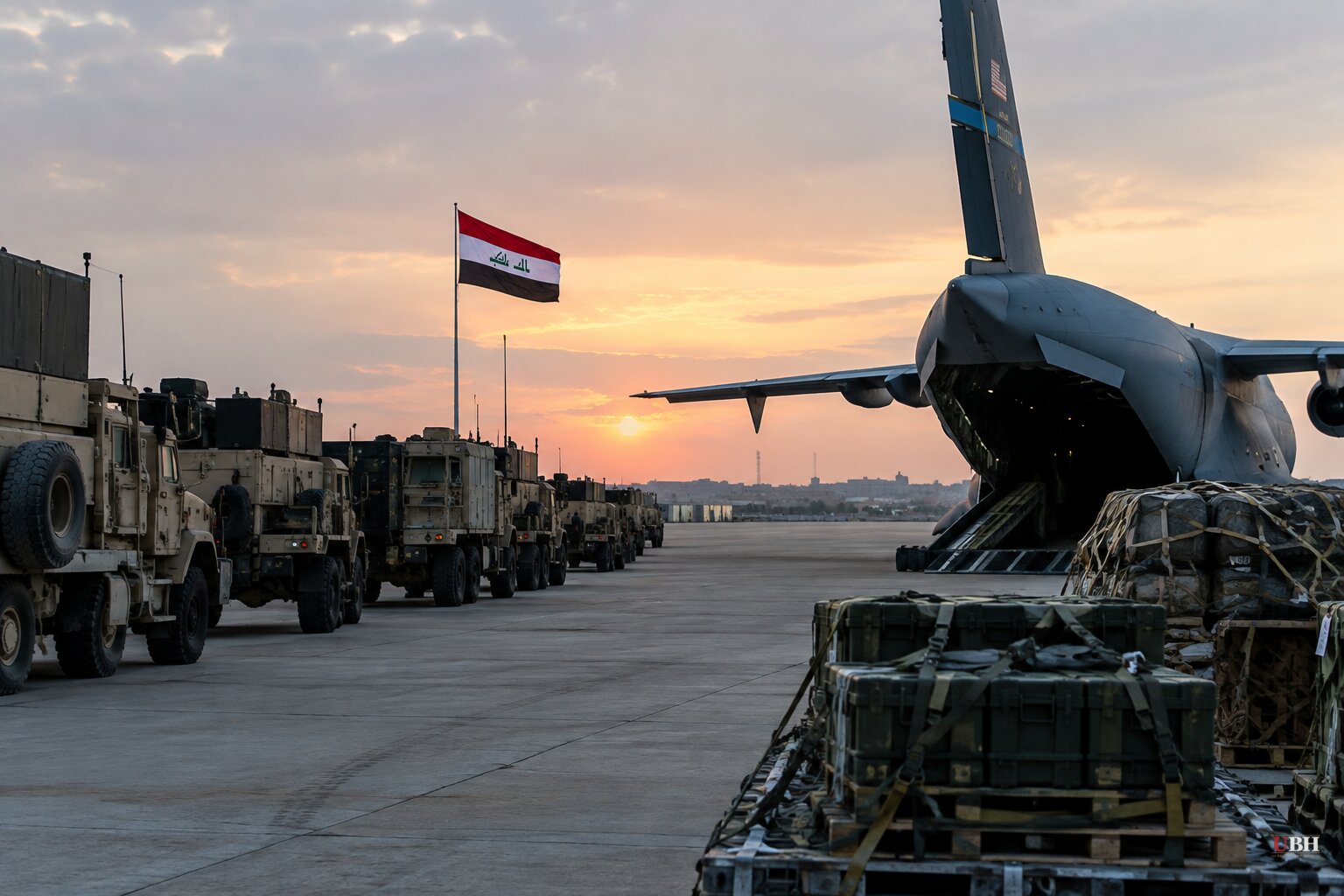
The United States is completing its troop withdrawal from Iraq by September 30, closing out a mission that began in 2014 to fight ISIS. Qasim al-Araji, security advisor to Iraqi Prime Minister Mohammed Shia' al-Sudani, told the Kurdish outlet Rudaw that the drawdown includes all remaining defense systems in Erbil and that the phased pullout of troops and equipment is already underway, according to the Jerusalem Post's reporting on that account.
The timing could not be worse for Iraqi Kurdistan. Since the U.S. and Israel struck Iran on February 28, 2026, the Kurdistan Regional Government says it has absorbed more than 1,000 Iranian drone and missile strikes, according to figures reported by Traders Union. On August 17, Iranian drones hit the personal office of Kurdistan Region Prime Minister Masrour Barzani and the home of the region's counterterrorism chief. No casualties were reported, per OSINT 613's dispatch that day.
Barzani told the Financial Times the American withdrawal is "shameful," arguing Washington is abandoning an ally that cannot defend itself. His core complaint, as relayed by Traders Union: the KRG has no air defense systems of its own and cannot legally procure them directly, since Iraq's constitution routes weapons purchases through Baghdad.
Baghdad's calculus is different
The withdrawal traces back to a 2024 agreement between Washington and Baghdad to wind down the coalition's anti-ISIS mission, according to The Independent. A U.S. military official, speaking anonymously because he wasn't authorized to comment publicly, told The Independent the remaining troops in northern Iraq will relocate primarily to Jordan and other regional bases, taking their air defense hardware with them.
The State Department says Iraqi security forces including the Kurdish Peshmerga have shown increased capability and frames the withdrawal as "an important new phase" in the U.S.-Iraq relationship, according to Traders Union.
On the ground in Erbil, residents are split. Electronics shopkeeper Sherzad Farhadi told AFP, as carried by Arab News, "we cannot intercept the missiles coming from Iran ourselves" and called the withdrawal "very dangerous." But another Erbil vendor, Zeravan Saeed, told AFP the pullout removes Iran-backed militias' stated excuse for attacking the region, calling that "the positive outcome." In Baghdad, resident Abdullah al-Kinani told AFP that Iraqi "sovereignty will not be fully realized until all foreign forces have left Iraqi soil."
The disarmament promise nobody expects to happen
Baghdad tied the U.S. departure to a demand that Iran-backed militias disarm. None have, according to both The Independent and the Jerusalem Post. Instead, per OSINT 613, the militias have hardened their conditions: withdrawal of American and Turkish forces, an end to U.S. political and economic backing of Iraq, dissolution of Kurdish security forces, entry of the Iraqi army into the Kurdistan region, and acquisition of more advanced air defense systems for themselves.
Araji told Rudaw that talks with the militias are "moving in a positive direction" and that a mechanism to place all weapons under state control will follow the coalition's exit. The Jerusalem Post's analysis is openly skeptical of that framing, arguing militias will simply claim their weapons are already under the nominal authority of the Baghdad-backed Popular Mobilization Forces, calling it "a kind of bait and switch." That's the outlet's own characterization, not a neutral fact, but the underlying detail, zero militias disarmed as of the September 30 deadline, is confirmed across sources.
A government that still doesn't exist
Layered on top of the security crisis is a governance vacuum. Iraqi Kurdistan held parliamentary elections in 2024 after repeated delays, and the KDP and PUK again won the overwhelming majority of seats, according to International Policy Digest. Two years later, no cabinet has been formed. The regional parliament has been inactive since 2023 following a ruling from Iraq's Federal Supreme Court, leaving the Kurdistan Regional Government's legitimacy in question even as it tries to manage an active security crisis on its border.
International Policy Digest also reports that Kurdistan Region President Nechirvan Barzani mediated secret contact between Washington and Iran's IRGC, including two Baghdad meetings with Quds Force commander Esmail Qaani, according to Al Arabiya. Tehran denies this. Iran's foreign minister separately called the August 17 strike on Masrour Barzani's office "reckless" and warned of "false-flag ploys to sow discord," per OSINT 613, though Iranian-aligned forces are the ones the KRG blames for the strikes in the first place.
Baghdad, meanwhile, has its own incentive to let Kurdish autonomy erode. International Policy Digest notes the federal government wants to reclaim control over Kurdish oil exports, which have been frozen since a 2023 Paris arbitration ruling found Turkey violated its pipeline agreement with Baghdad. A weaker, air-defenseless Kurdistan region is a more dependent one.
The open questions now: whether Baghdad will actually purchase air defense systems for Erbil once the U.S. hardware leaves by September 30, whether any militia surrenders a single weapon under the promised post-withdrawal mechanism, and whether the KDP and PUK will ever seat a government from an election that will turn two years old this coming October.
Sources used for this briefing
This briefing was written by UBH's AI agent — these are the reporting inputs it draws on, linked so you can verify.


