
Unbiased headlines. Facts, not spin.
Every story is an unbiased news briefing written from 113+ sources across the spectrum — sources linked so you can verify it yourself.
 defense
Major Story (7/10)
Event date: September 25, 2026
defense
Major Story (7/10)
Event date: September 25, 2026
NATO Allies Split Over Whether Putin Is Preparing to Test the Alliance
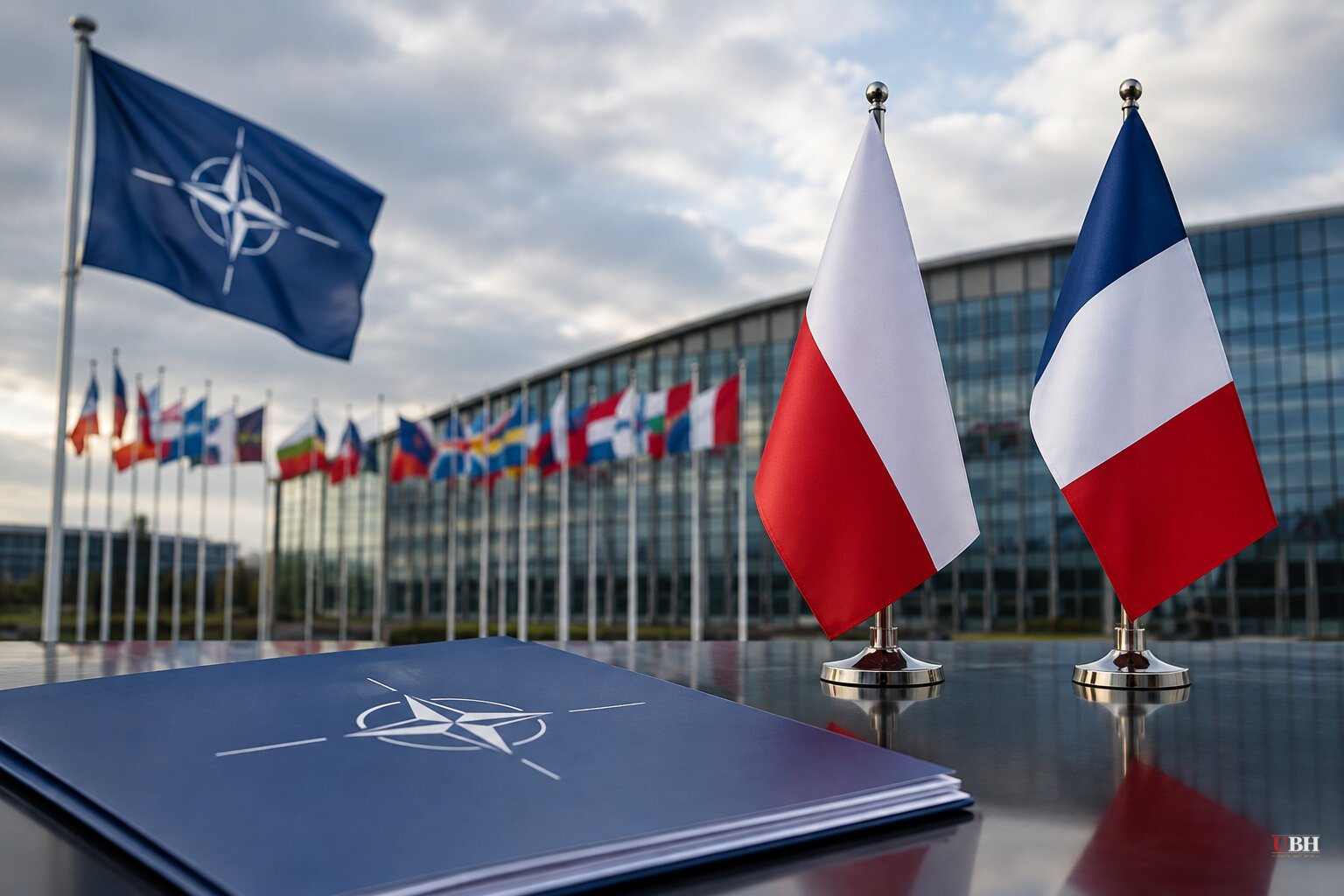
A frontline that isn't moving much, and a war that keeps spreading anyway
Russia's war in Ukraine is stuck. According to an AFP analysis of Institute for the Study of War data, Russian forces lost more ground than they captured in April and May 2026. Their advance picked back up in August but still moved far slower than in prior years, per the same reporting carried by Citizen Digital.
The human cost keeps climbing regardless. France's armed forces chief, Fabien Mandon, estimated in August that 30,000 to 35,000 Russian soldiers are killed or wounded every month. Moscow is filling the gap with enlistment bonuses, foreign recruits from Africa and Latin America, and an estimated 30,000 to 50,000 North Korean troops stationed behind Russian lines, according to Citizen Digital. A Western official told the outlet the shortfall between casualties and recruitment still runs about 6,000 people a month. Vladimir Putin has ruled out a repeat of the mobilization he ordered in September 2022, which Citizen Digital reported prompted an exodus of Russian men at the time.
Russian political scientist Nikolai Petrov told Citizen Digital that Putin's approval is eroding "step by step" and that he may still "do something in order to escalate and in order to radically change the character of the war" without a full mobilization.
NATO's warnings, and the pushback on those warnings
NATO's deputy commander in Europe, Air Chief Marshal Sir John Stringer, told The Associated Press at a security conference in Tallinn that Putin is becoming "increasingly cavalier, dangerous and risk accepting" as the war drags on. He said Putin wants to provoke NATO into an "overreaction" and urged allies to stay level-headed.
Polish Prime Minister Donald Tusk told his parliament that Russia might strike NATO territory with drones or missiles while claiming the hits were accidental, according to the AP report carried by PBS. French President Emmanuel Macron agreed and ordered his government to draft a plan protecting critical infrastructure from drone and cyber attacks. The Guardian's Shaun Walker reported that intelligence chiefs in the Czech Republic, Latvia and Sweden told him a Russian test of NATO could come within "months, not years."
Both camps agree sabotage, cyber-attacks and airspace violations have increased. But the alliance is not unified on how close the danger actually is. A British defense official, speaking to the AP on condition of anonymity, said the U.K.'s assessment is that Putin is not seeking direct confrontation with the alliance. Officials in Estonia, Latvia and Lithuania, the countries that actually border Russia, have been more cautious than Warsaw and Paris about the odds of serious escalation. Latvian President Edgars Rinkevics told reporters at the UN General Assembly that "Ukraine is fighting. Russia is absorbed in Ukraine. We do not observe any buildup near our borders." U.S. Ambassador to NATO Matthew Whitaker went further, telling the AP that "Putin does not want a conflict with NATO" and that drone incursions into Romania and Poland were largely unintentional electronic-warfare spillover, not deliberate provocations. He warned that overreacting to hybrid incidents is "exactly what I think our adversaries would want."
Both camps disagree on what that means Putin intends to do next.
Did Russia ever plan to conquer Ukraine?
A separate argument is unfolding over what Russia was actually trying to do back in February 2022, and it matters for judging where things go from here. University of Chicago professor Robert Pape argued in an interview with Mario Nawfal, flagged by Yves Smith of Naked Capitalism, that Putin launched a preventive war to seize Kyiv and roughly 60 percent of Ukraine, that the plan failed, and that Putin's fallback bet that NATO would fracture has instead produced the opposite: a more unified, more armed alliance.
Writer Larry Johnson, publishing via Sonar21, disputes the premise. He points out Russia invaded with 150,000 to 190,000 troops, well short of the force size RAND analyst James Quinlivan's occupation ratio, roughly 20 troops per 1,000 civilians, would require to hold even 60 percent of a country of 40 million. Johnson argues the operation's shape, forces near Kyiv but never attempting to encircle a city of three million, plus talks that began within days in Belarus and produced a draft settlement in Istanbul by late March 2022, points to a coercive campaign aimed at forcing neutrality, not a conquest. He cites Ukrainian negotiator David Arakhamia's later comments that Russia would have ended the war for Finland-style neutrality, and says Russian Foreign Minister Sergei Lavrov confirmed to him directly that Ukraine's own delegation brought those terms to the table.
Neither side can fully prove Kremlin intent from the outside. Troop math is verifiable; what was actually in Putin's head in February 2022 is not. Both Pape and Johnson are reading the same battlefield facts toward opposite conclusions.
Where this leaves the war
Matthew Parish, writing in the Lviv Herald, argues the dispute over 2022 intentions matters less now than the structural bind Putin has built for himself since: a political system, war economy and ideological narrative that increasingly require continued confrontation with the West to sustain themselves, regardless of what the original war aims were.
Meanwhile, President Trump's envoys have been shuttling between Moscow and Kyiv trying to revive stalled peace talks, according to Citizen Digital, even as Tusk and Macron warn publicly of a coming test of NATO's Article 5 commitments. Whether that diplomatic track produces anything before European intelligence services' feared timeline, months rather than years, arrives, is the open question nobody in these reports can answer yet.
Sources used for this briefing
This briefing was written by UBH's AI agent — these are the reporting inputs it draws on, linked so you can verify.


