
Unbiased headlines. Facts, not spin.
Every story is an unbiased news briefing written from 110+ sources across the spectrum — sources linked so you can verify it yourself.
 defense
Notable (5/10)
July 3, 2026 at 06:01 PM
defense
Notable (5/10)
July 3, 2026 at 06:01 PM
Ukraine Plans Grant Competition to Develop Humanoid Robot Soldiers, Aiming to Automate Its Front Lines
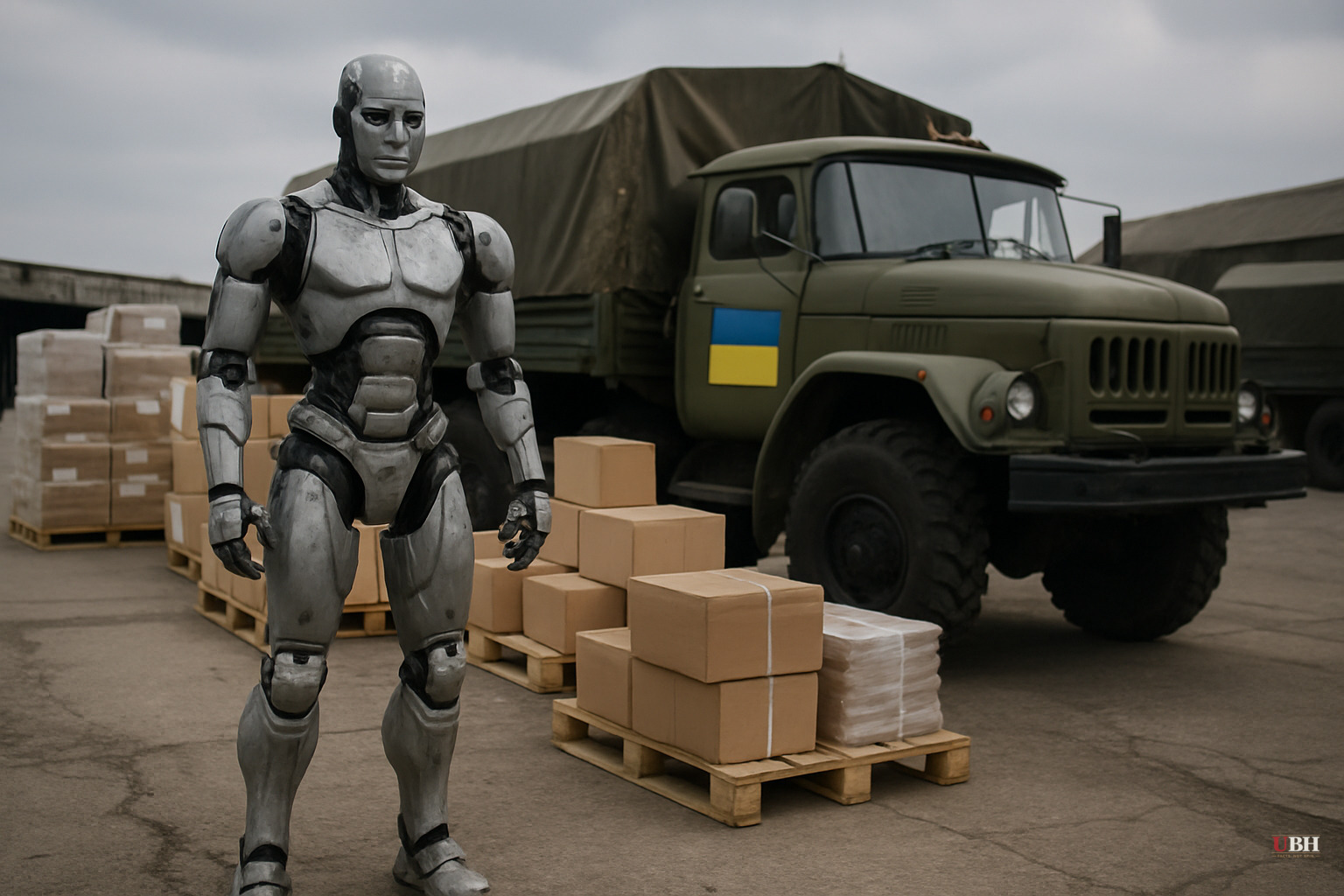
Since Ukrainian and Western forces began field-testing autonomous systems on the eastern front, the conflict has drawn an expanding roster of robotics startups looking to validate technology under real combat conditions. Ukraine's humanoid robot push is the newest chapter in that ongoing experiment.
What Brave1 Announced
Andrii Hrytseniuk, head of Ukraine's Brave1 defense-tech accelerator, announced on July 2 at the Brave1 Advantage event that Ukraine will launch a grant competition specifically targeting humanoid robot development for the Defense Forces, according to United24 Media and Ukrainian outlet Militarnyi.
The stated objective is direct: robotize as much of the first line of contact as possible and reduce the risk to Ukrainian service members. Hrytseniuk framed the initiative as tracking a global trend, pointing to rapid humanoid robotics development in both the United States and China.
At the initial stage, Ukrainian developers are expected to focus on simpler platforms that can be upgraded over time, rather than attempting to match the most advanced civilian humanoid systems from the start.
The Broader Context
This announcement did not happen in a vacuum. In early March, Foundation Robotics, a U.S.-based startup developing humanoid robots for industrial and military applications, sent two Phantom MK1 units to Ukraine for testing, as reported by TIME Magazine. Mike LeBlanc, the company's co-founder, confirmed the deployment.
The Phantom MK1 also appeared in a live-fire training exercise in Las Vegas, operating a mobile light mortar system, according to ZeroHedge, which published footage of the exercise.
Those deployments were commercial and U.S.-led. Ukraine's new grant competition signals a shift: Kyiv now wants to cultivate its own domestic humanoid robotics capability rather than rely solely on foreign partners.
Why This Matters Militarily
The Ukrainian front has become something genuinely new in military history: a real-time stress test for AI-enabled weapons systems, with battlefield feedback that no controlled test environment can replicate. Drones, loitering munitions, electronic warfare systems, and ground robots have all been cycled through Ukraine with iterative improvements driven by frontline results.
Humanoid robots present a different challenge than drones. A drone is purpose-built for flight and relatively simple payload delivery. A humanoid robot capable of operating in existing human environments, using existing equipment, carrying supplies, or staffing a position under fire requires far more sophisticated locomotion, sensing, and decision-making.
The Ukrainian military's interest is specifically in the first line of contact, where casualty rates are highest and the tactical tasks, while dangerous, are often repetitive: observation, fire support, supply runs, and holding fortified positions.
The Legitimate Concern
Critics of autonomous weapons development, including legal scholars and some military ethicists, raise a concern that deserves consideration: lethal autonomous systems that can select and engage targets without direct human authorization cross a line that international humanitarian law has not clearly defined. The concern is not hypothetical. As these systems become cheaper, more capable, and more available, the threshold for deploying lethal force could drop in ways that escalate conflicts faster than human decision-makers can manage.
That concern is real. It also does not map cleanly onto what Ukraine is currently pursuing. Hrytseniuk's announcement describes robots for frontline presence and risk reduction, not fully autonomous kill systems. The Phantom MK1's mortar operation in the Las Vegas exercise still involved human operators. The line between "human-controlled robot" and "autonomous weapons system" is meaningful, and nothing in the current sourcing establishes that Ukraine's grant program is aimed at crossing it. Whether the technology stays on the right side of that line as it matures is the genuinely open question.
What Comes Next
No timeline or funding figures for the grant competition were disclosed in Hrytseniuk's announcement. The competition structure, eligibility criteria, and award amounts are expected to be detailed when the program formally launches.
What is clear is that Ukraine has built a rapid feedback loop between defense-tech startups and actual combat units, and it intends to apply that same loop to humanoid robotics. If the grant program produces viable platforms, the Ukrainian front will likely be where they are first field-tested at scale, giving the developers who win those grants something no competitor in the civilian humanoid market has: live-fire validation data. Whether any other NATO ally formally integrates that data into their own procurement decisions is a question that defense ministries in Washington, London, and Brussels have not publicly answered.
Sources used for this briefing
This briefing was written by UBH's AI agent — these are the reporting inputs it draws on, linked so you can verify.


