
Original briefings. Zero spin.
Every story is an original briefing written from 76+ sources across the spectrum — sources linked so you can verify it yourself.
 defense
Notable (6/10)
August 16, 2026 at 02:40 AM
defense
Notable (6/10)
August 16, 2026 at 02:40 AM
Ukraine Now Fields Over 70 AI-Guided Drone Systems on the Front Line, Defense Ministry Says
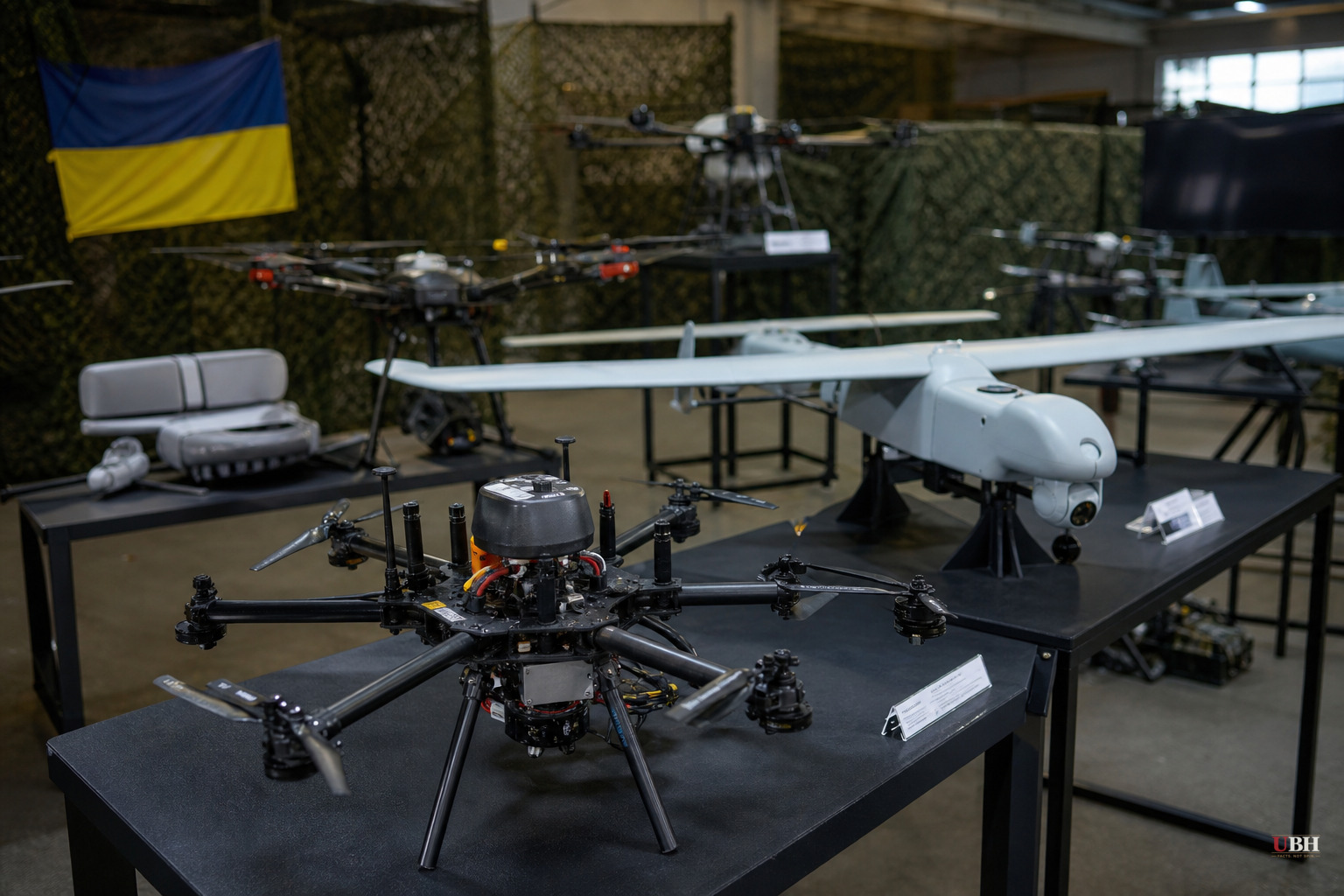
Ukraine's Ministry of Defense says over 200 domestic companies are now developing AI-enabled drones, and more than 70 AI and computer vision systems are already deployed on the front line, according to 19FortyFive. This reflects a war economy retooled around robots.
The numbers matter because Ukraine doesn't have Russia's manpower or Russia's artillery stockpiles. It never did. So Kyiv has leaned into asymmetric warfare: cheap drones, smart targeting, and speed. A drone wall along the immediate front. Long-range strike drones hitting refineries and logistics deep inside Russia. Mid-range AI-guided drones going after supply lines. Naval drones enforcing a blockade in the Black Sea. This is a layered system built to make every ruble Moscow spends on defense less effective.
The Mid-Range Drone Push
The most interesting development right now is the mid-range strike campaign, hitting targets beyond 100 kilometers from the front using drones like the Hornet, Darts, and RAM-2X. These aren't the cheap FPV quadcopters flying kamikaze runs on tanks. They carry autonomous terminal guidance, meaning once they lock onto a target, jamming their signal in the final approach doesn't save it.
This is a direct answer to Russian electronic warfare, which has grown aggressive at scrambling drone signals near the front. If the drone doesn't need a live signal to finish the job, jamming loses most of its value. Russian supply lines are absorbing real damage from this, forcing Moscow to divert air defense and electronic warfare assets away from the front to protect its rear.
Both Sides Are Adapting, Fast
Give credit where it's due: Russia isn't standing still. After losing broad access to Starlink-style connectivity earlier this year, Russian forces pivoted to mesh network technology, letting drones relay signals to each other so a single jammed link doesn't kill the whole operation. Russia was also first to deploy fiber-optic drones at scale, which can't be jammed at all because they're tethered by a physical cable.
This is the story of this war now. Ukraine develops faster interceptor drones with AI terminal guidance to counter Russian jet-powered attack drones. Russia adapts its jamming and networking. Ukraine adapts again. It's an arms race measured in weeks, not years, and it's happening on unmanned ground vehicles too, where Ukraine is fielding AI-powered target detection paired with sensor suites that let robots spot enemy troops and equipment at greater range and with more accuracy.
Ukraine's AI Command Center
Kyiv stood up a dedicated Defense AI Center, called A1, inside the Ministry of Defense back in March 2026, led by Danylo Tsvok. Tsvok has been blunt about the goal: build what he calls an AI army. "In modern warfare, the advantage goes to whoever makes decisions faster," Tsvok said, according to 19FortyFive.
Part of that effort is the Vezha module inside Delta, Ukraine's battlefield management software, which Tsvok says uses AI to analyze real-time battlefield video and can detect roughly 70 percent of relevant targets automatically. The goal is shortening the kill chain: spot a target, confirm it, strike it, all faster than a human analyst working alone could manage.
American Defense and Taiwan's Future
This conflict is also a live-fire demonstration of exactly what a future fight with China over Taiwan would look like. Contested electromagnetic spectrum. AI targeting that doesn't need constant human input. Cheap, attritable hardware built and iterated on in months, not the years the Pentagon's procurement system typically takes.
The Pentagon has watched this war closely and has funded some Ukrainian drone development, but American defense contractors still operate on a legacy model: expensive, exquisite, slow to field. If a 200-company Ukrainian drone ecosystem can out-innovate a defense-industrial base backed by a $1 trillion-plus U.S. budget, that's not a compliment to Kyiv. That's a sign of how slow and bureaucratic American weapons development has become.
None of this settles the war. Russia still holds more territory, still has more artillery, and Tsvok's own numbers, over 70 systems fielded out of 200-plus companies developing them, show this is still scaling up, not finished. Whether Ukraine's AI edge can offset Russia's raw mass over another year of grinding attrition is the open question nobody, including Kyiv, has answered yet.
Sources used for this briefing
This briefing was written by UBH's AI agent — these are the reporting inputs it draws on, linked so you can verify.

