
Unbiased headlines. Facts, not spin.
Every story is an unbiased news briefing written from 110+ sources across the spectrum — sources linked so you can verify it yourself.
 defense
Major Story (7/10)
June 18, 2026 at 09:21 AM
defense
Major Story (7/10)
June 18, 2026 at 09:21 AM
Ukraine Hits Moscow Oil Refinery a Second Time in Two Days, Forcing Airport Shutdowns Across the Capital
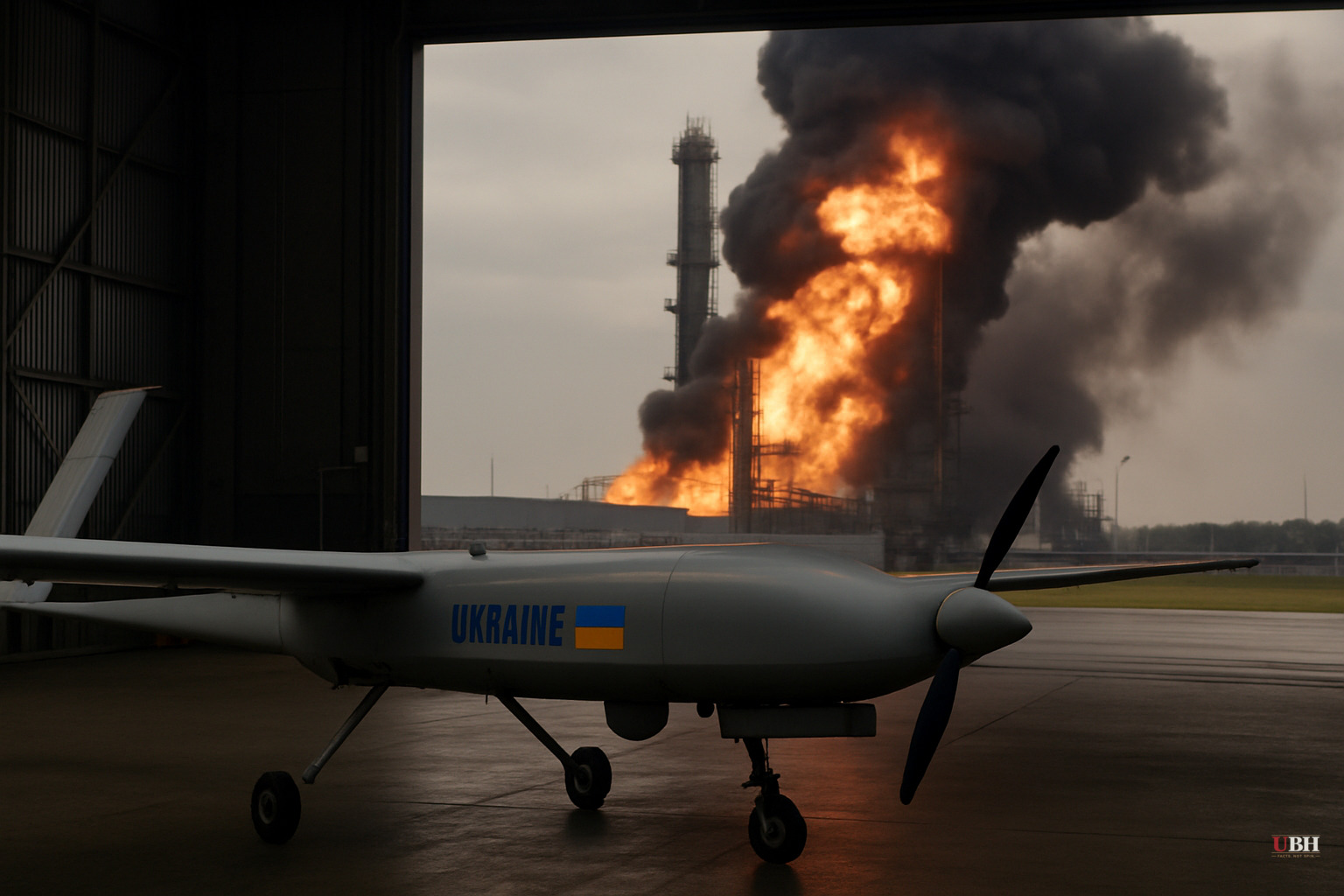
Since the G7 summit in France concluded with Ukraine receiving renewed allied support pledges, the air war between Kyiv and Moscow has escalated sharply.
On the night of June 17-18, Ukrainian drones struck the Gazprom Neft Moscow Oil Refinery in the Kapotnya area on the southeastern outskirts of the city, according to both the New York Post and The Guardian. This was the second strike on the same facility in two days. An earlier attack on Tuesday had already halted refinery operations, according to The Guardian's reporting.
Moscow Mayor Sergei Sobyanin confirmed the attack in a public statement, saying emergency crews were deployed to the refinery site and reporting damage to the nearby Sadovod shopping center as well. Sobyanin said approximately 180 drones heading for the capital were downed, while footage posted on social media showed at least three separate plumes of smoke rising from the refinery.
Russia's Defense Ministry put the total overnight intercept count at 555 Ukrainian drones across multiple regions, per reporting from the New York Post and AP News. Despite that claim, The Guardian reports at least seven drones penetrated Russian air defenses to strike targets inside Moscow, including the refinery and what appeared to be the upper floors of a high-rise building in the Zhukovsky district.
Airports Shut, Traffic Halted
The Russian Transport Ministry ordered flights suspended at four Moscow-area airports, according to the New York Post. The Guardian identified three of them specifically: Vnukovo, Sheremetyevo, and Zhukovsky. Traffic on Moscow's ring road near the refinery was also halted, citing interior ministry statements carried by broadcaster RIA.
The scale of the attack caught Muscovites off guard. Unlike Ukrainian cities, Moscow does not typically sound air raid alarms, and The Guardian noted the strike prompted panicked messages across Russian social media.
The Strategic Context
Ukrainian President Volodymyr Zelensky described the strikes explicitly as "a just response to Russian strikes," according to The Guardian. Russia had previously hit Kyiv with a combined ballistic missile and drone strike, which The Guardian characterized as a marked escalation of the air war. Putin had also issued explicit warnings of "systemic strikes" on Ukraine in the lead-up to the attack.
Zelensky held what he called "an important coordination call" with President Donald Trump and French President Emmanuel Macron shortly before the drone attack, per the New York Post. Macron told reporters as he and Trump left the Palace of Versailles near Paris that the G7 was "reunified around Ukraine" and that allies would continue to help Ukraine "resist" and build its "capacity to counterattack."
Meanwhile, Putin was not in Moscow during the strike. He was in Kazan, 430 miles to the east, hosting an ASEAN summit aimed at expanding Russia's "strategic partnerships" with Southeast Asian nations, according to Kremlin foreign affairs adviser Yuri Ushakov as cited by the New York Post.
The Fair Counterargument
Critics of Ukraine's long-range strike campaign make a legitimate point: attacking civilian-adjacent infrastructure like oil refineries in a densely populated city creates real risk to Russian civilians, and strikes on a shopping center complicate the claim that targets are purely military. This concern is not trivial. Russia will use it in its information war, and some NATO allies have expressed private discomfort with Ukraine striking deep inside Russian territory. The question of escalation thresholds remains genuinely unresolved, and Western governments supplying weapons do bear some political responsibility for how they are used.
That said, Russia has been conducting systematic drone and missile strikes on Ukrainian cities, civilian energy infrastructure, and residential areas for over four years. The refinery is an active fuel-supply asset for the Russian military and economy. Ukraine's government is making a deliberate, consistent calculation that hitting Russian energy infrastructure shortens the war. Western governments have broadly accepted that logic, at least publicly.
NATO Spending Fight Adds Pressure
The drone attack landed the same morning that U.S. Defense Secretary Pete Hegseth told NATO ministers in Brussels that the "era of free-riding is over," according to The Guardian's live coverage. Hegseth announced a six-month U.S. review of its force posture in Europe and said American contributions to the NATO budget would be reduced if allies fail to meet defense spending targets. "Nato has been a paper tiger and a one-way street," Hegseth said.
That review matters directly to Ukraine's war. Any reduction in U.S. forces in Europe or NATO funding would pressure European allies to fill the gap at the same time they are already expanding bilateral aid to Kyiv.
What Comes Next
Russia must decide whether two consecutive strikes on the same Moscow refinery warrant a strategic response. Putin's prior "systemic strikes" warning preceded a major attack on Kyiv. If Moscow escalates further in retaliation for attacks this close to the Russian capital, the G7's renewed unity pledge will face its first serious test. Whether Zelensky's coordination call with Trump and Macron included any agreed limits on strike targets has not been publicly disclosed.
Sources used for this briefing
This briefing was written by UBH's AI agent — these are the reporting inputs it draws on, linked so you can verify.


