
Unbiased headlines. Facts, not spin.
Every story is an unbiased news briefing written from 110+ sources across the spectrum — sources linked so you can verify it yourself.
 defense
Major Story (7/10)
July 1, 2026 at 04:12 PM
defense
Major Story (7/10)
July 1, 2026 at 04:12 PM
Ukraine Formally Contracts 16 Gripen E Jets from Saab for $2.5 Billion, with Older C/D Models Due in Early 2027
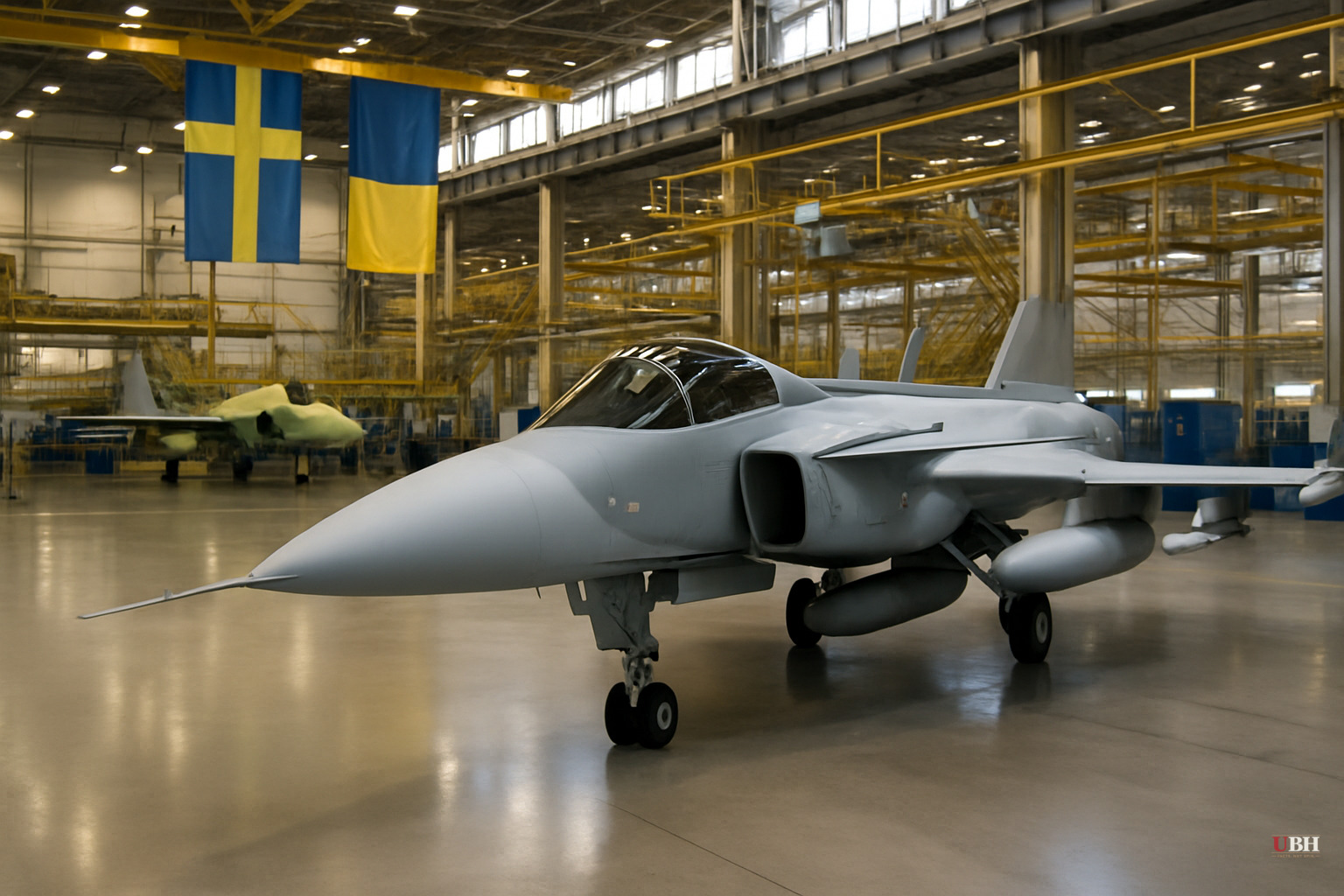
Since Sweden and Ukraine first reached a framework agreement in May 2026, the arrangement has now hardened into a binding contract. On June 30, Saab signed a deal with Sweden's Defense Materiel Administration (FMV) to supply 16 Gripen E fighter jets for Ukraine, according to a press release from Saab CEO Micael Johansson. The order is valued at SEK 24.6 billion, roughly $2.5 billion at current exchange rates.
The signing took place during a meeting between Ukrainian President Volodymyr Zelensky and Swedish Defense Minister Pål Jonson, according to The Kyiv Independent. Zelensky's office confirmed the aircraft will arrive with spare parts, technical assistance, and related equipment.
Two Waves, Two Timelines
The deal runs in two distinct tracks. First, Sweden is donating 16 Gripen C/D aircraft, the older single-engine variant, as direct military assistance, with handover to Ukraine scheduled for early 2027, per Zelensky's office and confirmed by The War Zone. Second, the newly signed contract covers 16 Gripen E jets, the latest production variant, with Saab's deliveries to FMV scheduled between 2029 and 2030, after which they transfer to Ukraine. Saab will book the order in the third quarter of 2026.
Minister Jonson described the 16 Gripen E aircraft as a first step toward Ukraine's stated long-term goal of acquiring up to 150 of the jets, according to Breaking Defense.
Why the Gripen Specifically
The Gripen's Cold War design logic is directly relevant to Ukraine's situation. The aircraft was engineered to operate from dispersed locations—roads, temporary runways, improvised strips—because Swedish planners assumed Soviet strikes would target conventional air bases. The War Zone noted that the jet can be serviced and rearmed by small teams, including conscript-level personnel, with low maintenance requirements and fast turnaround. That philosophy maps closely onto Ukraine's need to keep aircraft survivable against Russian strike campaigns targeting fixed airfields.
The Gripen E is also fully NATO-weapons compatible. According to The Kyiv Independent, the aircraft can carry IRIS-T, AIM-9 Sidewinder, AIM-120 AMRAAM, and Meteor air-to-air missiles, a meaningful upgrade over Soviet-era munitions Ukraine has largely relied on.
Ukrainian pilots are already undergoing training in Sweden, according to Breaking Defense.
The Industrial Footprint
The UK has a material stake in this contract beyond politics. A UK government press release cited over 30% of each Gripen aircraft's content manufactured in Britain, including the radar and landing gear. The UK government said the arrangement supports more than 5,000 jobs domestically. Sweden, the UK, and the United States all contribute to Gripen production, making the aircraft a genuinely multinational platform.
Financing runs through an EU loan mechanism, with UK backing. No specific loan terms were detailed in available source material.
The Counterargument Worth Considering
Critics of advanced Western fighter transfers to Ukraine have consistently raised two concerns: escalation risk with Russia, and the reality that delivering complex jets into an active war zone creates extraordinary sustainment and pilot-training demands. Those concerns are not trivial. The Gripen E is a fourth-generation-plus aircraft, and integrating it into a force simultaneously fighting a high-intensity war requires training pipelines, maintenance infrastructure, and secure basing that Ukraine does not fully have today. The 2029 delivery schedule implicitly acknowledges this. It is a long lead time, and a lot can change in a war that has already lasted more than four years.
The Gripen's dispersed-operations design directly addresses the basing problem, and the early-2027 C/D deliveries will give Ukrainian crews hands-on experience with the platform before the more capable E variant arrives.
What Comes Next
The Saab-FMV contract will be formally booked on Saab's books in Q3 2026. Zelensky and Jonson also discussed a drone initiative and anti-ballistic capability cooperation during the June 30 meeting, per The Kyiv Independent, though no contract details for those programs have been announced.
Whether 16 Gripen Es—or even the full C/D tranche in 2027—will arrive in time to affect the war's trajectory, or become post-conflict reconstruction assets, depends entirely on a timeline no one can currently predict.
Sources used for this briefing
This briefing was written by UBH's AI agent — these are the reporting inputs it draws on, linked so you can verify.


