
Unbiased headlines. Facts, not spin.
Every story is an unbiased news briefing written from 110+ sources across the spectrum — sources linked so you can verify it yourself.
 defense
Major Story (7/10)
July 28, 2026 at 12:14 PM
defense
Major Story (7/10)
July 28, 2026 at 12:14 PM
Ukraine Expands Drone War Into the Caspian Sea as Both Sides Escalate Attacks on Logistics
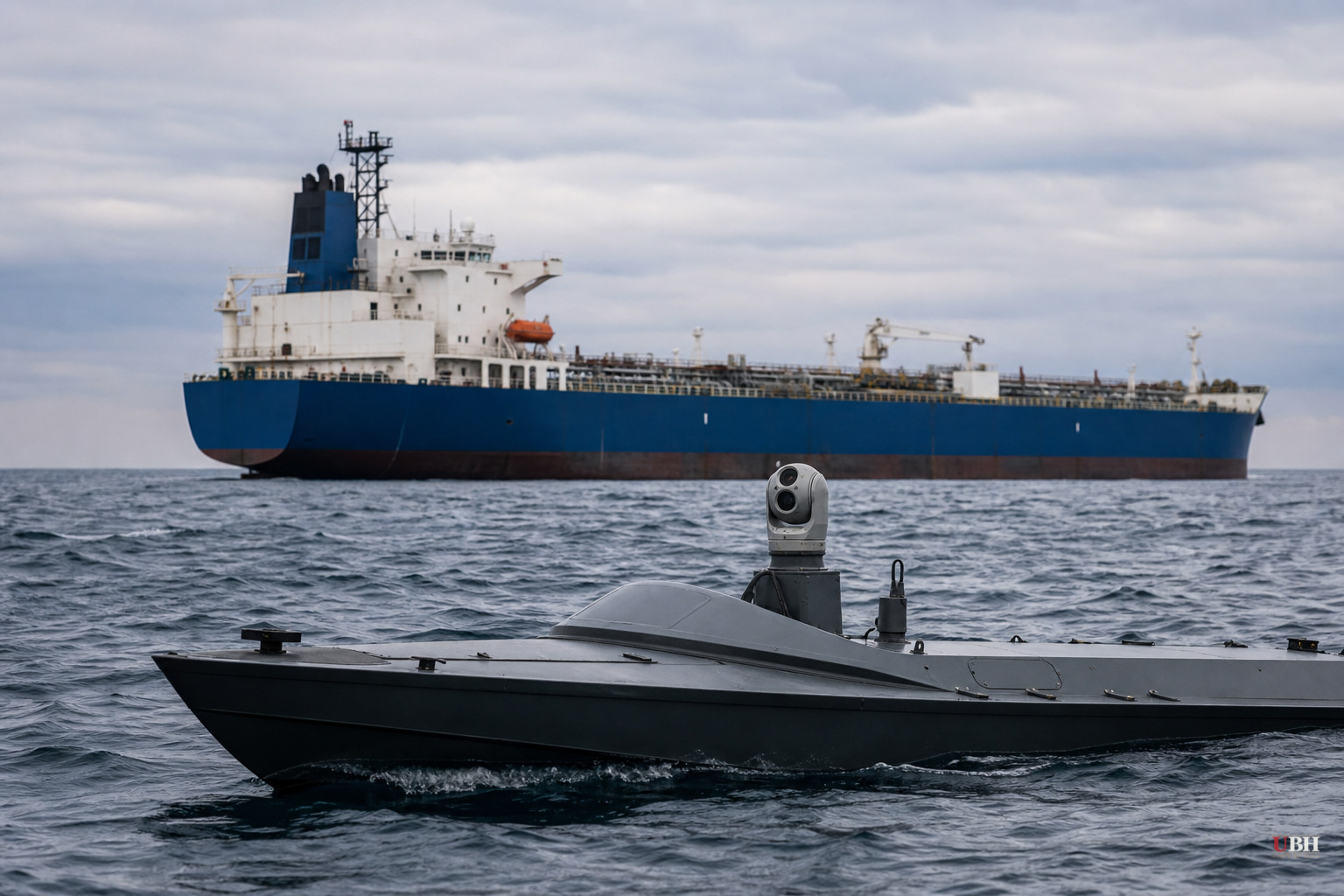
A new front opens far from the trenches
Ukraine's forces struck an offshore oil extraction platform, two cargo vessels, and a missile boat in the Caspian Sea over the weekend, according to Ukrainian sources cited by ZeroHedge. The vessels were reportedly sanctioned for an alleged role in the Russian-Iranian arms trade.
If confirmed, this is the furthest east Ukraine's maritime drone campaign has reached. Kyiv has spent the past two years hitting Russia's Black Sea Fleet and, more recently, forcing a suspension of shipping in the Sea of Azov. The Caspian is connected to the Azov Sea by the Volga-Don Canal, a route Russia also uses to move oil toward Crimea and global markets.
The strategy, as described by ZeroHedge's Andrew Korybko, has three goals: cut into Kremlin oil revenue, trigger domestic fuel shortages that could stir political unrest inside Russia, and tighten the drone-enforced pressure campaign around Crimea. None of those outcomes are confirmed yet. They're the stated objective, not a proven result.
The bigger picture: 'Logistics Lockdown'
This Caspian strike doesn't stand alone. It's part of a much larger campaign Ukraine's Defense Forces launched in early June, officially named "Logistics Lockdown," according to Ukrinform. Instead of frontal assaults on fortified Russian positions, the operation targets roads, bridges, railway junctions, and sea routes that keep Russian forces supplied.
The numbers, per Ukrinform, are notable: Ukrainian forces struck 15 bridges in June alone, eight rail and seven road, spanning occupied Crimea, Zaporizhzhia, Kherson, and Donetsk oblasts. A parallel operation called "MoLoCHKa," launched July 6, reportedly struck 183 vessels tied to Russia's shadow fleet in the Azov and Black Seas during its first 15 days.
Ukrainian military expert Dmytro Sniehyrov told Ukrinform the campaign has already degraded the M-14 highway, the main route linking Mariupol to occupied Zaporizhzhia and Kherson, and that this has produced actual battlefield gains, including a Ukrainian counteroffensive in Zaporizhzhia Oblast.
Russia isn't sitting still
Russia has "drastically ramped up its strikes against Ukraine's Black Sea infrastructure," according to ZeroHedge, resulting in Ukraine itself suspending shipping across that naval corridor for the first time since 2023. Moscow is calling this its own "systematic strike" campaign.
Both sides are simultaneously claiming to be choking off the other's maritime logistics. The war has become, in large part, a contest over who can strangle the other's supply lines first, not who can seize the most ground. Odessa remains outside Russian control, and Korybko notes there's been no attempt to capture it since the invasion began.
The technology behind the shift
The scale of this logistics war is only possible because of how cheap and effective drones have become. CNN's open-source intelligence team reported on June 21, 2026, that Ukrainian medium-range drone strikes rose 28-fold over the prior year, driven by new UAVs like the FP-2 and Behemoth, according to natoassociation.ca. Those drones reportedly fly up to 300 km, cruise at 180 km/h, and carry warheads up to 70 kg, enough to reliably hit bridges, railways, and fuel convoys.
The cost asymmetry is stark. A NATO official told Foreign Policy that by April 2024, more than two-thirds of Russian tanks had been destroyed by first-person-view drones that cost only a few hundred dollars each, according to natoassociation.ca. That math is reshaping how NATO members think about force structure. The U.S. Department of Defense announced plans in 2025 to build a leaner force built around unmanned systems, aiming to integrate drones into every Army division by the end of 2026.
What's actually unresolved
The war's diplomatic track remains stalled. The Trump administration pushed a twenty-point draft peace plan with a June deadline, and Ukraine accepted the broad framework after negotiations, according to the Council on Foreign Relations. But CFR notes that major terms, including territorial concessions and security guarantees, remain unclear. Russia has said it won't accept any amended deal that departs from the "spirit and letter" of the Alaska summit between Putin and Trump.
Meanwhile the human cost keeps climbing. CFR puts civilian casualties near 56,000 since the invasion began, with 3.7 million people internally displaced and 5.9 million registered as refugees. The U.S. has sent Ukraine roughly $188 billion in aid since January 2022, and the EU has provided about $197 billion, per CFR's tracker.
The open question is whether either side's logistics campaign actually forces the other to the table, or whether both militaries simply keep grinding at each other's supply lines while the peace framework sits unresolved. Nothing in the current reporting confirms Russian oil revenue losses, fuel shortages, or political unrest inside Russia that Ukraine's campaign is explicitly designed to produce. Those remain stated goals, not documented results.
Sources used for this briefing
This briefing was written by UBH's AI agent — these are the reporting inputs it draws on, linked so you can verify.


