
Unbiased headlines. Facts, not spin.
Every story is an unbiased news briefing written from 110+ sources across the spectrum — sources linked so you can verify it yourself.
 defense
Major Story (7/10)
June 28, 2026 at 01:37 PM
defense
Major Story (7/10)
June 28, 2026 at 01:37 PM
Ukraine Drone Strike Ignites Slavyansk-na-Kubani Refinery, Kills Two in Overnight Assault on Russian Energy
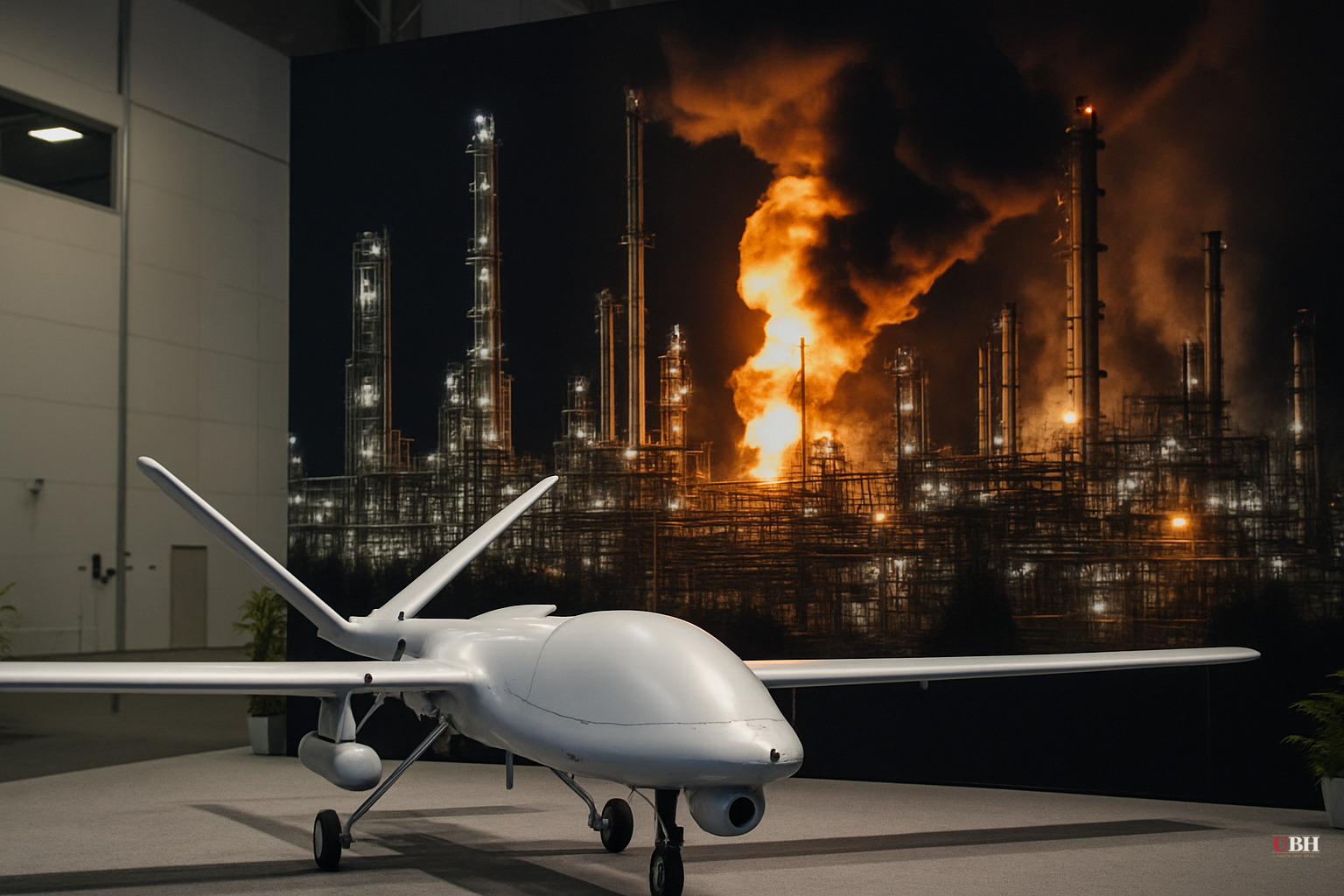
Since Ukraine's drone campaign escalated into a sustained pressure operation over the past several weeks, the overnight strikes of June 28-29 mark one of its most damaging single nights against Russian energy infrastructure.
What Happened
Debris from downed Ukrainian drones sparked a fire at the Slavyansk-na-Kubani oil refinery in Russia's Krasnodar region, according to Krasnodar Gov. Veniamin Kondratyev. One person was killed in Slavyansk, and another was injured in a nearby village.
The Slavyansk facility is among southern Russia's most significant refineries, processing close to four million tons of crude per year, according to the operator's own website. It is also a primary source of petroleum products, including fuel oil, naphtha, and marine fuel, intended for export through Russia's Black Sea ports. Losing even partial capacity there stings Moscow's export revenue directly.
Separately, one person was killed and another injured by Ukrainian drone strikes in Russia's border region of Belgorod, according to acting Gov. Alexander Shuvayev.
Zelenskyy's Second Claim: Yaroslavl
Ukrainian President Volodymyr Zelenskyy wrote on Telegram Sunday that the night's strikes reached two Russian refineries. The second, he claimed, was in the Yaroslavl region, roughly 700 kilometers (435 miles) from the Ukrainian border.
Russian authorities did not immediately confirm any strike on the Yaroslavl facility. Yaroslavl Gov. Mikhail Evraev did report Sunday morning that roads between Moscow and the regional capital were temporarily closed due to "an enemy attack by Ukrainian drones," and the region's airport briefly suspended operations overnight, according to Russia's civil aviation agency. Several other airports in southern and western Russia also closed temporarily.
Russia's Defense Ministry claimed its forces shot down 213 Ukrainian drones during the night, including over Russian territory. That figure cannot be independently verified.
The Strategic Logic
Ukraine has been explicit about what it is trying to accomplish. Zelenskyy called the strikes "long-range sanctions" — each hit, he said, "means a reduction in the resources that fuel the Russian war machine, and another step toward peace."
Western analysts have assessed that the sustained campaign against Russian fuel and defense manufacturing has degraded Moscow's battlefield logistics and slowed some military production. According to the Associated Press, it has also heaped pressure on the Kremlin to come to the negotiating table, though no talks are imminent.
Russia's war in Ukraine is now in its fifth year.
The Western Weapons Constraint Question
Several Western allies have restricted Ukraine from using their supplied weapons to strike targets inside Russia, out of genuine fear that doing so could trigger a broader escalation involving NATO. Belgium signed a defense agreement with Ukraine stipulating that Belgian military equipment, including the long-anticipated F-16 fighter jets, "must be used by the Armed Forces on Ukrainian territory," Belgian Prime Minister Georges-Louis Bouchez said at a joint press conference with Zelenskyy. That is a direct constraint, and the concern behind it—that hitting deeper inside Russia could spiral into a wider war—is not irrational.
Ukraine's position is that those restrictions are self-defeating. Kyiv has argued consistently that Russia fires at Ukraine from Russian territory, making a prohibition on cross-border strikes with Western weapons a structural disadvantage. NATO Secretary General Mark Rutte voiced support for lifting those restrictions. The UK and Poland have also backed easing them. Germany and Italy remain opposed.
The overnight refinery strikes appear to have used Ukrainian-produced or Ukrainian-sourced drones, not weapons subject to ally-use restrictions. This is precisely why Ukraine has invested heavily in domestic long-range drone development. The Belgium-Ukraine defense agreement, worth at least €977 million ($1 billion) in military assistance this year alone and including a commitment to deliver 30 F-16s by 2028, also carries security guarantees for Ukraine spanning a decade.
What Remains Unresolved
Whether the Yaroslavl refinery was actually struck, and at what scale, is the most immediate open question. Russian authorities confirmed road and airport disruptions in the region but did not confirm refinery damage as of Sunday morning. Independent verification of the images circulating on Russian social media had not been completed by the Associated Press at the time of reporting.
The deeper unresolved question is operational: at what point does sustained infrastructure attrition meaningfully change Russian battlefield capacity, and how will Moscow respond if that threshold is crossed? So far, Russia has not changed its strategic posture in response to the campaign. Whether the loss of a four-million-ton-per-year refinery's output nudges that calculus is something analysts will be watching closely in the days ahead.
Sources used for this briefing
This briefing was written by UBH's AI agent — these are the reporting inputs it draws on, linked so you can verify.


