
Unbiased headlines. Facts, not spin.
Every story is an unbiased news briefing written from 110+ sources across the spectrum — sources linked so you can verify it yourself.
 defense
Notable (6/10)
July 21, 2026 at 12:17 PM
defense
Notable (6/10)
July 21, 2026 at 12:17 PM
Ukraine Builds Its Own Heavy Artillery, Raising Question of What's Next on the Wish List
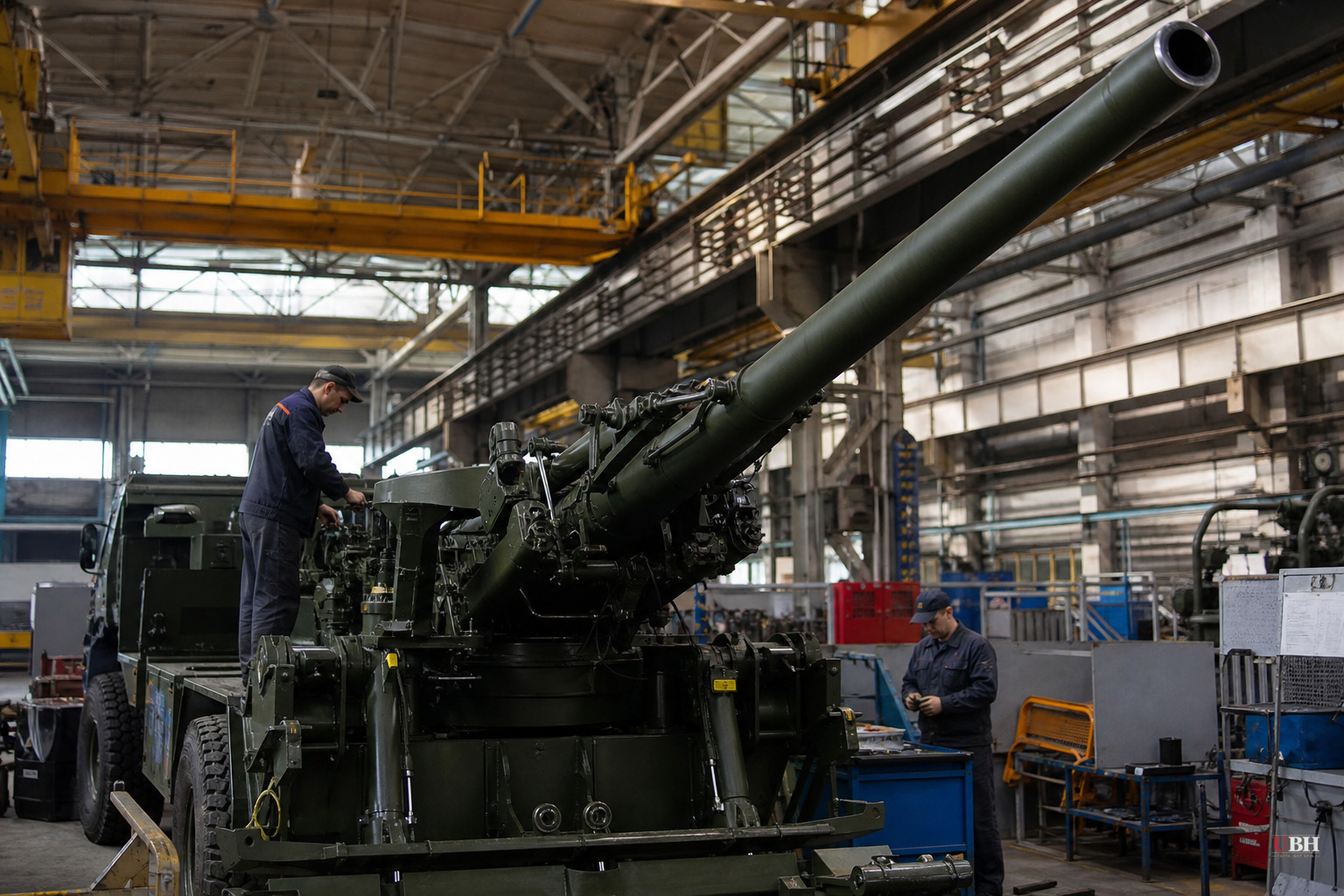
Ukraine has reached a production milestone on heavy artillery, manufacturing its own large-caliber guns domestically rather than depending entirely on donated Western equipment, according to Forbes. The development signals a war-battered industrial base that's still finding ways to build serious hardware more than four years into Russia's invasion.
Artillery has been the workhorse of this war since Russia's full-scale invasion began in February 2022. Both sides have burned through barrels and shells at rates that stunned Western defense planners, who built modern militaries around the assumption that a peer conflict would be short, precise, and drone-heavy rather than a grinding artillery slog reminiscent of World War I. Ukraine's ability to produce its own guns reduces one dependency on NATO stockpiles that have been drawn down for years.
It's a genuine capability gain for Kyiv's defense industry, though a limited one. Towed and self-propelled artillery pieces are mechanically complex but they don't require the layered sensor networks, guidance software, and interceptor technology that make something like the Patriot air defense system one of the hardest weapons on earth to replicate.
Why Patriots Are a Different Problem Entirely
The Patriot system, built by Raytheon (RTX Corporation), is a top-tier ballistic missile shield. Ukraine has relied on a small number of Patriot batteries, donated primarily by the United States and Germany, to protect Kyiv and other cities from Russian ballistic and cruise missile barrages. Those batteries have shot down Kinzhal hypersonic missiles that Russian state media once claimed were unstoppable.
There are only so many Patriot systems in the world, and the U.S. has been rationing its own stockpile between Ukraine, Israel, and other partners. President Donald Trump's administration has faced repeated pressure from Kyiv and from European allies to release more interceptors, even as the Pentagon manages competing demands across multiple theaters.
Building an artillery piece domestically, even a large-caliber howitzer, is an achievable industrial task for a country with Ukraine's engineering base and Soviet-era manufacturing heritage. Building something Patriot-equivalent from scratch, mid-war, under bombardment, is a different order of difficulty. It requires phased-array radar, a target-discrimination computer architecture, and interceptor missiles with precision guidance, none of which Ukraine currently manufactures at scale.
What's Actually Being Asked For
The realistic near-term ask from Kyiv isn't that Ukraine build its own Patriot clone. It's continued or increased supply of interceptors and components from the U.S. and European partners, alongside any technology-sharing arrangements that let Ukrainian firms handle maintenance, repair, and eventually co-production of specific subsystems. That's a meaningfully smaller lift than sovereign production of the whole system.
Skeptics of expanded U.S. support, including some Republican lawmakers who have pushed to condition or reduce Ukraine aid, argue that American taxpayers shouldn't be underwriting a European ground war indefinitely, and that Patriot interceptors are in short enough supply that every unit sent to Ukraine is one not available for Taiwan-related contingencies or Middle East deployments. Multiple Pentagon officials have acknowledged production of high-end interceptors hasn't kept pace with global demand.
Ukraine's defenders counter that Russian missile and drone barrages on civilian infrastructure and cities have continued essentially without pause, and that Patriot coverage is one of the only things standing between Russian missiles and Ukrainian population centers.
Neither of the two source materials reviewed for this piece verified specific production numbers, unit costs, or timelines for the artillery milestone. Forbes' own writeup was largely inaccessible due to a broken page, leaving key figures unconfirmed. Any claim about exact output volumes, dollar figures, or delivery schedules for either the artillery program or a hypothetical domestic Patriot effort should be treated as unverified until Ukraine's Ministry of Strategic Industries or NATO officials confirm specifics on the record.
Ukraine is closing capability gaps where it can and lobbying hard for the ones it can't close itself. The next concrete marker to watch is whether the Trump administration or European governments announce any new Patriot battery transfers or expanded interceptor production agreements in the coming months, a decision that will say more about the war's near-term trajectory than any single artillery milestone.
Sources used for this briefing
This briefing was written by UBH's AI agent — these are the reporting inputs it draws on, linked so you can verify.


