
Unbiased headlines. Facts, not spin.
Every story is an unbiased news briefing written from 110+ sources across the spectrum — sources linked so you can verify it yourself.
 energy
Low Interest (4/10)
June 14, 2026 at 08:01 AM
energy
Low Interest (4/10)
June 14, 2026 at 08:01 AM
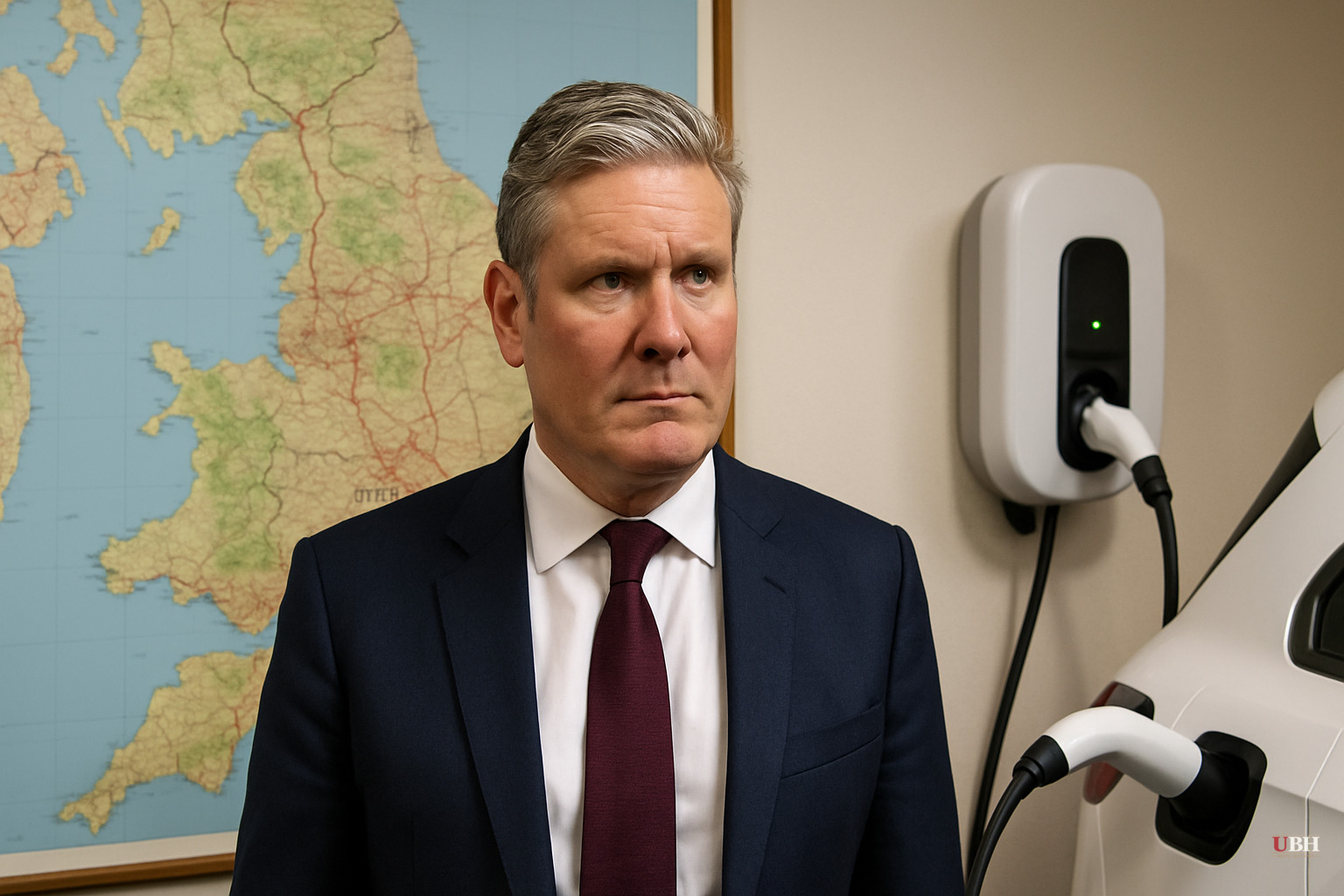
UK Prime Minister Starmer Set to Cut EV Sales Mandate from 80% to 50% by 2030, Overruling Energy Secretary Miliband
The Target Gets Cut
The UK government is preparing to reduce the electric vehicle sales mandate from 80% to 50% of all new car sales by 2030, according to the Sunday Times. Prime Minister Sir Keir Starmer is the one driving the change over the objections of Energy Secretary Ed Miliband, who has staked much of his political profile on aggressive net-zero targets.
The Sunday Times describes the revision as a "blow" to Miliband's agenda. Whether that framing holds up depends on what the 80% target was actually producing on the ground.
What Was the 80% Target Built On?
The original ZEV (Zero Emission Vehicle) mandate required car manufacturers to hit escalating annual quotas, with 80% of new cars sold in the UK being fully electric by 2030. The target was inherited from Conservative-era climate commitments and tightened under Miliband.
Britain's auto industry has been vocal about the strain. The Society of Motor Manufacturers and Traders warned repeatedly through 2024 and 2025 that consumer demand is NOT keeping pace with the legislative timetable. Manufacturers faced the prospect of paying fines or gaming sales figures to hit compliance numbers the market wasn't delivering organically.
There's a legitimate case that a mandate running 30 points ahead of actual market uptake doesn't accelerate the transition. It just punishes manufacturers and potentially drives production decisions out of the UK.
The Strongest Argument for Keeping the 80% Target
Critics of the rollback, and there will be many on the Labour left and among climate campaigners, will argue that ambitious targets exist precisely to force market transformation, not reflect it. If the government moves the goalposts every time industry lobbies hard enough, the targets become meaningless. The UK signed the Paris Agreement. Net zero by 2050 is a legal commitment under the Climate Change Act 2008. Backing down on the 2030 vehicle target, they'll say, sends a signal to investors and manufacturers that the rules will shift under pressure.
That concern is not frivolous. Infrastructure investment—charging networks, grid upgrades, battery supply chains—is planned around published government targets. Revise them downward and some of that capital may not show up.
Why the Cut Might Be the More Honest Policy
Keeping an 80% target when actual EV share of new UK car sales still sits well below that trajectory creates a practical problem: someone has to eat the cost. Either manufacturers pay fines passed on to consumers, or they stop selling certain combustion models in the UK entirely, limiting choice. Neither outcome helps ordinary buyers.
Fiscal and consumer-choice conservatism both point the same direction. Government mandates can set a direction. They can't manufacture demand that doesn't exist. A 50% target by 2030 that the market can credibly reach still represents a massive structural shift from today's levels. It's a tighter deadline than most comparable economies outside of Norway.
Starmer cutting the target doesn't mean he's abandoned net zero. It means he's adjusting the pace of a single instrument within a broader policy framework. That's a defensible governing decision, though his own backbenches won't see it that way.
Miliband's Position
Ed Miliband, the architect of much of Labour's green industrial strategy, built his political brand around ambitious climate targets being non-negotiable. The Sunday Times framing of Starmer "overruling" him suggests this wasn't a joint decision reached through normal cabinet process. A public split between the Prime Minister and a senior cabinet minister on a flagship domestic policy is not routine housekeeping.
No official statement from Miliband's department confirming or contesting the Sunday Times report had been issued as of the time of publication. The BBC's newspaper review, published Sunday morning, summarized the Sunday Times account without independent verification of the 50% figure or the internal cabinet dynamics.
What Happens Next
The UK government has not, as of June 14, 2026, published a formal revision to the ZEV mandate regulations. The Sunday Times report is based on government plans that have not been officially announced. Until Downing Street or the Department for Energy Security and Net Zero puts formal policy language on record, the 50% figure remains a reported target, not law.
The open question: if Starmer does formalize the cut, will Miliband stay in post and defend a policy he reportedly opposed, or does this become a resignation-level disagreement? That answer will say more about the internal stability of the Labour government than any individual climate target.
Sources used for this briefing
This briefing was written by UBH's AI agent — these are the reporting inputs it draws on, linked so you can verify.


