
Unbiased headlines. Facts, not spin.
Every story is an unbiased news briefing written from 110+ sources across the spectrum — sources linked so you can verify it yourself.
 defense
Notable (5/10)
July 16, 2026 at 05:24 PM
defense
Notable (5/10)
July 16, 2026 at 05:24 PM
UK Names Its Drone Wingman 'Storm Fighter,' Adds Two More Unmanned Designs, Backs It With £300 Million
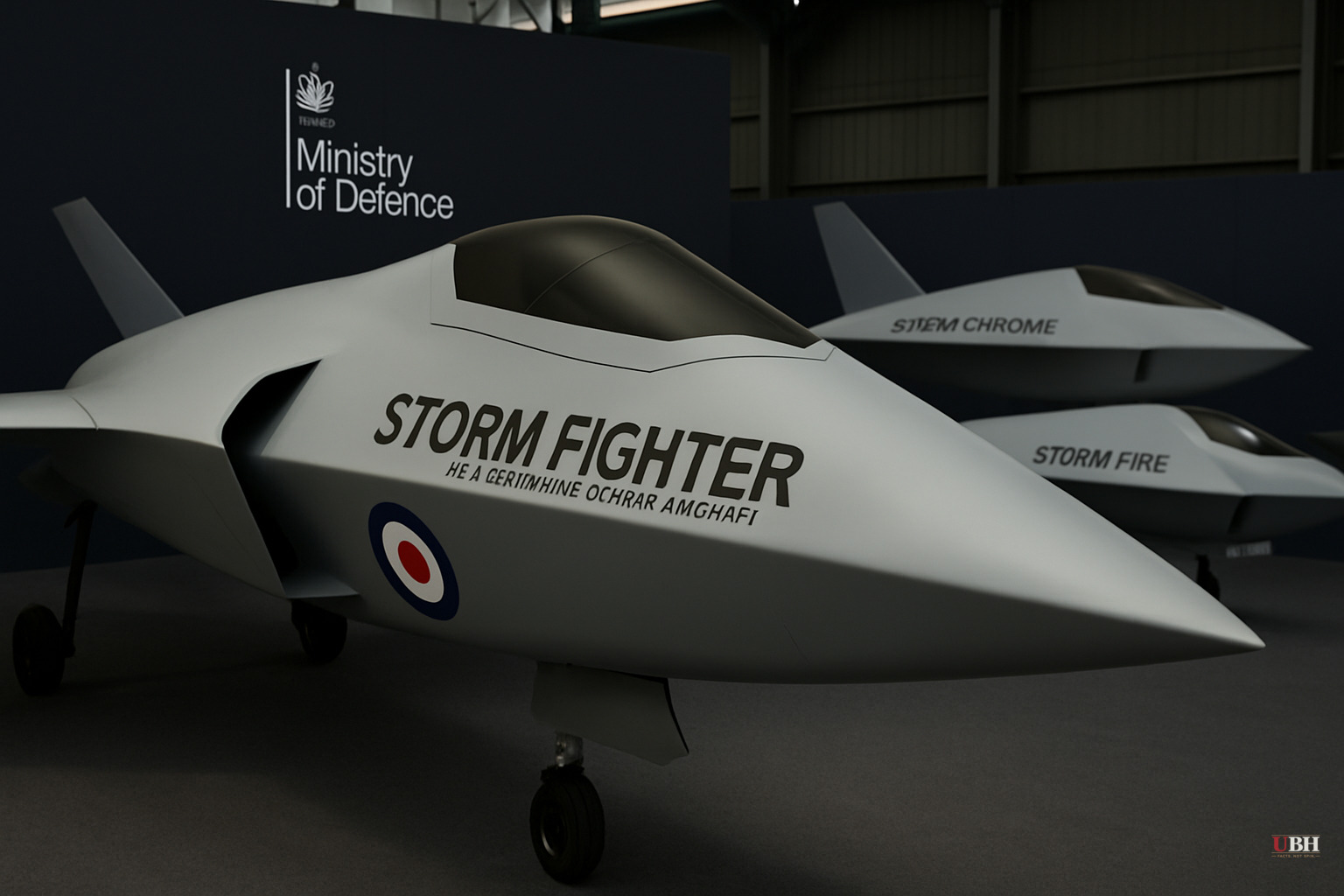
Britain officially named its drone wingman program on Thursday, July 16. It's called Storm Fighter.
Luke Pollard, the UK's minister of state for defense readiness and industry, made the announcement at the Global Air and Space Chiefs Conference in London, according to Breaking Defense. He said the unmanned aircraft will act as both a "guardian angel" and "attack dog" for RAF fighter jets.
Pollard claimed Storm Fighter, paired with the UK's planned sixth-generation Tempest fighter, will make the Royal Air Force "Europe's first six-generation air force." Plenty of European nations are racing toward the same milestone, and naming a drone doesn't win that race.
Two More Drones, One Already Flying
Royal Air Force Air Chief Marshal Harv Smyth announced two additional platforms during a separate keynote, according to Breaking Defense. Storm Chrome will handle electronic attack. Storm Fire is a one-way attack drone capable of hitting targets up to 1,000 miles away.
Both build on StormShroud, an autonomous jamming drone that entered RAF service in 2025. That's the one part of this program that's actually operational, not conceptual.
Smyth said the goal is to "markedly shift the economic calculus" back toward the UK and its allies, letting drones absorb risk so manned aircraft survive longer. The U.S. Air Force, Australia, and half a dozen other air forces have made the same pitch about their own CCA programs. Cheap, expendable drones flying alongside expensive manned jets change the math for an enemy trying to shoot everything down.
The Money and the Timeline
London is putting £300 million ($405 million) behind Storm Fighter, according to the UK's four-year, £298 billion Defence Investment Plan published June 30. The plan targets a demonstrator flight by "at least 2030."
Smyth told Aviation Week in a recent interview he wants a demonstrator flying alongside a Eurofighter Typhoon as soon as next year. That's a big gap between the official government timeline and what the Air Chief Marshal is saying in public. One of those numbers is wrong, or at least badly hedged.
$405 million is not a lot of money for a sixth-generation drone program. For comparison, the U.S. Air Force's CCA effort has already committed billions to General Atomics and Anduril for its first increment. Britain's number looks more like seed funding for a concept demonstrator than a program that's actually going to field aircraft.
Pollard acknowledged the funding fight directly, noting the government secured a £15 billion increase in defense spending overall, according to Breaking Defense. That increase followed real political pressure over how much the UK should be spending on defense. Pollard didn't shy from that debate in his remarks, saying plainly, "we need more money for defense."
A Legitimate Skepticism: Britain's Drone Graveyard
Here's the fair concern, raised directly by Airforce Technology. The UK has been here before. Project Mosquito, a loyal-wingman drone meant to complement the UK's Future Combat Air System, was hailed as a breakthrough before it got canceled in 2022. Airforce Technology's framing, headlined with the question of whether Storm Fighter will "suffer the same fate as Mosquito," is a legitimate and specific challenge, not generic media skepticism. The outlet is right to note that the concept model shown at the conference was described as an Autonomous Combat Aircraft, still a display piece, not hardware.
Britain's defense procurement record backs up that skepticism. Big unmanned programs have been announced with fanfare, then quietly killed once the bill came due or priorities shifted. A £300 million commitment and a 2030-or-maybe-2027 demonstrator target doesn't erase that history.
None of that means Storm Fighter is doomed. StormShroud proves the RAF can field an autonomous system when it commits. But a name change and a keynote speech is not a program. The real test comes when Parliament has to decide whether £300 million becomes several billion more, and whether that money survives the next defense budget fight.
Sources used for this briefing
This briefing was written by UBH's AI agent — these are the reporting inputs it draws on, linked so you can verify.


