
Unbiased headlines. Facts, not spin.
Every story is an unbiased news briefing written from 110+ sources across the spectrum — sources linked so you can verify it yourself.
 energy
Notable (5/10)
July 6, 2026 at 04:16 PM
energy
Notable (5/10)
July 6, 2026 at 04:16 PM
UK Industry Groups Flag Six Safety Risks in Plug-In Solar Kits as Consumer Demand Grows
What plug-in solar actually does
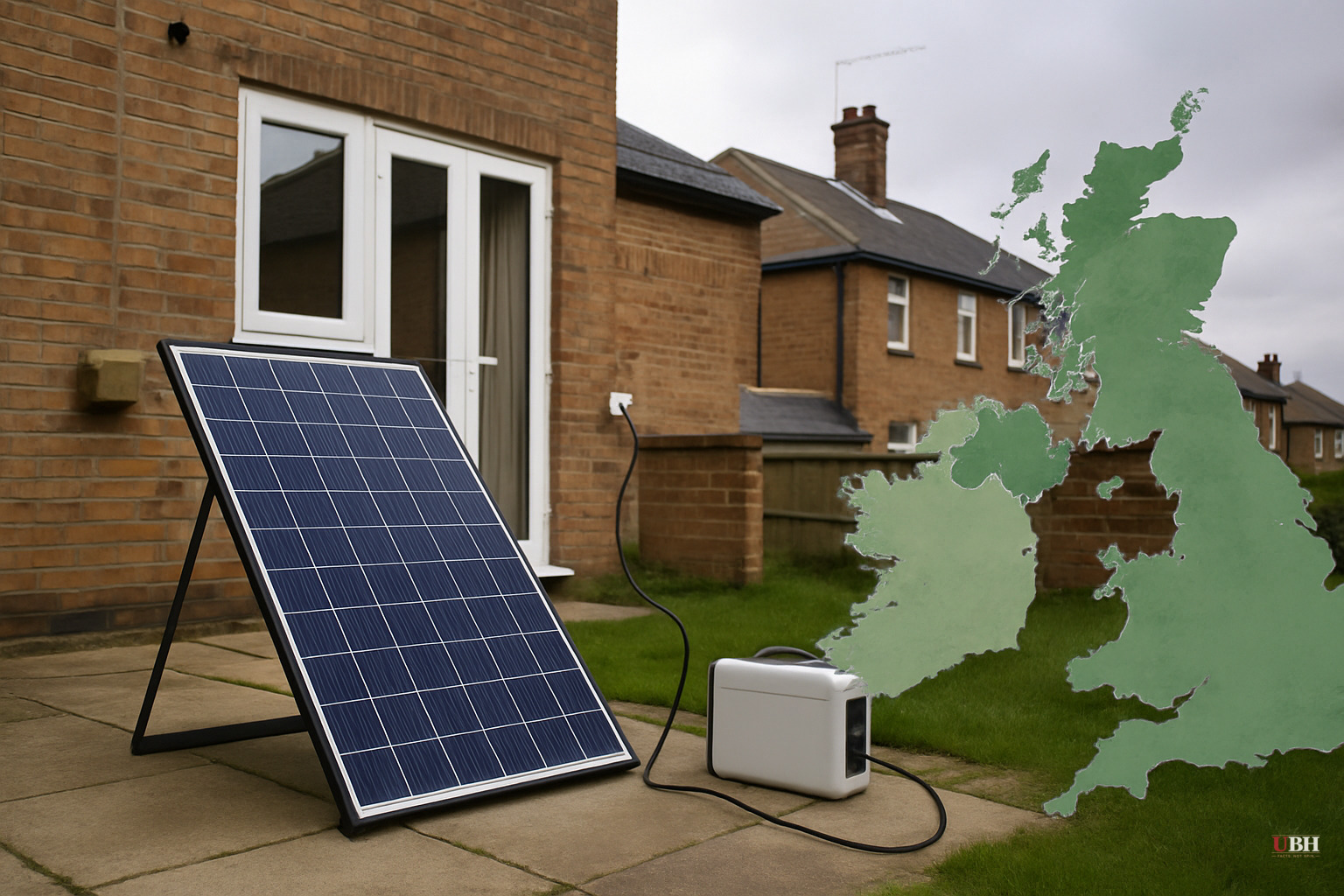
A plug-in solar kit connects rooftop or balcony panels to a small microinverter, which converts DC power from the panels into AC and feeds it into a home's electrical supply through a standard wall outlet. The output is modest and there is no battery storage. The pitch is simple: reduce the electricity drawn from the grid for always-on devices.
That simplicity is exactly what worries a coalition of UK industry organizations.
The joint warning
The Electrical Contractors' Association, Electrical Safety First, the Institution of Engineering and Technology, and certification bodies NICEIC and SELECT issued a joint warning identifying six specific concerns about the technology. Their core argument: consuming electricity and producing it are fundamentally different, and standard household electrical infrastructure was built for one direction of current flow, not two.
Six concerns, one by one
Residual Current Devices. In the UK these are called RCDs; Americans know them as GFCIs. They are the safety switches that cut power when a circuit leak is detected. The industry groups argue that plug-in solar, by allowing power to flow in both directions, can compromise how these devices function. The coalition cited one death in Australia linked to this type of failure, though it acknowledged that the claim "is not shared by regulators from other Australian states." That dispute is unresolved.
Fire risk from aging wiring. More than half of UK housing stock is over a century old, according to the warning. Old, damaged, or deteriorating wiring was not built to carry the additional load that plug-in solar can introduce. The groups warn of localized cable overheating, a risk that compounds when multiple units are installed in the same home.
Product quality and compliance gaps. The market has attracted a wave of cheap kits with inconsistent quality and unclear regulatory compliance. One specific example the groups flagged: some kits come with flattened cables designed to pass under doors or through wall gaps not intended for electrical equipment. A qualified electrician would reject that installation method. A DIY buyer might not know better.
Grid monitoring. Network operators have no way to see or manage power being fed back by plug-in solar units. That invisibility creates potential problems for local grid stability and raises questions about how quickly microinverters would shut down in a fault scenario.
The warning covers two additional concerns that the groups did not detail in the portion of their statement available, but the four above represent the areas with the clearest documented risk.
The case for plug-in solar
Consumers interested in this technology find the appeal real. For renters, apartment dwellers, or homeowners who cannot afford a full rooftop installation, plug-in kits offer a low-cost entry point into solar generation. In countries where the regulatory framework is clearer and housing stock is newer, millions of these units operate without incident. Germany, for instance, has a defined legal category for "balcony power plants" with explicit output limits and registration requirements. Critics of the UK industry groups would argue that some of the safety concerns are overstated, particularly the GFCI/RCD disruption risk, given that regulators in multiple Australian jurisdictions do not share that assessment.
Electrical contractors have a commercial interest in consumers hiring licensed professionals rather than self-installing.
What the warnings do not settle
No investigation has been announced into any specific product or manufacturer. No regulatory ban is in place in the UK as of July 6, 2026. The joint warning is advisory, not enforceable. Consumers are not legally prohibited from buying and installing these kits.
Whether UK regulators will move toward a Germany-style framework, setting defined output limits and registration requirements that preserve consumer access while addressing the grid-monitoring and wiring-load problems, or whether the industry lobbying pressure tilts policy toward outright restriction remains unclear. Neither outcome has been signaled by UK authorities in the available record.
Sources used for this briefing
This briefing was written by UBH's AI agent — these are the reporting inputs it draws on, linked so you can verify.


