
Unbiased headlines. Facts, not spin.
Unbiased Headlines is an independently owned news organization. We bring you the facts, not opinions, written fresh from 110+ named sources. Sources linked so you can verify it yourself.
 health
Major Story (7/10)
health
Major Story (7/10)
UK Hits 38.1C, Its Hottest Day of 2026, as France Marks 17th Day of Heatwave
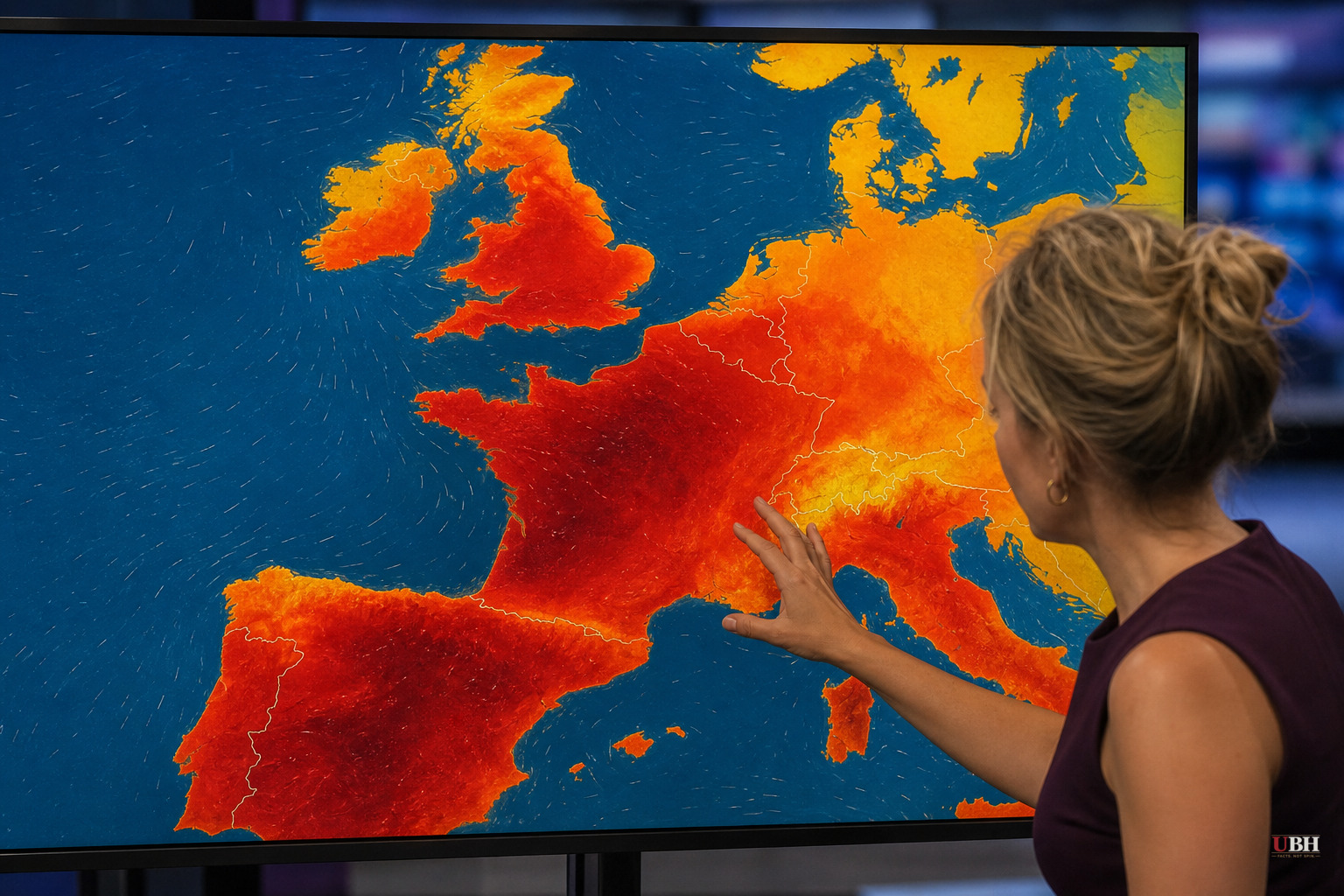
Since Andy Burnham's emergency meeting on wildfires Wednesday, the heat across western Europe has gotten worse, not better. West London hit 38.1 degrees Celsius (100.6 Fahrenheit) Thursday, the UK's hottest day of 2026, according to the Met Office and confirmed by AP News. That edges out the previous 2026 high of 38C set in June, though it's still short of Britain's all-time August record of 38.5C from 2003.
This is the UK's fifth heatwave since May, according to AP News. The country has now had four days this year above 36C and has matched 2022's mark of two days above 38C. France is faring no better. Meteo France recorded temperatures near 41C in spots stretching from Aquitaine to the Rhone Valley, and the country's heatwave has now run 17 days, its third-longest ever recorded, according to live coverage from The Guardian.
The human toll is showing up in hospitals. The Royal College of Nursing said Thursday that nursing staff have collapsed from heat exhaustion on the job, some in the same aging hospital buildings that lack basic cooling. "When nursing staff are collapsing, feeling dizzy, sick or even being admitted to the very hospitals they work in because their workplaces cannot handle the heat, it shows just how badly they are being failed," said Nicola Ranger, the college's chief executive, in comments carried by both AP News and PBS.
An NHS worker put it more bluntly to AFP, as reported by Al Jazeera. "The heat has been unbearable here, honestly," said pharmacist Bailey Williamson, who described patients "really, really sick" and unable to breathe properly because of ward temperatures. "It's scary," Williamson said. "I think it's a real sign about how bad climate change has really got."
Fires break out again in the Midlands
Two new grass fires broke out Thursday in England's West Midlands, with homes burning in Stourbridge next to a golf course, according to Sky News helicopter footage cited by AP News. The Guardian's live coverage reported several homes caught fire and two people were treated by firefighters battling the blaze.
Additionally, wildfires have struck across the UK this summer as tracked by the BBC, including a Cairngorms National Park fire in Scotland that burned for 10 days before being brought under control, a more-than-600-hectare moorland fire near Glossop in Derbyshire, and blazes in North Wales' Rhinogydd mountains visible from space.
Greece evacuates a resort village by boat
The most dramatic scene came from northern Greece, where a fleet of small boats evacuated more than 250 tourists and locals from the resort village of Siviri as a wildfire closed in on homes and holiday properties, according to The Guardian's live coverage. Many were evacuated still in swimwear.
That follows a summer in which the BBC reported more than 330,000 people have been evacuated across France and Spain combined due to wildfires, with roughly 40,000 moved out of France's Gironde region alone after a fire fueled by a self-sustaining "pyrocumulonimbus" storm system burned an area larger than the Isle of Wight.
Continent-wide heat
Weather agencies recorded temperatures above 35C in France, Italy, Spain and the UK simultaneously Thursday, with more than 135 million people across Europe forecast to endure the heat, according to Al Jazeera. Spain's Aemet agency logged 37C in the country's center, and forecasters expected similar heat to affect roughly 29 million people in Italy and 25 million in Spain.
The World Meteorological Organization's John Kennedy said plainly, in comments cited by the World Economic Forum, that "heatwaves like this are what we expect to see in a changing climate." The WEF's analysis, drawing on Copernicus Climate Change Service data, found western Europe had its warmest June-July stretch on record this year, and Reuters estimated roughly 10,000 excess deaths tied to June's heatwave alone based on early data.
Portugal stands as a genuine outlier this year, recording a temperature slightly below its historical average high, according to the WEF's data drawn from Reuters Climate Monitor. The broader pattern remains stark. Belgium's average high on August 4 ran more than 11C above its 1961-1990 norm, and the Netherlands ran nearly 10C hot, per the same data.
The most intense heat was expected to shift east away from Britain and France by Friday and ease over the weekend, according to AP News. But Southern Water's application for England's first drought order since May 2006, aimed at banning nonessential water use, still sits with Environment Secretary Angela Eagle awaiting a decision. Whether she approves it will be the next concrete marker of how seriously the UK government treats a drought that's already straining rivers, crops and hospital wards simultaneously.
Sources used for this briefing
6 links from 6 independent newsrooms (syndicated copies of the same report count once)
These are the sources it draws on, linked so you can verify.


