
Unbiased headlines. Facts, not spin.
Unbiased Headlines is an independently owned news organization. We bring you the facts, not opinions, written fresh from 110+ named sources. Sources linked so you can verify it yourself.
 health
Notable (5/10)
Heart Guidelines Now Back $100 Calcium Scans as Cardiologists Urge Medicare to Pay and Researchers Warn of Test Cascades
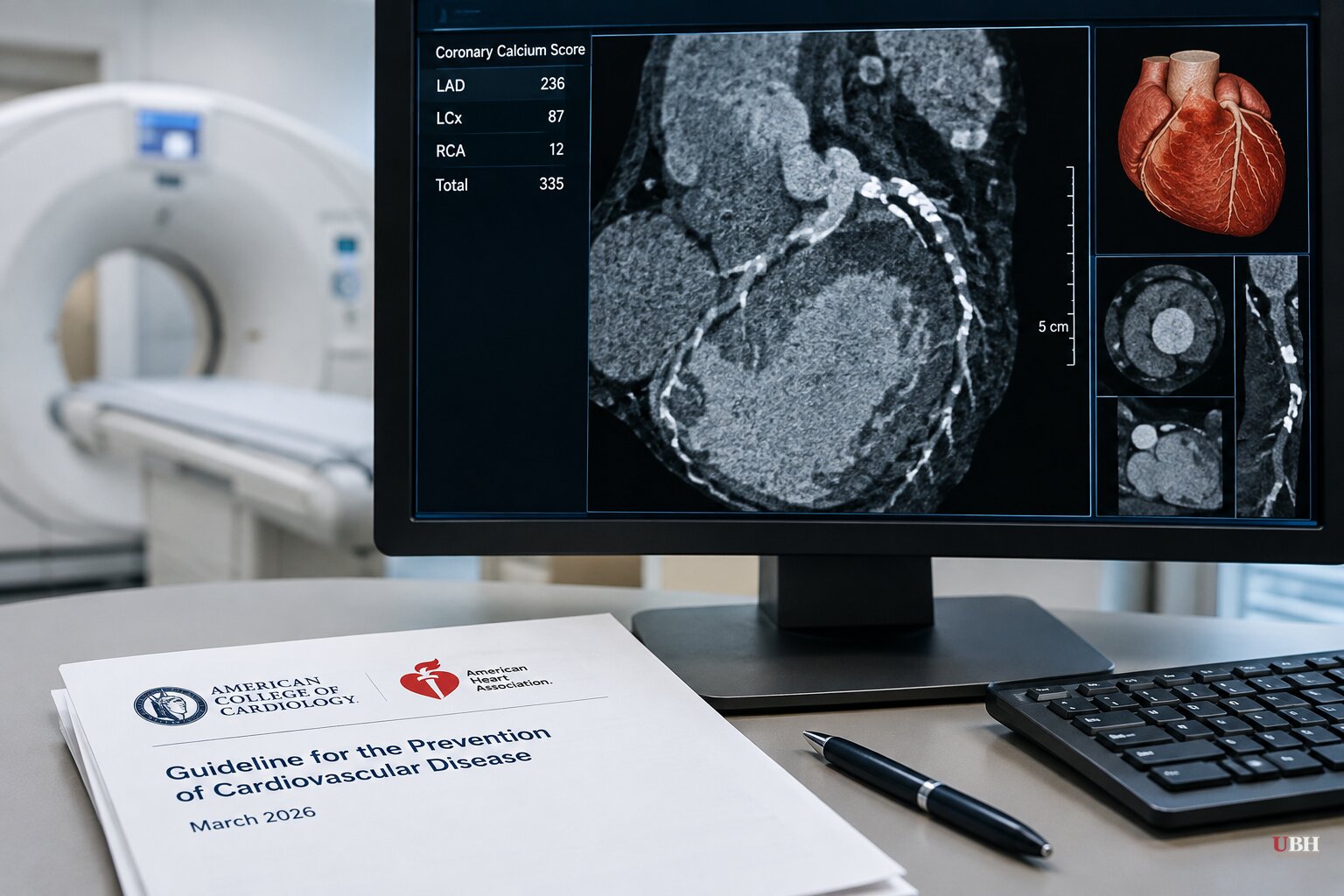
The coronary artery calcium (CAC) scan is a 10-minute test that costs about $100, according to the authors of a new MedPage Today op-ed. In March 2026, the American College of Cardiology (ACC) and American Heart Association gave it a central role in national prevention guidelines.
The guidelines recommend the scan for adults at borderline or intermediate risk of coronary disease when the decision to start a statin remains uncertain.
The op-ed authors say more than 800,000 Americans suffer a heart attack each year and that the great majority of those events are preventable. They argue Medicare pays roughly $50,000 for a heart attack but should pay $100 to help prevent one.
What the scan measures
Standard risk calculators use age, sex, cholesterol, diabetes status, blood pressure and smoking to estimate probability. The CAC scan looks for calcified plaque in the arteries, which is the disease itself.
The authors say a score of zero moves a patient's risk estimate down and can spare them a statin. They say a score above 100 identifies patients who may benefit from drugs and aggressive lifestyle changes.
Their example is a 52-year-old patient called Rob. He exercises, eats well, has borderline high cholesterol and a family history of heart disease. The calculator put him in the low-risk category. His CAC score was 220.
The authors say CAC has been included only peripherally in national guidelines for 35 years. They attribute part of the delay to clinical decision support tools built around population-average risk factors rather than individual imaging, and to the cautious pace of guideline committees.
The cost of chasing results
Not everyone sees more testing as the answer. Dr. H. Gilbert Welch, a general internist and coauthor of "Overdiagnosed: Making People Sick in the Pursuit of Health," told The Epoch Times that fear drives a lot of testing. Doctors don't want to be sued or be the one who missed something, he said. Many patients want a definite answer, even though no test can give one.
Dr. Ishani Ganguli, a primary care physician and researcher at Harvard Medical School, calls the pattern a cascade of care. Her team studied more than 110,000 Medicare patients with no known heart disease. Of those who had an EKG, about one in six saw a heart doctor or had more tests within three months, for symptoms such as a slightly slow heartbeat.
EKGs cost Medicare about $3.3 million a year. The follow-up care costs an estimated $35 million.
The researchers acknowledged some of that follow-up may have helped some patients. On average, they said, cascades can cause worry and lead to care patients may not have needed. Ganguli's advice is to ask a doctor what another test will tell you that you don't already know.
The scan itself can also carry a financial cost beyond the test. The Epoch Times profiled a man named Rich, who got a heart scan at about 40 because his father died of a heart attack at 45. It showed so much calcium that his doctor called him "The Calcium King."
According to Rich's account, later stress tests came back normal or only hinted at a slight blockage. He declined a catheterization and has had no heart attack or arterial procedure in more than 30 years. But the scan result limited his insurance options for years and pushed his and his wife's premiums to $2,300 a month, he said.
The guidelines' answer to that tension is to target the scan at patients whose treatment decision is truly uncertain. The op-ed's argument is that a zero score can prevent unnecessary drugs as well as identify those who need them.
Lab payments are being reset
Separately, Medicare is rewriting what it pays for lab tests. On Sept. 21, 2026, the Centers for Medicare & Medicaid Services released preliminary calendar year 2027 rates under the Clinical Laboratory Fee Schedule.
Under the Protecting Access to Medicare Act of 2014, certain labs had to report their private payer data to CMS between May 1 and July 31, 2026. By law, CMS will use that data starting in 2027 to update Medicare Part B lab rates.
In an Oct. 21 letter to CMS Administrator Mehmet Oz, the American Hospital Association raised concerns about the preliminary rates. The group represents nearly 5,000 hospitals and health systems. Many run outreach laboratories that serve physician offices, nursing homes and other community settings.
The association says hospital outreach labs have a direct stake in making sure rates rest on private payer data from all sectors of the laboratory market. It says that testing matters especially in rural communities, where it cuts long-distance travel and speeds treatment.
The CAC scan is imaging, not a lab test, so the lab fee schedule does not set its price. But the two disputes reflect one question: what Medicare pays for diagnostics, and how it decides.
The final 2027 lab rates have not been issued. Whether Medicare payment for calcium scanning changes after the March guidelines remains an open question.
The op-ed authors say the evidence is in. The Harvard cascade data shows what happens when testing runs past what patients need.
Sources used for this briefing
3 links from 3 independent newsrooms (syndicated copies of the same report count once)
These are the sources it draws on, linked so you can verify.


