
Unbiased headlines. Facts, not spin.
Every story is an unbiased news briefing written from 110+ sources across the spectrum — sources linked so you can verify it yourself.
 defense
Notable (6/10)
July 16, 2026 at 03:25 PM
defense
Notable (6/10)
July 16, 2026 at 03:25 PM
UK Government Tells Britons to Stockpile Food and Water, Citing Russian Threat
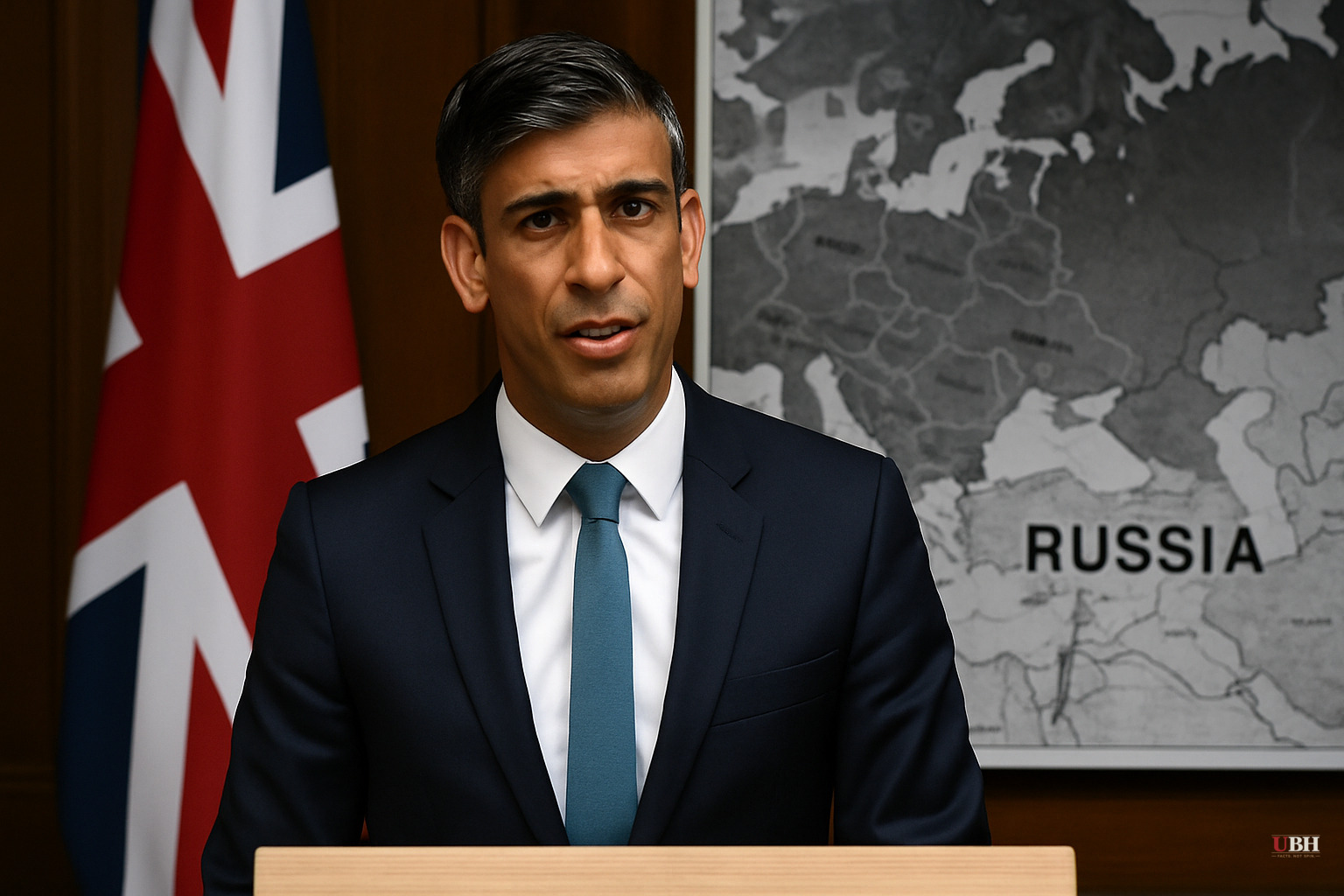
The British government is preparing to tell its own citizens to start stockpiling food, water, and medicine. Not because of a hurricane or a pandemic. Because of Russia.
According to Breitbart, the Cabinet Office plans to launch a national resilience campaign later this year advising households to keep a supply of long-life food, bottled water, and essential medicines on hand. The push is tied to a broader revival of Cold War-era home defense planning, including updates to Britain's so-called "War Books" and a wargame exercise, dubbed Operation Albiston Shadow, meant to stress-test the country's readiness for a crisis.
Darren Jones, Chief Secretary to the Prime Minister and a Cabinet Office minister with national security responsibilities, said the government "will do all it can" but that ordinary people need to "play our part." His statement, cited by Breitbart, framed the campaign as covering everything from severe weather to cyberattacks that knock out power, water, or phone service.
Louise Sandher-Jones, Under-Secretary of State for the Armed Forces at the Ministry of Defence, was more direct. She said Russia "is not only a threat to NATO's eastern flank" but "a direct threat to the UK homeland," and that the new exercises and War Book updates are meant to prepare Britain to meet that threat while signaling to Moscow that the UK isn't an easy target.
The Cabinet Office cited specific scenarios driving the plan: cyberattacks on data infrastructure, water systems, and police networks amid what it called a rapid rise in AI-driven attack sophistication. It also flagged "digital resilience failure" as a new risk category, explicitly referencing lessons from the July 2024 CrowdStrike IT outage that knocked out systems worldwide.
The government hasn't spelled out exactly what a household stockpile should contain or how long it should last. Breitbart noted the announcement was light on specifics, a concern given how vague official messaging tends to get when a government wants public buy-in without inducing panic.
The Fair Pushback
There's a legitimate argument that this looks like the state offloading responsibility onto ordinary people. If Whitehall spent decades letting Cold War infrastructure and civil defense planning atrophy, telling families to buy extra tinned beans doesn't fix the underlying problem. Britain is one of the only developed nations without a standing Civil Defence establishment, having stood the old one down in the 1960s to save money, and the country's own Chief of the Defence Staff has told a Parliamentary committee that Britain is under-prepared for emergencies because of a long-running "peace dividend" and defence budget trade-offs. Critics could reasonably ask why the government hasn't already hardened the water supply, the power grid, and police data systems against the threats it is now naming.
Jones' language, that the state "will do all it can" but the public must share the load, is itself an admission that resilience planning was neglected for years and is now being rebuilt in a hurry, with citizens filling gaps the government didn't close in time.
Still, the underlying threat assessment isn't invented. A UK defence minister has explicitly stated that Russia poses a direct threat to the UK homeland, not just NATO's eastern flank, and the government is treating hybrid attacks and sabotage as serious enough to justify reviving Cold War-era war planning. Whether stockpiling canned goods meaningfully counters that kind of threat is a separate question from whether the threat itself is real.
What Happens Next
The national awareness campaign is expected to launch later this year, though the Cabinet Office has not set a firm date or detailed the specific guidance households will receive. The Home Defence exercise, Operation Albiston Shadow, is planned for 2027 and is expected to be the largest such exercise ever undertaken, testing the country's response to hybrid attacks like cyberattacks or sabotage.
What remains unclear is the scale of investment behind the rhetoric. Announcing a stockpiling campaign is cheap. Hardening the actual water, power, and police infrastructure the government says is vulnerable costs real money, and no specific budget figures for that hardening work have been disclosed alongside this announcement. It's also worth noting that the government making these announcements was due to be replaced by a new administration, raising questions about whether the current plans, and the ministers behind them, will survive the transition. Parliament and taxpayers will want to see whether the spending matches the warnings.
Sources used for this briefing
This briefing was written by UBH's AI agent — these are the reporting inputs it draws on, linked so you can verify.


