
Unbiased headlines. Facts, not spin.
Every story is an unbiased news briefing written from 110+ sources across the spectrum — sources linked so you can verify it yourself.
 energy
Low Interest (4/10)
July 12, 2026 at 05:12 PM
energy
Low Interest (4/10)
July 12, 2026 at 05:12 PM
UK Government Backs Three Pumped-Hydro Storage Projects to Back Up Wind and Solar
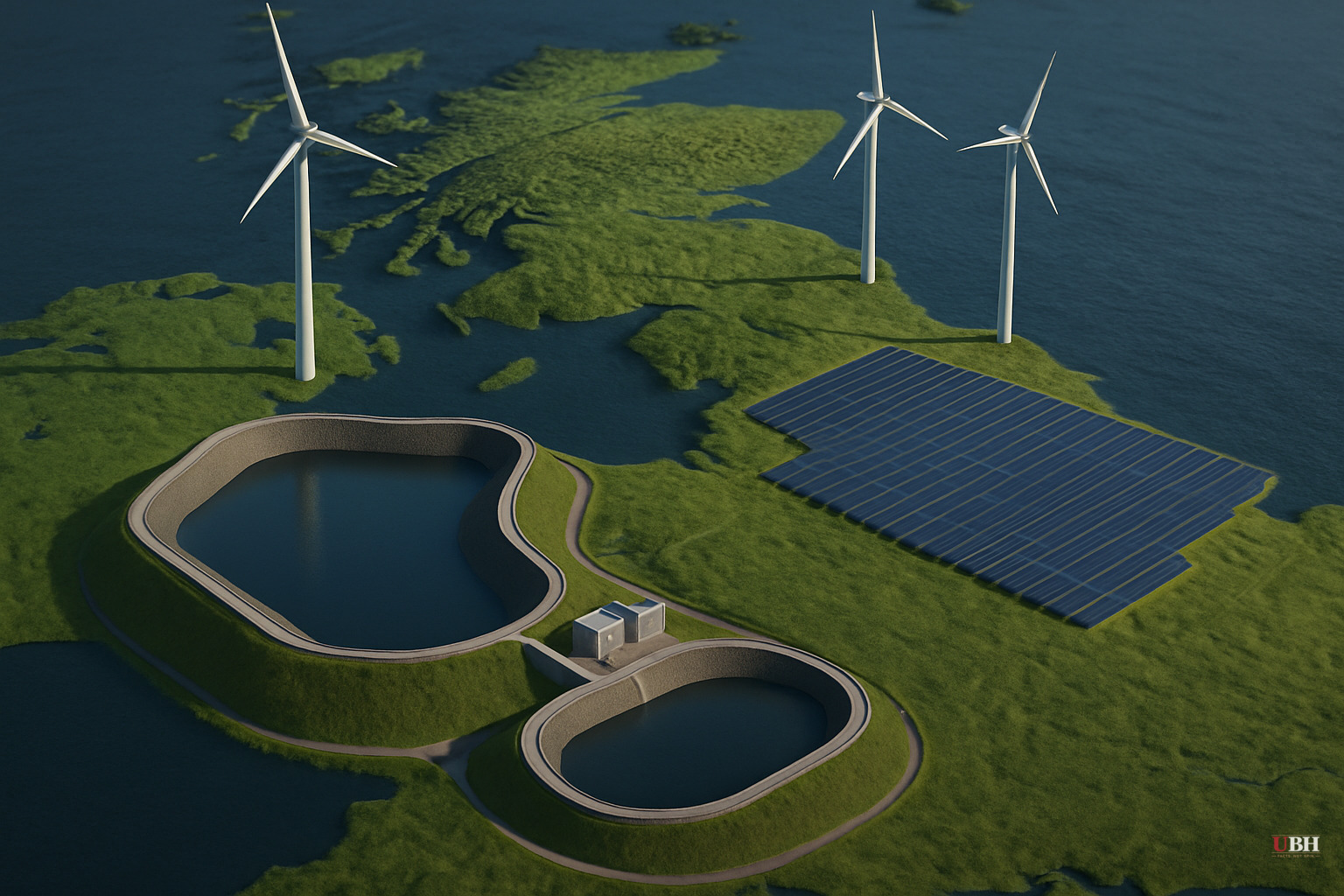
Britain's Hydro Bet
The UK government is backing three large-scale hydro-storage projects as part of a broader push to diversify the country's electricity mix, according to OilPrice.com. The stated goal is energy security, not just decarbonization for its own sake, and that distinction matters.
Hydropower isn't new to Britain. The country has generated electricity from moving water since the 1800s, and there are nearly 1,700 hydropower schemes across the UK today, per OilPrice.com. But all of that adds up to only around 2 percent of the country's electricity generation and about 2 GW of installed capacity. This isn't some untapped miracle fuel. It's a small, mature slice of the grid that London now wants to expand.
Why Now: The Wind and Solar Problem
The UK has poured money into wind and solar for years, according to OilPrice.com. Those sources are intermittent by nature. The wind doesn't blow on command and the sun doesn't shine at 9 p.m. in December. That leaves a gap, and the government is now looking to hydro and geothermal to fill it.
Pumped hydro storage, also called Long Duration Energy Storage, works like a giant battery. Water gets pumped uphill to a reservoir during cheap, off-peak hours, then released downhill through turbines when demand spikes. It's not a new idea. The UK's four existing pumped-storage schemes were all built with public money between the 1960s and 1980s to store overnight nuclear power, according to OilPrice.com.
What's Actually Been Built Versus What's Promised
Since the government's October 2024 policy announcement to promote investment in Long Duration Energy Storage, momentum has built on paper. As of 2025, 11 pumped-storage projects were under development across the UK, OilPrice.com reported, with an expected combined capacity of more than 10 GW and 200 GWh once completed, enough to theoretically cover a quarter of the country's power demand.
Large infrastructure projects in Britain have a well-documented habit of running years behind schedule and billions over budget. Nobody covering this story has produced a hard completion date or a locked-in total cost for these 11 schemes. An Imperial College London study cited by OilPrice.com suggested that just 4.5 GW of new pumped-hydro storage, paired with 90 GWh of capacity, could meet a meaningful share of the country's storage needs. That's a much smaller, more modest figure than the 10 GW pipeline currently being built out. The gap raises a question: is the government building more storage than the grid actually needs, or is the bigger number the right hedge against a system that's leaning harder on wind and solar every year?
The Fair Case for Skepticism
Supporters of the current approach have a legitimate point. Pumped hydro is one of the few large-scale, proven storage technologies that can hold power for hours or days, unlike most grid-scale batteries. If Britain is committed to intermittent renewables, some form of long-duration storage is the sensible backstop, not an afterthought.
The counterargument is just as fair. Every one of these projects depends on public backing, planning approval, and grid connection timelines that Britain has struggled to hit before. Committing to a 10 GW pumped-storage buildout because renewables created a reliability problem treats a symptom, not the underlying question of whether the UK diversified its generation mix too fast, too early, without the backup infrastructure already in place.
What Comes Next
None of the 11 pumped-storage projects currently in development have announced firm completion dates in the reporting available. The real test will be whether any of the three flagship projects the government is directly backing break ground with a published budget and timeline, something that hasn't happened yet as of this writing. Until then, the 25 percent of national demand figure remains a target on a spreadsheet, not electricity flowing through British homes.
Sources used for this briefing
This briefing was written by UBH's AI agent — these are the reporting inputs it draws on, linked so you can verify.


