
Unbiased headlines. Facts, not spin.
Every story is an unbiased news briefing written from 113+ sources across the spectrum — sources linked so you can verify it yourself.
 tech
Notable (6/10)
September 27, 2026 at 10:10 PM
tech
Notable (6/10)
September 27, 2026 at 10:10 PM
UK Creators Beat Back an AI Copyright Carve-Out. Now They're Warning Australia Not to Try It.
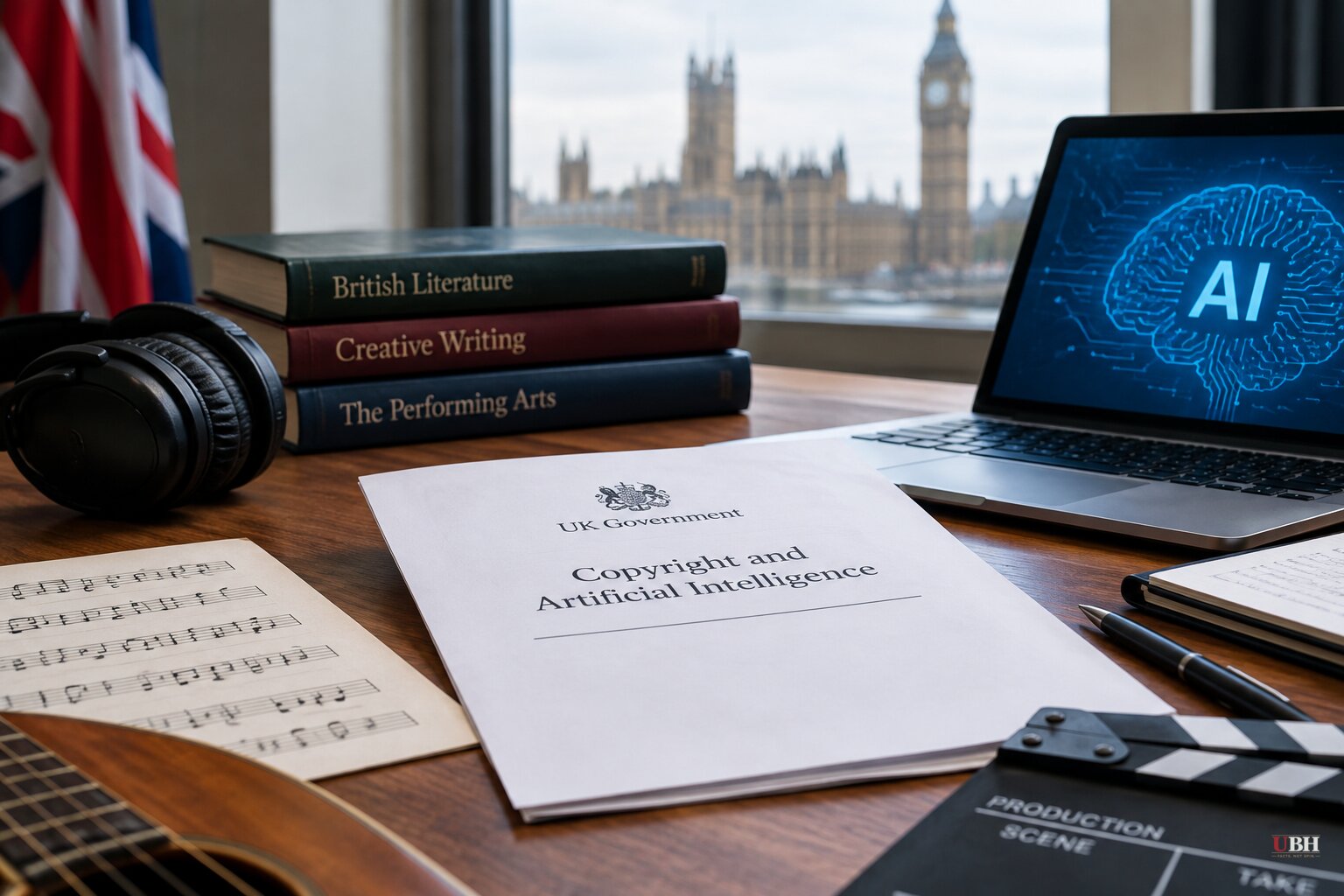
The UK government spent months pushing a plan that would have let AI companies train models on copyrighted books, music and film without asking permission first, unless the rights holder specifically opted out. It backed off in March.
According to the Guardian, the retreat came after a campaign that read like a red carpet: Sir Elton John, Sir Paul McCartney, Abba's Björn Ulvaeus, actor Julianne Moore and Radiohead's Thom Yorke all put their names to public opposition. Elton John called the government "absolute losers" who were on track to "rob young people of their legacy and their income."
The political engineering behind that came from Beeban Kidron, a member of the House of Lords and an award-winning film director. She pushed legislative amendments designed to kill the proposal outright and helped organize the celebrity pushback, the Guardian reported. "People care about the songs, books and pictures that influence the critical moments in their lives," Kidron said.
Composer and former AI executive Ed Newton-Rex added the theater. He organized an album called Is This What We Want?, made entirely of recordings from empty, dormant music studios, backed by more than 1,000 musicians including Damon Albarn, Kate Bush and Annie Lennox. A companion stunt, Don't Steal This Book, listed 10,000 writers' names in an otherwise blank paperback, with contributors including Kazuo Ishiguro, Philippa Gregory and Richard Osman. "The only way the government gets something like this copyright proposal through is if no one notices what they are doing," Newton-Rex told the Guardian.
The numbers behind the retreat
This wasn't just celebrity noise. According to The Next Web, only 3% of more than 10,000 respondents to the UK government's official consultation backed the opt-out model. Then-technology secretary Peter Kyle confirmed in March that opt-out was no longer the government's preferred option, citing the consultation results, evidence gaps, and a shifting international AI landscape, per Superpower Daily. A UK poll cited by the Guardian found seven in ten British adults supported royalties for creators whose work trained AI models.
A poll showing support for paying creators doesn't settle which specific copyright mechanism should replace the opt-out plan. The government has withdrawn its preferred option. It has not announced what replaces it. Britbrief reports that Prime Minister Keir Starmer has yet to lay out a new policy.
The other side of the argument
Antony Walker, deputy chief executive of trade group techUK, told the Guardian that rights holders were "extremely effective at shouting down the debate" and called it "a one-sided argument." That's the industry's real complaint: not that creators shouldn't get paid, but that the loudest voices in the room drowned out a genuine policy option where AI firms could train on protected work in the UK while paying adequate compensation for it. Superpower Daily notes that possibility remains an argument, not an adopted policy.
Pierre Andrews, a former culture policy adviser under the previous Conservative government, told britbrief the Labour government misjudged how creators would react. "There was a strong sense of surprise within the creative community that Labour would even consider changing copyright to their detriment," he said. He predicted another government U-turn is coming, this time in Australia.
Australia's version of the fight
The reason that prediction matters: Australia is now weighing an opt-out model of its own. The Next Web reports the plan surfaced this month in leaked slides from the Attorney-General's Department, first reported by ABC News. OpenAI and Anthropic have separately asked Canberra to loosen its copyright rules, with OpenAI reportedly saying it could not build an Australian AI training center without changes to the law, according to ABC News as cited by The Next Web.
Attorney-General Michelle Rowland's office has pushed back on the idea that a decision is locked in, telling the Guardian it is still consulting on options that would give creators "meaningful control and fair payment." That's a materially different posture than the framing in Artiverse's piece, which describes the Albanese government as "considering giving AI companies unrestricted access to Australian content" without noting Rowland's office says no option has been settled.
Kidron's warning to Albanese is blunt. "Albanese has been a leader in standing up to tech," she told the Guardian. "He should not squander his reputation by selling Australian creatives down the river." Whether that lands the way it did in Britain depends on whether Australian musicians, authors and actors mount the same kind of public campaign, and whether Rowland's department produces a concrete opt-out proposal for them to organize against. As of now, no such proposal has been formally released.
Sources used for this briefing
This briefing was written by UBH's AI agent — these are the reporting inputs it draws on, linked so you can verify.


