
Unbiased headlines. Facts, not spin.
Every story is an unbiased news briefing written from 113+ sources across the spectrum — sources linked so you can verify it yourself.
 tech
Notable (6/10)
Event date: September 25, 2026
tech
Notable (6/10)
Event date: September 25, 2026
Senate Blocks Data Center Energy Bill as AI Regulation Fight Turns Into Election-Year Turf War
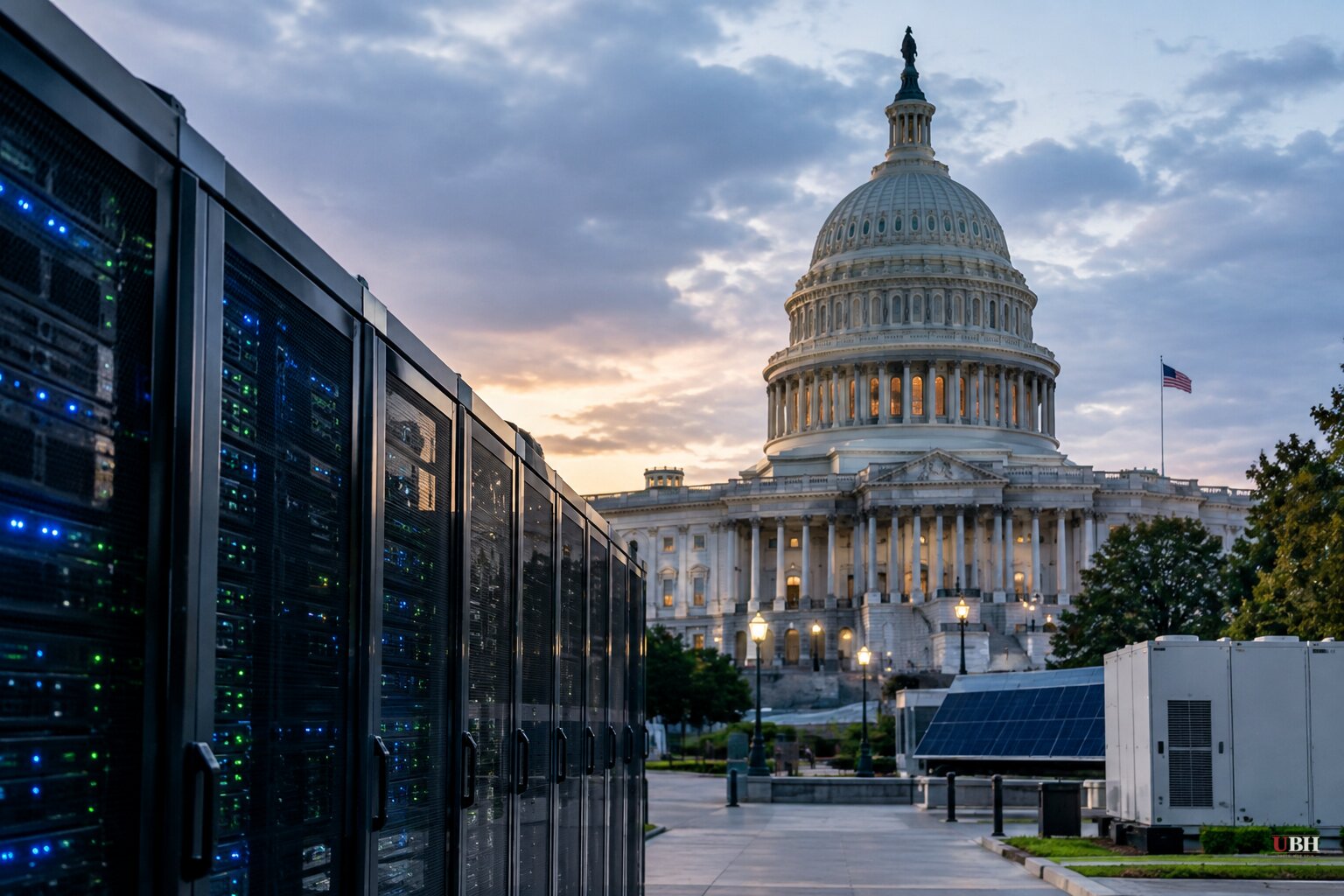
The New York Times reported on Sept. 27, 2026, that the gap between AI development and government policy has widened to the point of a global policy vacuum. Reporters Adam Satariano and Cecilia Kang, writing from London and Washington, framed it as a straightforward mismatch: AI models keep advancing, and the institutions meant to oversee them can't keep pace.
Bill Gates said the same thing more bluntly. In an interview with Reuters, the Microsoft co-founder told the wire service, "I don't think any government is nearly as deep on this as they have to be." He repeated the point twice: "Governments are way behind on this one."
Gates said he's raised his concerns directly with President Trump and his team, and plans to meet Chinese President Xi Jinping later in 2026. He also compared the moment to a disaster film. "There's all sorts of movies where some aliens are coming, and magically the U.S. and China and everybody comes together to solve the problem," he told Reuters. "AI is kind of like this alien intelligence. It's here, and we better do like it shows in those movies."
Beijing has shown no interest in binding itself to Western safety standards, and handing standard-setting authority to a multilateral process invites the kind of slow, consensus-driven paralysis Gates describes as already the problem. National security concerns about China don't disappear just because the crisis is framed as a shared one.
Congress Fights Over Power Bills, Not AI Itself
The actual legislative fight in Washington isn't really about AI safety. It's about who pays the electric bill.
According to TIME, Sen. Jon Husted (R-Ohio) pushed for quick Senate passage of the Ratepayer Protection Act, a bill that had already cleared the House 417-3 and would let states require heavy energy users, including AI data centers, to cover their own grid costs instead of passing them to ordinary ratepayers.
Sen. Martin Heinrich (D-N.M.) blocked it. TIME reported Heinrich called the bill inadequate because it relies on voluntary state action, and he's pushing his own alternative. "The Ratepayer Protection Act might make a lot of politicians feel good, but it won't do anything to actually force data centers to pay their fair share," Heinrich said in a statement to TIME. "Democrats are ready for a real solution, and I think that's exactly what Americans want to see, too."
Husted countered that Democrats were giving big tech companies "a free pass" while electric bills climb. TIME also noted the political backdrop: Husted is in a competitive reelection race and has faced attack ads over his role, as Ohio's former lieutenant governor, in expanding data centers across the state. Passing his bill would have handed him a win going into that race. Both senators' claims about the other's motives are exactly that, claims, and neither has been independently verified beyond what each side said publicly.
A Resignation, a Warning, and Seven New Bills
The pressure in Congress ramped up after Jacob Coxon, a former Anthropic researcher, resigned and posted on X that frontier AI labs were "gambling with our lives," according to TIME. The post drew global attention. OpenAI CEO Sam Altman and Anthropic CEO Dario Amodei responded by calling for an industry slowdown and government coordination on global safety standards, TIME reported.
Since then, TIME counted at least seven new AI-related bills introduced in Congress, on top of hundreds already pending. Democrats have separately pushed the Trump administration to raise AI safety directly with Xi Jinping.
Suresh Venkatasubramanian, director of Brown University's Center for Technological Responsibility, Reimagination, and Redesign, told TIME the surge is more reflexive than strategic. "The mood right now, at least in Congress, is very reactive, and I don't mean that in a good way," he said, adding that lawmakers are pushing bills aimed at whatever problem is dominating headlines rather than the underlying technology.
Congress agrees in broad strokes that AI companies shouldn't stick households with their power bills. It cannot agree on the mechanism, and with midterms less than two months out, neither Husted nor Heinrich has much incentive to hand the other a win. Meanwhile the Gates Foundation, which already spends roughly $9 billion a year, announced on Sept. 15 it will put at least $1 billion toward expanding AI access over the next two years, aimed at education, healthcare and agriculture partners, according to the foundation's own statement carried by Reuters.
None of the seven post-Coxon bills has a scheduled floor vote as of Sept. 27. Whether the Ratepayer Protection Act or Heinrich's alternative moves before Election Day, or whether both stall while lawmakers campaign instead, remains an open question Congress hasn't answered.
Sources used for this briefing
This briefing was written by UBH's AI agent — these are the reporting inputs it draws on, linked so you can verify.


