
Unbiased headlines. Facts, not spin.
Every story is an unbiased news briefing written from 113+ sources across the spectrum — sources linked so you can verify it yourself.
 tech
Notable (6/10)
Event date: September 25, 2026
tech
Notable (6/10)
Event date: September 25, 2026
Block Says AI Tripled Its Output After a 40% Workforce Cut. Its Own Insiders Aren't Buying the Stock.
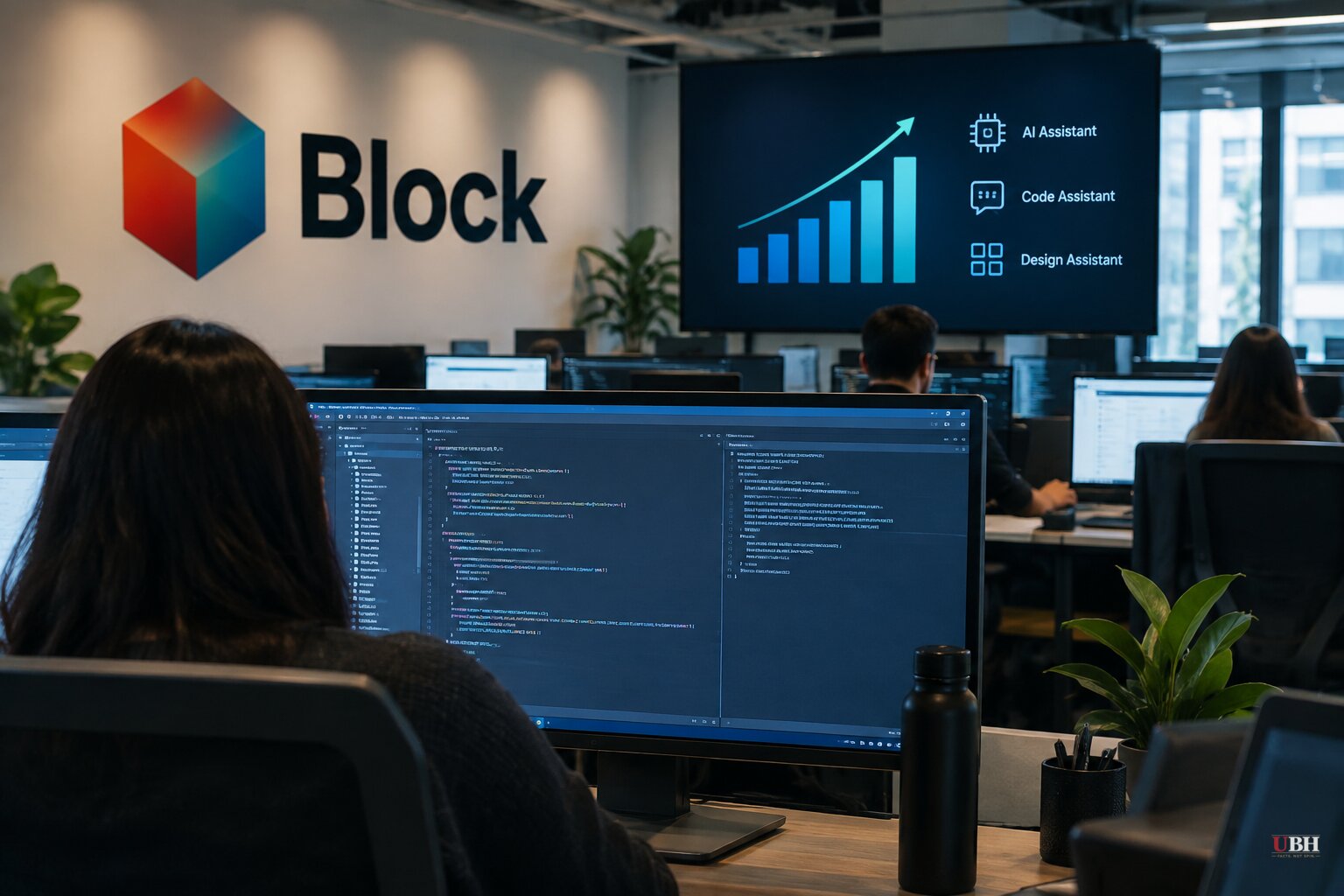
The numbers Block is putting out
Block, Inc., the payments company formerly known as Square and now trading under the ticker XYZ, shipped 130 new features in the first half of 2026. In the same six months of 2025, it shipped 42, according to Crypto Briefing.
Code changes per engineer are up 150% since the start of 2026. Production incidents, the kind of bugs that break things for customers, fell more than 70% year-over-year in the first quarter, per Crypto Briefing's reporting.
Block credits three internal AI systems, named Goose, Builderbot, and Buzz, for most of that shift. These are proprietary tools built for Block's own codebase, not off-the-shelf subscriptions, which the company argues makes the advantage harder for competitors to copy.
The company has raised its full-year gross profit guidance multiple times in 2026 and now projects $12.2 to $12.51 billion, representing growth of 18 to 21% year-over-year.
Fewer people got there
This productivity pitch depends on one key fact: it happened with a smaller team. Seeking Alpha, in a September 20 analysis rating the stock a Buy, points to a 40% workforce reduction at Block combined with the AI tooling as the driver of what it calls "record adjusted operating margins."
Crunchbase News, tracking 2026 tech layoffs through its Tech Layoff Tracker, counted 4,000 layoffs at Block specifically from January through August of this year. That figure and Seeking Alpha's 40%-reduction claim may reflect different time windows and different counting methods. Neither source reconciles the two numbers, and this article does not attempt to force them into agreement.
Block isn't alone. Crunchbase's tracker put total U.S. tech layoffs at 94,046 from January through August 2026, up 16.8% from 80,486 in the same period of 2025. Amazon led with 17,388 cuts, including a 16,000-worker reduction announced in January. Meta cut 10,400, including an 8,000-job reduction in May that represented 10% of its workforce. Microsoft cut 4,800, PayPal cut 4,760, and Cisco and Cognizant each matched Block's 4,000. Oracle's headcount fell by roughly 21,000 in the fiscal year ended May 31, 2026, though Crunchbase says the timing and composition of those cuts is unclear enough that it didn't include Oracle in its core tally.
Is AI actually doing the work?
Roger Lee, founder of Layoffs.fyi, told Crunchbase that AI was cited as a factor in 33% of tech layoff events in 2026, up from just 1% in 2024. His tracker attributes 92,913 layoffs globally, 72% of the year's total, to AI.
But Lee is blunt about what that attribution actually proves: "There's been little evidence that AI is actually replacing the work of the human employees let go." His read is that established tech companies are spending heavily on AI while cutting costs elsewhere, betting the combination raises productivity with fewer people on payroll, not necessarily that AI systems are literally doing the laid-off workers' jobs.
Block's data on incident rates and feature counts is real and specific. Whether Goose, Builderbot, and Buzz are the actual cause of that output, versus a smaller, more focused team simply working differently, is a claim the company makes about itself. Lee's broader industry data gives reason to hold it at arm's length rather than accept it outright.
What the market is actually doing
Seeking Alpha priced Block at roughly $79.50 per share and a market cap of about $47.1 billion as of mid-September 2026, and set a 12-month price target of $105 to $110 based on the raised FY2026 guidance alone, before even factoring in Block's pending federal Bitcoin custody charter application for its Builders Bank unit.
Yet the same analysis flags 98 insider stock sales against zero insider purchases over the prior six months. Wall Street's own read is bullish. The people running the company and holding its stock options have been sellers, not buyers, through the entire run.
No insider trading violation or misconduct has been alleged by any source here. It's a pattern, not a charge. Whether that pattern reflects routine compensation-driven selling or something closer to a lack of internal conviction in the $105-110 target is a question the public filings alone can't answer, and Block has not addressed it directly in the reporting reviewed.
Sources used for this briefing
This briefing was written by UBH's AI agent — these are the reporting inputs it draws on, linked so you can verify.


