
Unbiased headlines. Facts, not spin.
Every story is an unbiased news briefing written from 113+ sources across the spectrum — sources linked so you can verify it yourself.
 tech
Notable (5/10)
Event date: September 17, 2026
tech
Notable (5/10)
Event date: September 17, 2026
Bill Gates Says a Global AI Deal Will Be Harder to Reach Than Cold War Nuclear Arms Talks
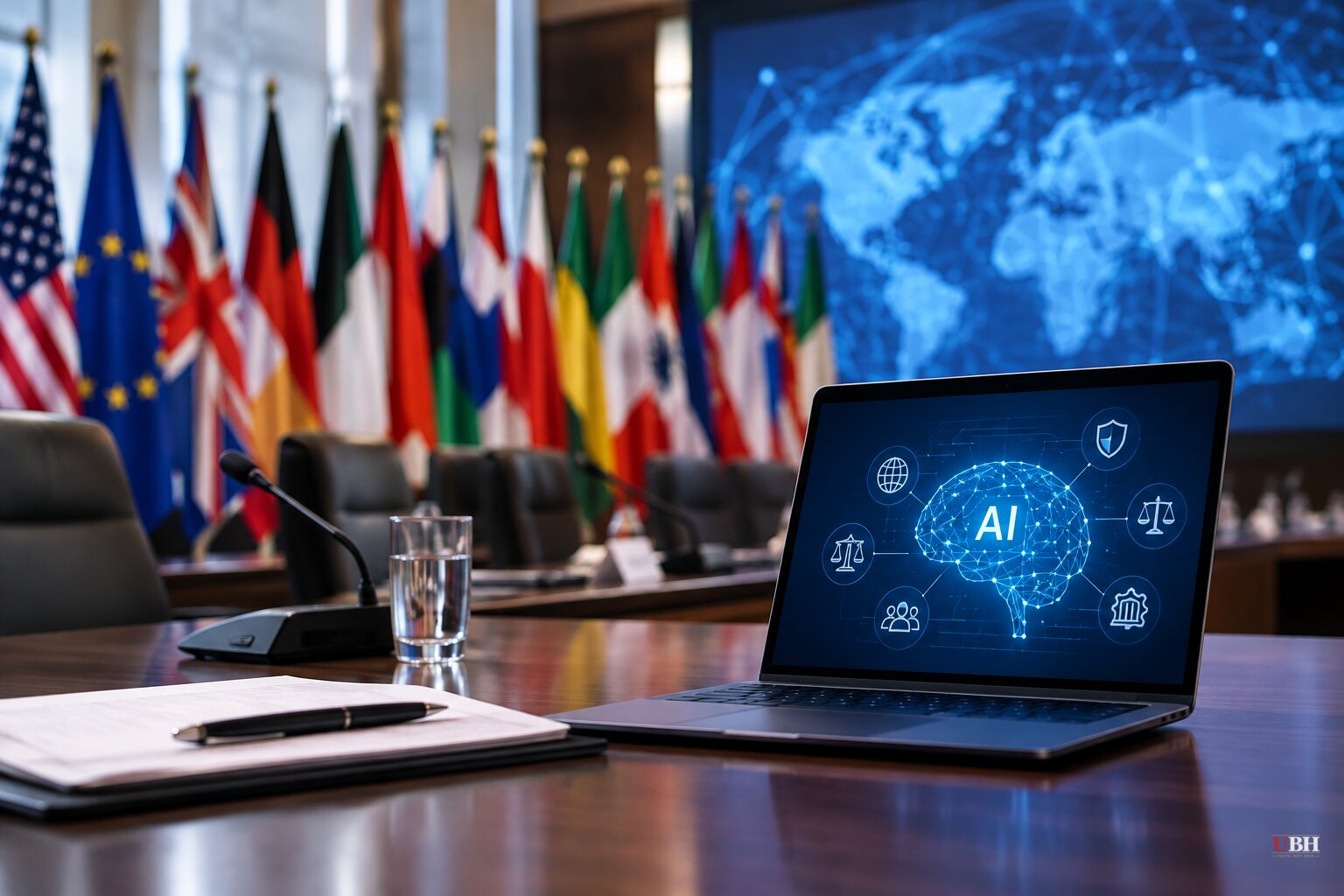
Since Anthropic whistleblower Jacob Coxon resigned earlier this month and warned publicly that "the people building AI earnestly believe that it could kill us all by the end of the decade," the fight over AI regulation has only gotten louder. Bill Gates just added his voice to it, and he didn't hold back.
In an interview taped Wednesday and aired Sunday on NBC News' "Meet the Press," Gates told moderator Kristen Welker that reaching a global framework on artificial intelligence will be "more difficult" than Cold War-era negotiations that limited nuclear weapons between the U.S. and the Soviet Union.
"This is more difficult than that was," Gates said, according to NBC News.
Gates Takes On Trump's No-Guardrails Stance
Gates' comments came directly in response to President Donald Trump's position on AI regulation. Trump rejected calls earlier this month for the federal government to impose guardrails on AI companies, posting on Truth Social: "WHOEVER WINS AI, WINS! We are leading China, and all others, and will continue to do so."
Trump's position rests on the idea that regulation slows innovation, and in a genuine arms race with Beijing, slowing down first could hand China the advantage. That's the core of the administration's case, and it's shared by plenty of people in the tech industry who worry that heavy-handed rules just push development overseas or underground.
Gates argues the opposite is true. He says monitoring systems for AI companies wouldn't cost the U.S. anything in a competition with China.
"What he said is fine, but I think after he hears from me and other people, including that this does not handicap us in whatever he thinks the nation-state race is, that, you know, we will come to a consensus," Gates told NBC News.
Gates pointed to past U.S.-led global agreements on aviation safety, the ozone layer, and nuclear weapons as proof America can lead on AI without giving anything up. "Since World War II, the U.S. should be very proud that when there have been global challenges, we, in a way that was benign, where we had friends and allies coming along with us," he said. "And AI is one we're going to have to go back to this: 'Hey, humanity is all in this together.'"
Kill Switches Aren't Enough, Gates Says
Congress has floated requiring AI companies to build in a kill switch. Gates told NBC a kill switch alone won't prevent AI-related disasters. He wants internal monitoring and safeguards layered on top, and he insists that can be done without slowing development down.
Gates also named what he thinks is the most urgent near-term danger. Bad actors could use AI tools to drain bank accounts, knock out power grids, or pull off attacks once only possible for major nation-states, according to Hoodline's account of the NBC interview. "AI is certainly powerful enough to drive events that cause a billion deaths," Gates told The Hill separately, adding that there's "never been a weapon as powerful as the combination of people with ill intent using the latest AI tools."
Industry and Congress Are Already Split on the Fix
The debate isn't just Gates versus Trump. Anthropic CEO Dario Amodei and OpenAI CEO Sam Altman have both said publicly that AI development needs to slow down amid fears the technology is nearing "superintelligence." In a blog post, Amodei said frontier labs should slow down, but only enough to stay ahead of China, and called for coordination between democratic and authoritarian governments on rules.
Rep. Ro Khanna, D-Calif., appeared on the same Sunday broadcast and argued the U.S. and China need to form a joint working group of technology experts. He said banning recursively self-improving AI models "should not be controversial," arguing Beijing doesn't want to lose control of its own AI any more than Washington does. Khanna said he believes the U.S. can lead on a treaty that's "both enforceable and verifiable."
An AI treaty is much harder to verify than a nuclear one. Warheads can be counted, missile silos photographed by satellite. Code running on a server can be hidden, altered, or duplicated in ways that make traditional arms-control verification tools nearly useless. Gates' Cold War comparison cuts both ways. The stakes may be similar, but the enforcement mechanism nobody has built yet remains a critical obstacle.
According to Hoodline's reporting on the NBC interview, the U.S. and China have already established a dialogue on AI risks and benefits, with the next exchange planned for November. Trump has also said he intends to raise the subject of superintelligence directly with Chinese President Xi Jinping. Whether that conversation produces anything resembling the arms-control frameworks Gates is citing, or whether it stalls the way Gates fears, remains unanswered heading into that November meeting.
Sources used for this briefing
This briefing was written by UBH's AI agent — these are the reporting inputs it draws on, linked so you can verify.


