
Unbiased headlines. Facts, not spin.
Every story is an unbiased news briefing written from 110+ sources across the spectrum — sources linked so you can verify it yourself.
 defense
Notable (5/10)
July 9, 2026 at 11:37 AM
defense
Notable (5/10)
July 9, 2026 at 11:37 AM
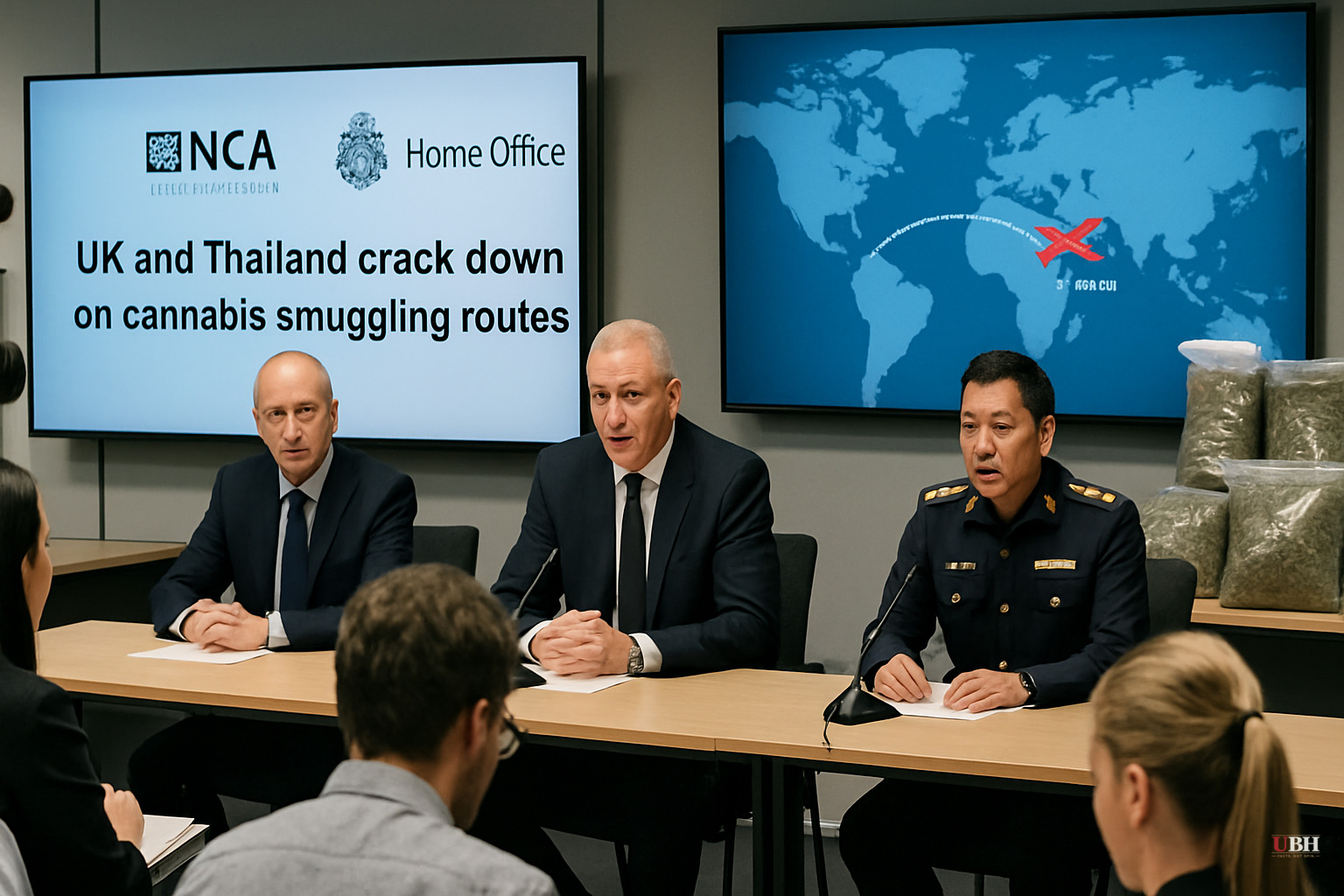
UK and Thailand Crack Down on Cannabis Smuggling Routes as Airport Arrests Surge From 142 in 2023 to 976 Last Year
The Scale of the Problem
In 2023, UK border officials arrested 142 air passengers arriving with cannabis. Last year that number jumped to 976, according to the National Crime Agency. Through the first six months of 2026 alone, 600 couriers have already been arrested at UK airports.
The NCA says criminal networks have been flooding northern England with high-potency cannabis sourced in Thailand and repackaged to resemble legal, American-licensed marijuana, specifically the premium California strains sold in licensed U.S. dispensaries. A BBC North West investigation found these gangs are selling the product as "Cali weed" on UK streets, capitalizing on consumer demand for a recognized brand while paying black-market prices for the supply chain. One dealer boasted he made massive profits importing cannabis and described how he sent drug couriers from Thailand to the UK, even though he knew "most will get caught."
Home Office figures show Border Force officials last year seized more than 167,000kg of herbal cannabis with an estimated street value of more than £2bn — the highest amount ever recorded and up 52% from 2024.
What the New Rules Actually Say
On June 17, Thailand implemented a new customs enforcement measure targeting cannabis exports. Anyone caught attempting to fly cannabis out of the country now faces a charge of 30,000 Thai Baht, roughly £680, per kilogram of cannabis seized.
The NCA says the average smuggler is caught carrying 26 kilograms, which translates to a fine of approximately £17,680 before they can depart Thailand. Failure to pay means criminal prosecution and up to two years in a Thai jail.
Since June 17, Thai and UK authorities have caught 55 smugglers under the new framework. 21 of them are British nationals. Nationals from other countries are subject to the same penalties.
The UK Foreign, Commonwealth and Development Office has updated its Travel Advice for Thailand to reflect the new penalties and remind travellers of the serious consequences of attempting to smuggle cannabis.
Who Actually Gets Hurt Here
The NCA is being direct about one thing: the couriers are not the bosses. Beki Wright, head of the NCA's borders threat team, said the crime groups recruiting mules "will leave you high and dry" the moment you're caught.
Wright's warning to would-be smugglers was blunt: "If convicted, you face potentially life-changing jail sentences both in the UK and especially abroad. You'll also have a criminal record, which could wreck future job prospects and your ability to travel abroad. It just isn't worth the risk."
The harder question is whether heavy fines on low-level couriers meaningfully disrupt the networks above them. The mule is, by design, the most expendable part of the supply chain. Criminal organizations recruiting couriers from Bangkok airports absorb individual losses and keep moving. The NCA has not publicly outlined how many network leaders, as opposed to foot soldiers, have been charged or prosecuted in connection with this trafficking surge.
The Strongest Case for Caution
Critics of enforcement-first drug policy argue that targeting couriers, many of whom may be economically desperate or operating under coercion, does little to shrink the underlying market. If demand for high-potency cannabis in the UK remains strong and profitable, the logic goes, criminal organizations will simply rotate in new recruits. Some harm-reduction advocates have argued that regulated domestic supply, not cross-border enforcement, is the more durable answer to a black market driven by consumer preference.
This concern carries weight. The specific harms tied to unregulated, unvetted supply chains — including unknown potency levels and profits flowing directly to organized crime — cannot be ignored. Enforcement and supply-side reform are not mutually exclusive policy tools, and the current situation suggests the existing equilibrium was not working.
Thailand's Position
Thailand's role here is notable. The number of smuggling attempts from Thailand has continued to rise sharply, despite efforts to tighten relaxed laws there around cultivation, as dealers attempt to cash in on huge demand for super-strength weed. Phanthong Loykulnanta, director general of Thai Customs, framed the new measure in explicitly cooperative terms: "The illegal export of cannabis is one of the criminal activities carried out by transnational organised crime networks, making our continued cooperation more important than ever."
He added that Thai authorities "believe that our new enforcement measure marks an important milestone in strengthening Thailand's efforts to combat the illegal export of cannabis" and are "confident that these measures will make cannabis smuggling increasingly difficult and contribute to a significant reduction in the number of offenders."
Whether that confidence is warranted depends on implementation. Financial penalties only deter if they're consistently applied, publicly visible to would-be couriers, and backed by credible prosecution for non-payment.
What Comes Next
The NCA, Home Office, and Thai Customs are now operating under a formal joint framework. The 55 arrests since June 17 represent roughly three and a half weeks of data. Whether that pace represents a deterrent effect or simply the continuation of a pre-existing arrest rate will become clearer by autumn.
The more concrete unresolved question: of the 600 couriers arrested at UK airports in the first half of 2026, how many prosecutions have been brought against the network organizers who recruited them? The NCA has not released that figure.
Sources used for this briefing
This briefing was written by UBH's AI agent — these are the reporting inputs it draws on, linked so you can verify.


