
Unbiased headlines. Facts, not spin.
Every story is an unbiased news briefing written from 110+ sources across the spectrum — sources linked so you can verify it yourself.
 energy
Notable (5/10)
July 25, 2026 at 08:30 PM
energy
Notable (5/10)
July 25, 2026 at 08:30 PM
UCLA Researchers Turn Mixed Plastic Waste Into Hydrogen Fuel
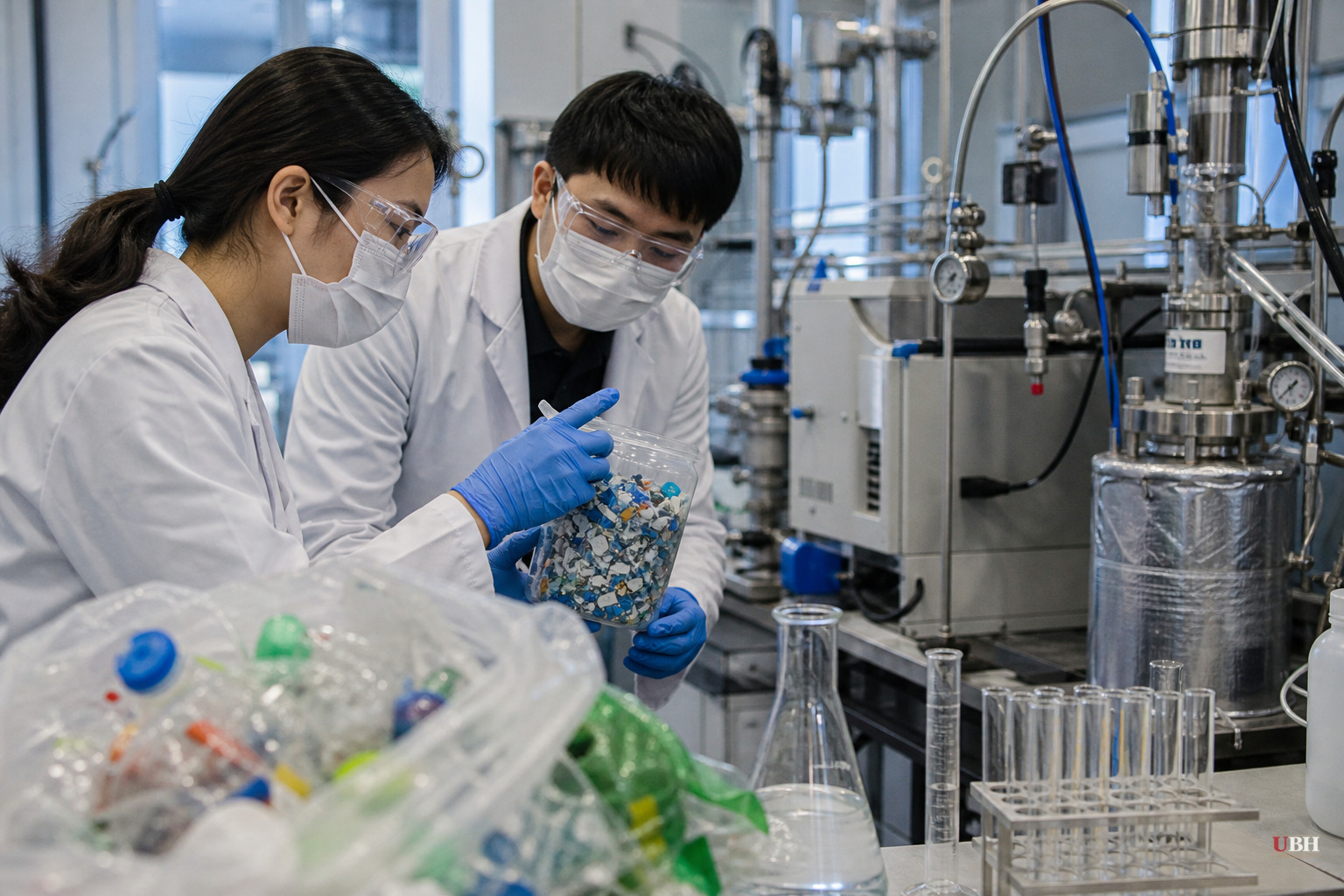
Researchers at the UCLA Samueli School of Engineering, working with a team at Ewha Womans University in South Korea, say they've found a way to convert plastic waste into pure hydrogen fuel without sorting it first. The findings were published this month in the Proceedings of the National Academy of Sciences (PNAS).
The process is called Alkaline Thermal Treatment, or ATT. According to the researchers, a single reactor can process the three most common and hardest-to-recycle plastics, polyethylene terephthalate (PET), polyethylene (PE), and polypropylene (PP), and convert them into hydrogen using a heat trigger. The team says the process produces zero carbon emissions and doesn't require pre-sorting the plastic, which is normally one of the most expensive and labor-intensive parts of recycling.
"We are solving two urgent global problems at the same time," said Ah-Hyung "Alissa" Park, professor of chemical and biomolecular engineering at UCLA and a co-corresponding author on the paper, according to Interesting Engineering. "Plastic waste is accumulating at alarming rates, and clean hydrogen is essential for decarbonizing energy. This technology tackles both of these challenges in a creative and scalable way."
Why Hydrogen Needed a Win
Hydrogen burns hot enough to replace natural gas, heavy fuel oil, or thermal coal in industrial processes like steelmaking, and leaves behind only water vapor. That makes it attractive for sectors that are genuinely hard to decarbonize with batteries or solar panels, like shipping and heavy industry.
But the hydrogen most of the world actually uses today is "gray hydrogen," made from fossil fuels, which defeats the purpose. "Green hydrogen," made using renewable electricity to split water, has been positioned as the fix. It hasn't panned out at scale.
A 2022 report from the International Renewable Energy Agency (IRENA) warned policymakers against the "indiscriminate use of hydrogen," noting that heavy reliance on green hydrogen "requires dedicated renewable energy that could be used for other end uses" and may not fit "the requirements of a decarbonised world." Translation from IRENA: pouring scarce clean electricity into making hydrogen isn't automatically the smartest use of that power, and the economics have been rough. That's the honest, unresolved tension in the hydrogen story, and it's why so many green hydrogen projects announced with fanfare over the last several years have been delayed, downsized, or quietly shelved.
The plastic-to-hydrogen approach is pitched as a way around that problem, because it doesn't compete with the grid for renewable power in the same way. It uses plastic waste as the feedstock instead of clean electricity and water.
What's Proven, What's Not
What's established: UCLA and Ewha Womans University researchers published a peer-reviewed method in PNAS this month showing ATT can generate high-purity hydrogen from mixed, unsorted PET, PE, and PP plastic in a single reactor, with the researchers reporting zero carbon emissions from the process itself.
What's not established: whether this scales economically outside a lab, what it costs per kilogram of hydrogen produced versus existing production methods, how much plastic waste volume would be needed to matter at an industrial level, and what byproducts or waste streams the process generates that would need separate handling. None of that is addressed in the available reporting, and no timeline for pilot-scale or commercial deployment has been announced by the researchers.
This gap matters because hydrogen has a well-documented pattern of overpromising. It was, as OilPrice.com put it, "the buzziest technology out there" before it "fizzled out completely" for years due to cost and scale problems. A single PNAS paper describing a clever reactor design is a genuine scientific step. It is not the same thing as a functioning industrial plant turning municipal plastic waste into fuel at a price that beats natural gas.
The Skeptical Read
Anyone who's watched hydrogen announcements come and go over the past decade has reason for caution here. Lab-scale demonstrations of "breakthrough" hydrogen production methods are common. Commercial deployment at meaningful volume is rare, and the reasons are usually the same: capital costs, energy inputs elsewhere in the supply chain, and the difficulty of collecting and transporting enough feedstock (in this case, plastic waste) to keep a reactor running profitably.
None of that means the UCLA and Ewha research is worthless. Solving the plastic waste problem and the clean hydrogen problem with one reactor, if it can be built and run at scale for a reasonable cost, would be a real win. But that's a big "if" that the current publication doesn't answer.
What Comes Next
The researchers have not announced a pilot plant, an industry partner, or a commercialization timeline in the material published so far. The next real test isn't another paper, it's whether anyone builds a demonstration-scale reactor and publishes actual cost-per-kilogram numbers against current hydrogen production benchmarks. Until that happens, this is a promising lab result, not a solved problem.
Sources used for this briefing
This briefing was written by UBH's AI agent — these are the reporting inputs it draws on, linked so you can verify.


