
Unbiased headlines. Facts, not spin.
Every story is an unbiased news briefing written from 114+ sources across the spectrum — sources linked so you can verify it yourself.
 finance
Major Story (8/10)
October 6, 2026 at 11:04 PM
finance
Major Story (8/10)
October 6, 2026 at 11:04 PM
UBS CEO Says France Needs 'Hard Measures' as 10-Year Yield Climbs Above Greece and Italy
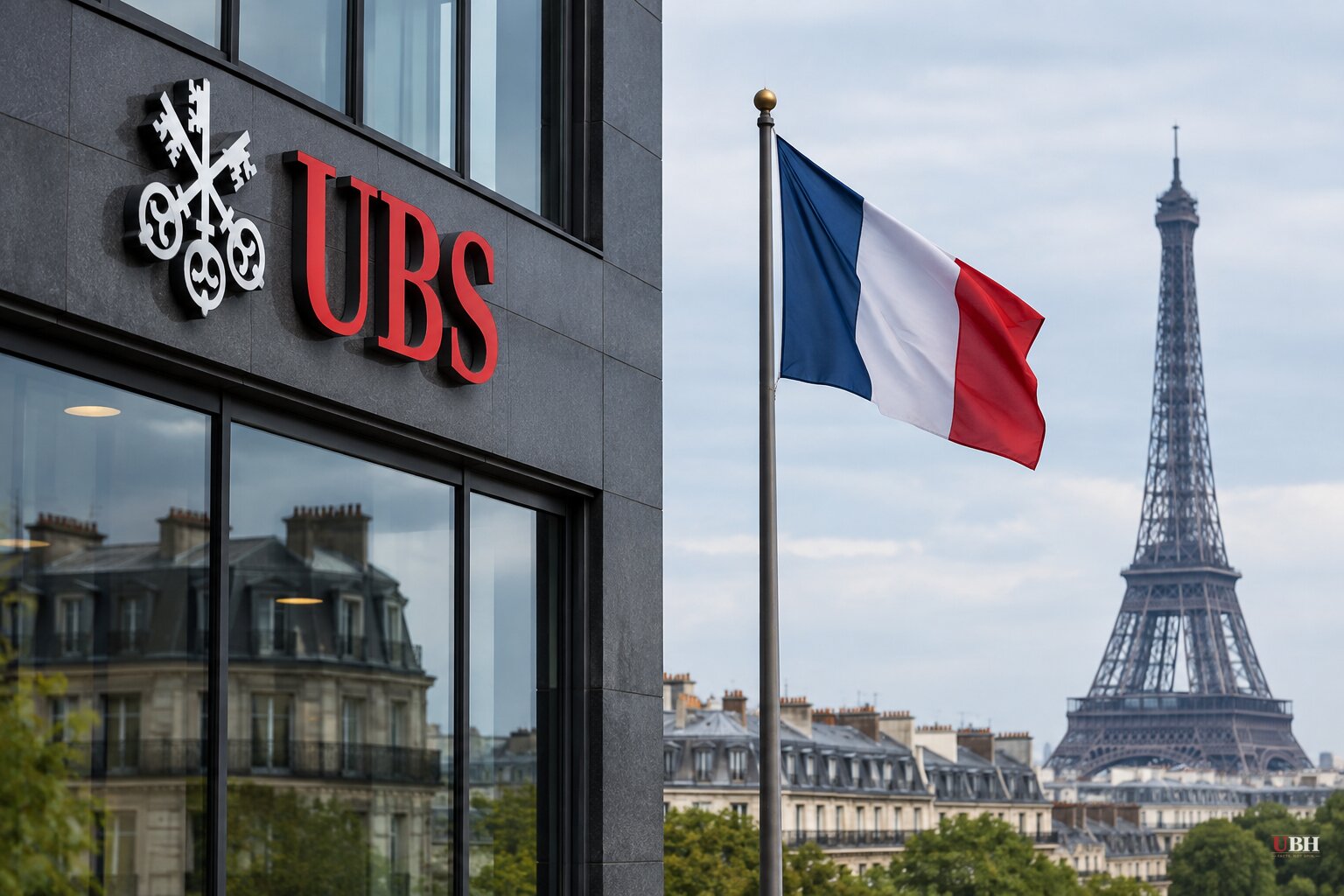
Since Societe Generale's default-insurance costs surpassed Deutsche Bank's on Monday, France's fiscal crisis has only drawn louder warnings from the banking world, and the political backdrop has gotten messier.
UBS CEO Sergio Ermotti told CNBC's "Squawk on the Street" on Tuesday that France's debt pile is too large for gradualism. "Small, incremental changes are not going to be enough to resolve the big debt pile," he said. Asked directly if he meant austerity, Ermotti didn't dodge it: "It needs to go through hard measures."
Ermotti compared the moment to the 2011 eurozone sovereign debt crisis, when Spain, Italy, Greece and Portugal underwent painful fiscal overhauls. "These countries that went into a big crisis are now the best performing countries in Europe," he said, adding that France's much bigger economy could make its version of that reckoning harder to manage.
The Numbers
France's benchmark 10-year note yield stood at 4.7689% Tuesday afternoon, according to CNBC, after easing 9 basis points during the session. Even with that pullback, French borrowing costs remain higher than Italy's and Greece's, a reversal that would have seemed unthinkable a few years ago.
The spread between French and German 10-year yields, the OAT-Bund spread, has pushed above 140 basis points, according to Quartz, after widening by 34 basis points in a single week, the sharpest such move in 17 years. The euro dropped to a 17-month low on Monday as the fiscal strain rattled currency markets.
Mitch Reznick, head of cross-border credit at Federated Hermes, said France has become the epicenter of Europe's bond stress, with its debt "increasingly being priced less like core Europe and more like the periphery." He tied the widening spread to France's debt load, persistent deficits, a heavy bond issuance calendar and the political fog ahead of the country's April 2027 presidential election. Investors are rotating out of French paper and into German Bunds, he said, magnifying the gap.
Nicolas Forest, chief investment officer at Candriam, warned last week that France's deficit, originally projected to shrink to 5% of GDP this year, could instead widen toward 6%. Economist Mohamed El-Erian said Monday that "contagion risk is back," as Italian 10-year yields climbed to 4.74% and Greek yields to 4.57% over the same stretch.
The European Central Bank has stayed out of the fray so far. ECB policymaker Joachim Nagel said the bank's bond-buying tools exist for price stability, not for targeting sovereign spreads, pushing back on speculation of an imminent intervention. Reznick said that stance "could start to change" if spreads keep widening, but for now the ECB is treating this as a French problem, not a eurozone one.
The Politics Making It Worse
France's debt troubles aren't happening in a vacuum. Student protests that began last month in Paris suburbs over teacher shortages and crumbling school buildings have escalated into sustained violence. Interior Minister Laurent Nuñez said police and gendarmes made 5,000 arrests nationwide since Tuesday, September 29, and that urban violence broke out around 158 schools, according to the Epoch Times.
A police commander was beaten unconscious outside a high school in Belfort on October 2, prompting an attempted murder investigation, and a teacher in La Ciotat was doused with gasoline while trying to defuse a confrontation. Education Minister Édouard Geffray said 170 students and 65 school staff, including 40 principals, had been injured, and more than 100 schools sustained serious damage.
Prime Minister Sébastien Lecornu's office said French intelligence views the unrest as "a maneuver organized by LFI and its ultra-left proxies," referring to Jean-Luc Mélenchon's La France Insoumise party. LFI denies responsibility. Neither side's account is settled, and no charges tying LFI leadership to the violence have been announced.
Far-right candidate Marine Le Pen used the moment on Tuesday to pledge sweeping spending cuts, warning that France risks outright default without them. Critics of the austerity path Ermotti is urging have a real argument too. The protests themselves erupted over years of underfunded schools and teacher shortages, and deeper spending cuts risk deepening the exact grievances now playing out in the streets. Between a market demanding fiscal discipline and a public already furious over service cuts lies a tension that makes France's politics harder to navigate than Greece's or Portugal's were in 2011.
No French government has yet announced a concrete austerity package matching the scale Ermotti describes. With the presidential election still roughly a year and a half away and a minority government trying to pass a 2027 budget amid the unrest, the open question is whether Paris can act before bond markets force its hand, or whether the ECB's hands-off stance holds if the OAT-Bund spread keeps climbing past 140 basis points.
Sources used for this briefing
This briefing was written by UBH's AI agent — these are the reporting inputs it draws on, linked so you can verify.


