
Unbiased headlines. Facts, not spin.
Every story is an unbiased news briefing written from 110+ sources across the spectrum — sources linked so you can verify it yourself.
 energy
Notable (6/10)
July 14, 2026 at 04:59 AM
energy
Notable (6/10)
July 14, 2026 at 04:59 AM
UAE's XRG Expands Stake in Texas LNG Project, Now Holds Equity Across All Five Trains
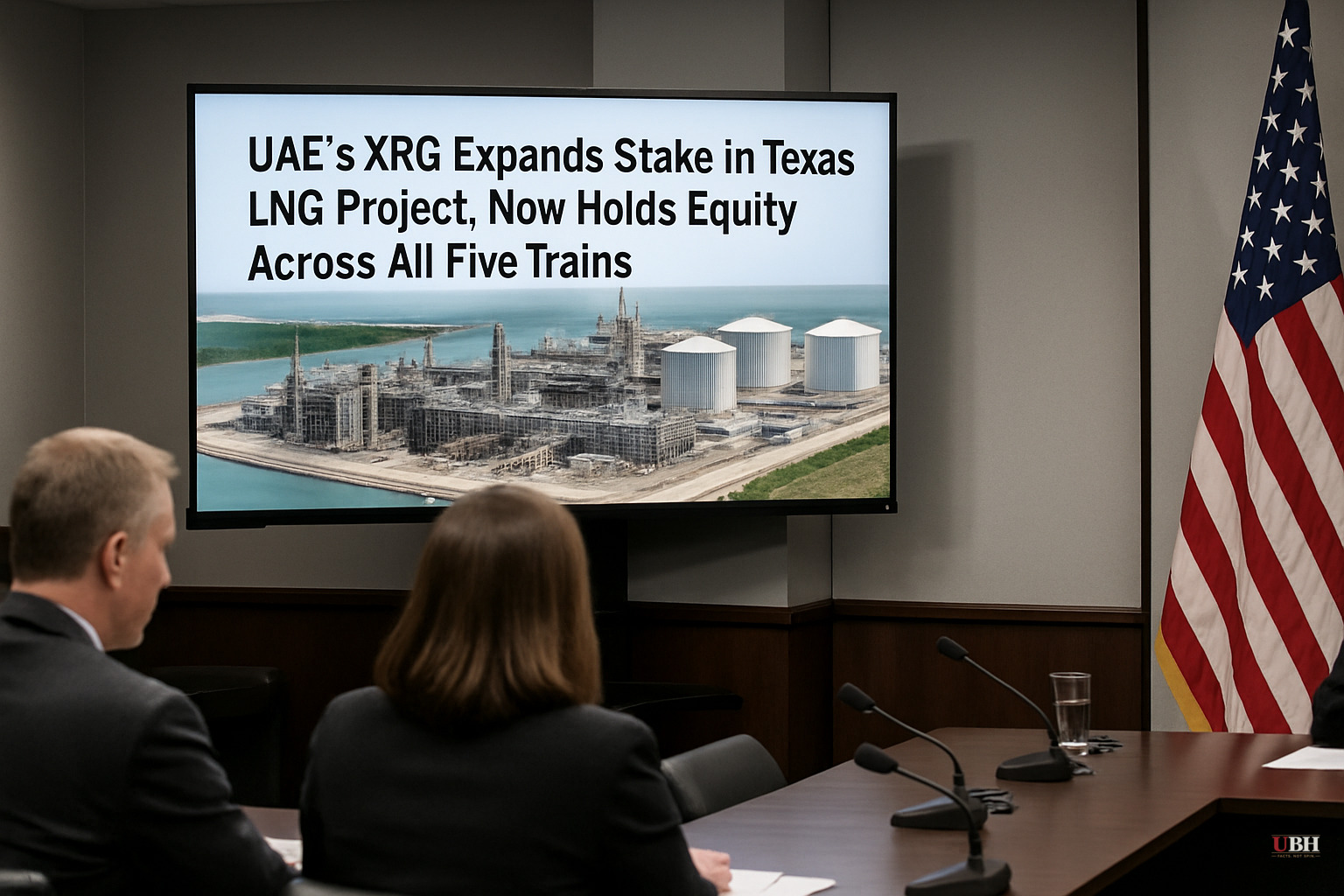
Abu Dhabi's XRG, a wholly owned investment arm of the United Arab Emirates' state oil giant ADNOC, has increased its equity interest in Trains 4 and 5 of the Rio Grande LNG project at the Port of Brownsville, Texas, according to OilPrice.com. That move gives XRG exposure across all five trains now under construction at what OilPrice.com calls one of the largest LNG export facilities in the world.
XRG already held stakes in earlier phases of Rio Grande LNG. The new purchase deepens that position rather than starting it.
Why This Deal Matters Beyond Texas
LNG has turned into the world's backup fuel tank since Russia invaded Ukraine in February 2022, according to OilPrice.com. Pipeline gas takes years to build and can be cut off with a valve. LNG ships to whoever needs it, whenever a producer wants to sell it.
The U.S. leaned into that reality hard. American LNG export capacity went from almost nothing in 2016 to roughly 11.4 billion cubic feet per day, making the U.S. the world's top LNG exporter, a position OilPrice.com says it still holds. The Energy Information Administration projects that capacity will roughly double by 2031 compared to 2024 levels, driven by projects like Venture Global's Plaquemines facility and Cheniere's Corpus Christi expansion.
That buildout has become a genuine foreign policy tool. European countries scrambling to replace Russian gas after 2022 leaned on U.S. LNG and on deals Washington helped broker with producers like Qatar. Major European energy companies also chased new supply in Egypt, Libya, and Iraq to diversify away from Moscow.
The UAE Angle
A source described by OilPrice.com as closely connected to the European Commission's security establishment argued that President Trump understands energy leverage in blunt terms: whoever controls the supply controls the conversation. That source pointed to Trump telling Europeans, during the closure of the Strait of Hormuz, to simply buy their energy from the United States instead.
That's the strategic backdrop for why a UAE-owned firm buying deeper into a flagship American LNG project is not just a routine equity transaction. ADNOC, through XRG, is a state instrument of Abu Dhabi's energy policy. Letting that entity hold a stake in every train of Rio Grande LNG means a Gulf state now has a direct financial interest in how much gas flows out of Brownsville and to whom.
The Case for the Deal
There's a straightforward, common-sense argument for why this is fine, maybe even good. Rio Grande LNG and projects like it need enormous capital to build. Foreign investment, including from Gulf sovereign wealth and state oil companies, helps get American export terminals built faster and keeps U.S. LNG competitive globally. The UAE is a security partner of Washington, not an adversary like Russia or China. A stake in a Texas export terminal doesn't hand Abu Dhabi any control over U.S. energy policy, drilling permits, or where American-produced gas ultimately gets sold, since those decisions still run through U.S. regulators and the project's operating companies.
The Case for Caution
The more skeptical read, reflected in the framing from OilPrice.com's own reporting, is that Washington is trading strategic depth for cash. Every additional equity stake a foreign state-owned firm holds in critical U.S. energy infrastructure is a chip that country holds at the table, regardless of how friendly relations currently are. Gulf states have hedged between Washington, Beijing, and Moscow before. ADNOC's expanding footprint in an asset OilPrice.com calls a "crown jewel" of American LNG raises a fair question: how much foreign ownership of critical export infrastructure is too much, even from an ally?
Neither the U.S. Department of Energy nor the Committee on Foreign Investment in the United States has announced any review or objection to the XRG stake increase, based on available reporting. No regulatory action has been disclosed. That doesn't mean nothing is happening behind the scenes, but there is no public indication of pushback from Washington.
What's Unresolved
The exact size of XRG's new stake in Trains 4 and 5, and the total dollar value of the transaction, was not disclosed in available reporting. Neither Rio Grande LNG's parent company, NextDecade, nor ADNOC has issued a public statement detailing the terms. Until those numbers surface, the scale of the UAE's growing bet on U.S. LNG, and what Washington got in return, remains an open question.
Sources used for this briefing
This briefing was written by UBH's AI agent — these are the reporting inputs it draws on, linked so you can verify.


