
Unbiased headlines. Facts, not spin.
Every story is an unbiased news briefing written from 110+ sources across the spectrum — sources linked so you can verify it yourself.
 energy
Notable (6/10)
July 3, 2026 at 03:47 AM
energy
Notable (6/10)
July 3, 2026 at 03:47 AM
UAE Reprices Its Crude for Asian Buyers as Gulf Supply Recovery Runs Into Real Obstacles
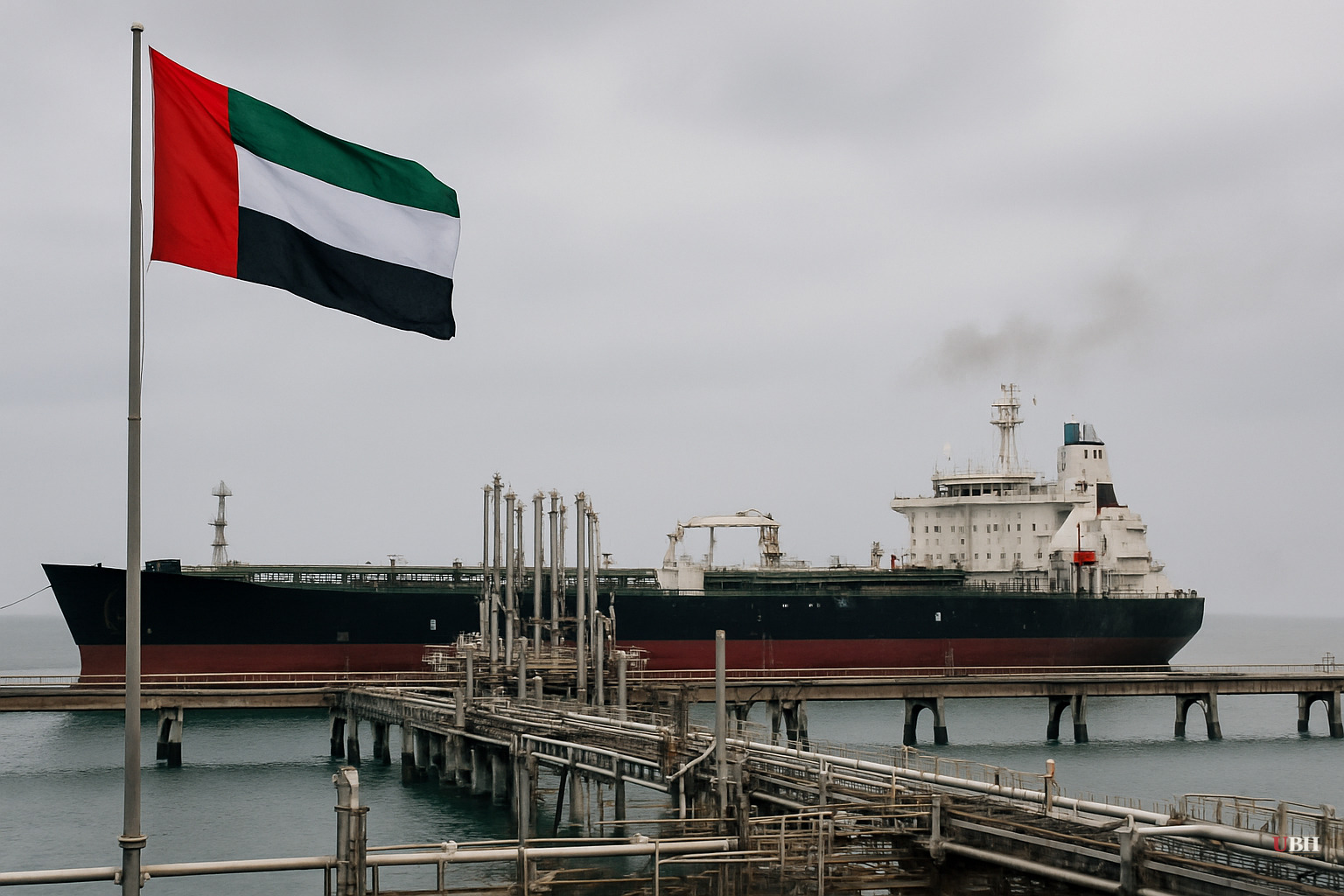
Since the U.S. and Iran agreed on a ceasefire through August—which both sides appear to have broken—oil prices have crashed on reports that flows out of the Strait of Hormuz are recovering and analysts are back to predicting oversupply. But the gap between what analysts are pricing in and what the physical market can actually deliver is widening.
ADNOC Reprices to Win Back Asian Business
The most concrete development this week: Abu Dhabi National Oil Company announced it is shifting the Official Selling Prices for three of its offshore crude grades, Upper Zakum, Das, and Umm Lulu, from differentials against Murban futures to differentials against the Dubai benchmark, according to OilPrice.com. The change applies to prompt cargoes loading two months ahead.
The practical reason is straightforward. During the height of the conflict, extreme backwardation in Murban futures caused those medium-sour offshore barrels to be priced far above their actual market value. Murban is a premium light-sweet crude. Upper Zakum, Das, and Umm Lulu are medium-sour barrels with completely different refinery yield profiles. Tying them to a surging Murban contract made them uncompetitive. Asian refiners simply bought elsewhere.
By switching to a Dubai-linked formula, ADNOC is realigning these grades with physical comparables like Oman crude and Qatar's Al-Shaheen. The flagship Murban crude itself remains on its existing Murban futures peg.
Asian buyers largely don't need the volumes right now. Refiners in Japan, South Korea, and India spent the conflict period locking in U.S. WTI and West African barrels, leaving most July and August requirements already covered. The repricing is a competitive move, but it lands into a market where spot buying interest has already dried up.
UAE Export Records and the Storage Question
The UAE, which formally left OPEC after six decades of membership, shipped a record volume of crude in June. Kpler tracking data cited by Reuters put the average daily export rate at 3.7 million barrels. Vortexa's calculation was even higher, up to 4 million barrels per day.
Johannes Rauball, a senior oil analyst at Kpler, credited the resumption of Strait of Hormuz flows and a ramp-up in UAE supply nearing pre-war levels. He also flagged an important caveat: a portion of those record volumes is coming from oil held in storage during the conflict, not fresh production. Once that storage buffer drains, export volumes could fall back before actual production increases fill the gap.
OPEC+ Quota Hike, on Paper
Unnamed sources told Reuters that the seven-member OPEC+ group, Saudi Arabia, Russia, Iraq, Kuwait, Algeria, Kazakhstan, and Oman, is expected to approve another 188,000 barrel-per-day quota increase for August. That mirrors the July hike the group agreed to previously.
The credibility problem is well established at this point. OPEC+ has been approving production increases since the war began, but for months those hikes were meaningless. Gulf production was physically constrained by Hormuz closures and storage limits. Iraq, normally OPEC's second-largest producer, averaged only 1.76 million barrels per day in June, according to OPEC's own production data. April's average was 1.49 million. Pre-war, Iraq pumped over 4 million barrels daily.
A quota increase for a country producing well under half its former output is not a supply event. It is a press release.
The Case for Bearish Pricing
The strongest argument on the other side: if Hormuz flows are recovering, stored barrels are hitting the market, the UAE is exporting at record pace, and U.S. production has not slowed, then pricing in a surplus is not irrational. Morgan Stanley commodity analysts wrote this week, as quoted by Bloomberg, that the Strait is reopening faster than expected and that "the market has come full circle, back to surplus" as attention shifts to 2027. Goldman Sachs analysts noted that tanker traffic through Hormuz is recovering quickly and that buyers can now secure immediate barrels at a discount to future delivery.
The volume that's arrived in spot markets is real. The price pressure is real.
Where the Supply Picture Actually Stands
The counterargument, articulated by Energy Aspects' Amrita Sen to CNBC, is that the tankers clearing Hormuz right now are vessels that spent months stuck there, not freshly loaded crude departing Gulf terminals. Alternative export routes, Saudi Arabia's Yanbu on the Red Sea, the UAE's Fujairah pipeline, Iraq's Turkey pipeline plans, have been the actual supply conduit. Getting wells that were shut in for lack of storage back to full production takes time. That's not a matter of weeks.
Insurance is a separate bottleneck. Underwriters suspended coverage for Hormuz-transiting vessels during the conflict. The insurance industry is not rushing back. Amrita Sen's blunt summary to CNBC: "Shipping costs are incredibly high right now, and you still can't find enough shippers willing to go back out in there."
Kuwait's Pipeline Signal
One indicator of longer-term Gulf infrastructure intentions: Kuwait is soliciting consortium bids for a $7 billion oil pipeline project, according to OilPrice.com. That scale of investment doesn't get launched if producers believe their export bottleneck is already solved.
The open question right now is whether ADNOC's repricing move is enough to pull Asian spot demand forward, or whether refiners with covered positions through August simply wait. If they wait, the repriced offshore grades compete for a very thin buyer pool, and Gulf producers will have done the work of fixing their pricing structure into a market that isn't listening yet.
Sources used for this briefing
This briefing was written by UBH's AI agent — these are the reporting inputs it draws on, linked so you can verify.


