
Unbiased headlines. Facts, not spin.
Every story is an unbiased news briefing written from 110+ sources across the spectrum — sources linked so you can verify it yourself.
 energy
Major Story (7/10)
July 10, 2026 at 06:07 PM
energy
Major Story (7/10)
July 10, 2026 at 06:07 PM
UAE Pumped 4.1 Million Barrels Per Day in June, a Record High, as Gulf Ceasefire Collapses Again
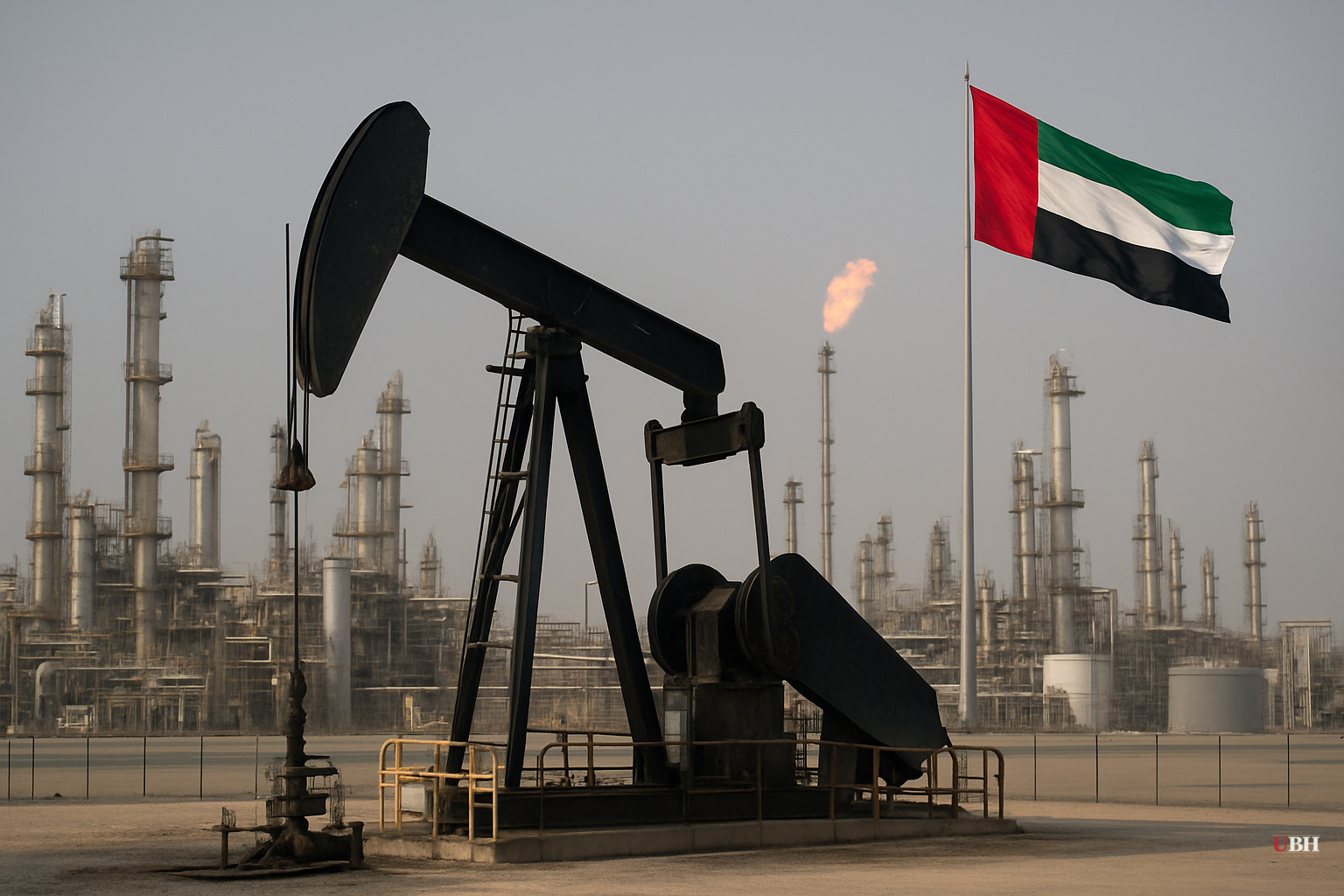
Since the Iran conflict began on February 28, the UAE has moved faster than any other Gulf producer to restore and then surpass pre-war output levels. The International Energy Agency's July monthly Oil Market Report, released Friday, put UAE crude production at 4.1 million barrels per day (bpd) in June, topping the country's previous record of 4.0 million bpd set during the brief Saudi-Russia price war in 2020.
For context, the UAE averaged 3.5 million bpd across all of 2025, according to Middle East Eye. The June number is also nearly double the UAE's output in March 2026, at the height of the Hormuz crisis, per OilPrice.com.
How Abu Dhabi Got There
The UAE departed from OPEC at the end of April, according to Anadolu Ajansı, which freed it from Saudi-led production caps that Abu Dhabi had openly chafed against for years. Analysts cited across multiple outlets have long argued the UAE had the physical capacity to produce far more but was politically constrained inside OPEC by Saudi Arabia's preference for price support over volume.
Once out, Abu Dhabi moved quickly. ADNOC, the Abu Dhabi national oil company, deployed its own tanker fleet and contracted additional vessels, including ships operated by South Korea-based Sinokor Group, according to Anadolu Ajansı. Some vessels reportedly sailed with their Automatic Identification System transponders switched off, making their movements harder to track. Maritime intelligence experts cited by Middle East Eye corroborated this tactic.
The UAE's existing Fujairah pipeline, which terminates on the Gulf of Oman outside the Strait of Hormuz, was also central to sustaining exports. ADNOC has since accelerated a new project, the West-East 1 Pipeline, expected to become operational in 2027, which would double export capacity through Fujairah, per OilPrice.com. The company has also announced plans to spend up to $55 billion on upstream and downstream projects over the next two years.
Middle East Eye separately reported that the UAE paid Iran billions of dollars in exchange for a halt to attacks on UAE vessels and infrastructure. This represented a significant policy shift for a country that participated in strikes against Iran earlier in the conflict.
The Broader Gulf Picture
The UAE was not alone in raising output, though it went furthest. According to the IEA report cited by Anadolu Ajansı, Saudi Arabia produced 7.3 million bpd in June, up roughly 900,000 bpd from May. Kuwait hit 1.4 million bpd and Iraq reached 2.0 million bpd. All three remain below their pre-war levels.
Refined product exports are the more troubling gap. The IEA said exports of refined petroleum products across the Gulf remain below half of pre-war levels. Crude is moving; diesel, jet fuel, and liquefied petroleum gas are not recovering at the same pace. Buyers in Asia faced materially higher prices for refined products than customers in the U.S. and Western Europe, according to Middle East Eye.
Brent crude briefly rose above $80 per barrel earlier this week before falling back to around $76 on Friday, per Anadolu Ajansı. That pullback came partly because higher Gulf supply, combined with a 30 percent cut in Chinese crude imports and a coordinated release of strategic reserves by Western nations and China, capped what many analysts had feared would be a sustained triple-digit price spike after the conflict began.
Structural Vulnerabilities
Critics would reasonably ask whether the UAE's record output is built on a fragile foundation. The Fujairah pipeline is vulnerable to Iranian drone strikes, as Middle East Eye noted. Dark-vessel routing through the Strait of Hormuz is not a permanent logistics solution. And the bilateral payment arrangement with Tehran is informal. Any resumption of hostilities dissolves the buffer instantly.
This week, Anadolu Ajansı reported renewed attacks on commercial vessels in the Strait of Hormuz that disrupted traffic again after President Donald Trump declared the ceasefire effectively over following fresh exchanges of U.S. and Iranian strikes. Most of the UAE's June production recovery occurred before that renewed escalation.
What Comes Next
The IEA report confirms a supply recovery in crude terms. It does not resolve whether refining capacity in the Gulf can catch up. Until it does, the gap between crude output and usable refined products remains a structural constraint on actual energy relief for Asian importers.
The IEA's next monthly Oil Market Report, which will cover July data, will be the first real test of whether the UAE's record output held through the latest round of Strait disruptions or whether the week's renewed strikes reset the recovery clock.
Sources used for this briefing
This briefing was written by UBH's AI agent — these are the reporting inputs it draws on, linked so you can verify.


