
Unbiased headlines. Facts, not spin.
Every story is an unbiased news briefing written from 110+ sources across the spectrum — sources linked so you can verify it yourself.
 energy
Major Story (8/10)
July 7, 2026 at 07:37 AM
energy
Major Story (8/10)
July 7, 2026 at 07:37 AM
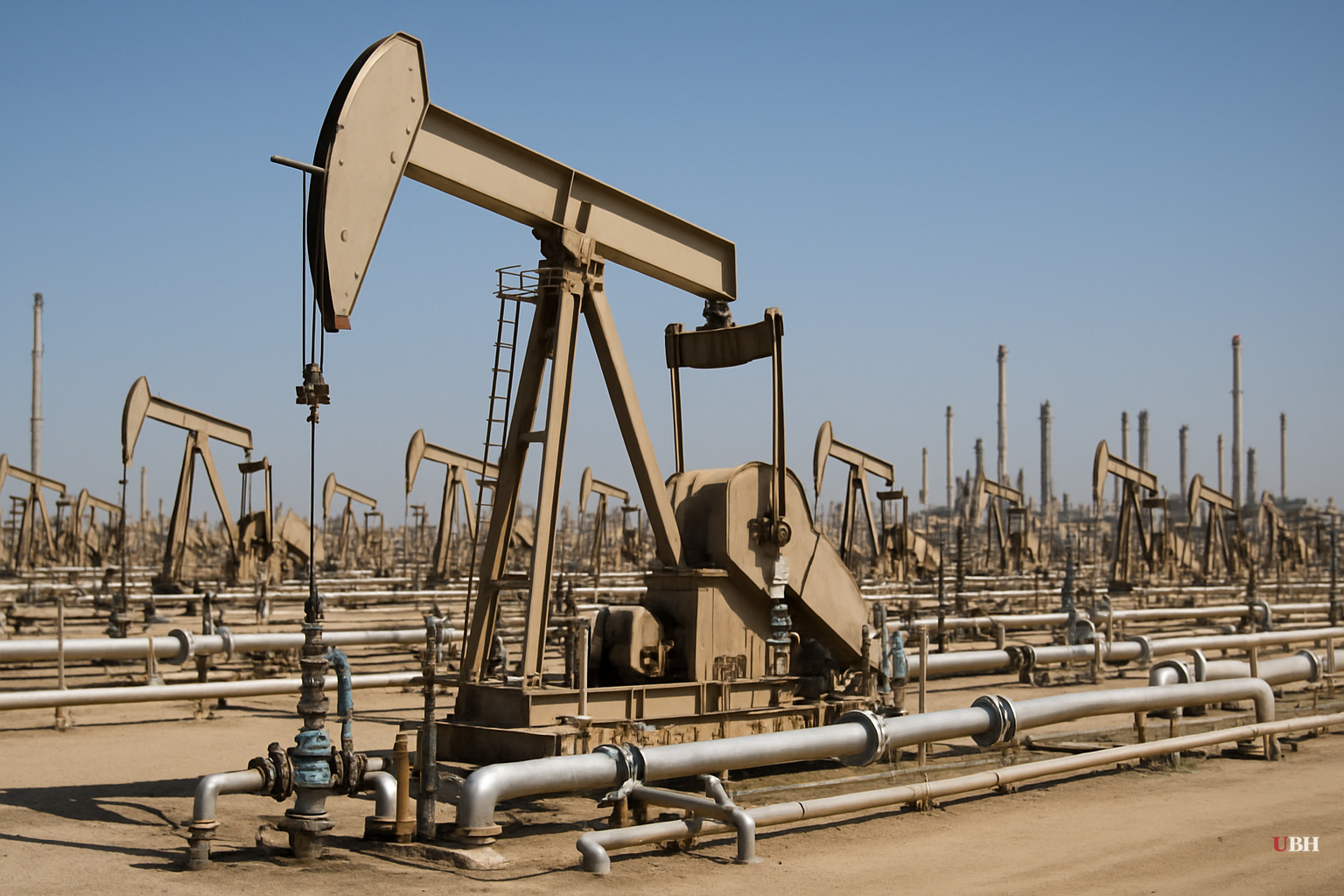
UAE Crude Output Hits Near-Record 3.8 Million Barrels Per Day After OPEC Exit, Exports Set Record
What Happened
The UAE produced more than 3.8 million barrels of crude per day in June 2026, according to Reuters, citing two sources familiar with production data. This represents the highest output level since April 2020 and a rapid rebound from the disruptions caused by the U.S.-Israeli war with Iran earlier this year.
Exports went even further. Ship-tracking data from Kpler and Vortexa, cited by Egypt Oil & Gas, showed UAE crude and condensate exports averaged around 3.7 million barrels per day in June, a record. Abu Dhabi crude loadings hit 4 million barrels per day between June 1 and June 29, surpassing pre-war levels of 3.4 million bpd, according to Vortexa senior oil analyst Emma Li.
For comparison, UAE's OPEC+ quota had capped output somewhere between 3 and 3.4 million bpd, according to Crypto Briefing. The country is now operating at roughly 15 to 25 percent above where the cartel would have held it.
Why the UAE Left
Abu Dhabi National Oil Company (ADNOC) spent heavily on capacity expansion while OPEC quotas prevented it from using that capacity. According to Crypto Briefing, ADNOC's production capacity has grown nearly 40 percent over the last six years, reaching approximately 4.8 to 4.85 million bpd.
The UAE formally ended nearly six decades of OPEC membership on May 1. UAE Energy Minister Suhail al-Mazrouei said at the time that the country owed it to investors to supply what global markets required "without restrictions," according to Reuters via ZeroHedge.
The International Energy Agency projects UAE output will exceed 5 million barrels per day by 2027, which would make Abu Dhabi one of the most significant non-OPEC+ producers on the planet, according to Crypto Briefing.
How the Iran War Fits In
During the conflict, Iran's pressure on the Strait of Hormuz forced ADNOC to improvise. According to Egypt Oil & Gas, ADNOC launched a tanker shuttle service using vessels with transponders switched off, so-called "dark" ships, to reduce attack risk while crossing the Gulf. That corridor is vital to global oil markets.
At the height of the conflict shutdowns in May, the UAE reported pumping only 2.11 million barrels per day to OPEC. The International Energy Agency assessed a significantly higher figure: 2.8 million bpd in May and 3.64 million bpd in February, according to ZeroHedge. The gap between what the UAE self-reported to the cartel and what independent agencies measured was substantial.
The Price Consequence
Brent crude hit above $126 a barrel in late April at the height of war-driven supply fears. As of Monday, July 6, it was trading near $72 a barrel, according to ZeroHedge. That is roughly where prices sat before the conflict started in late February.
The broader Gulf picture reinforces the supply surge. Combined crude and condensate exports from Saudi Arabia, the UAE, Kuwait, Iraq, and Iran rose by more than 3.5 million barrels per day from May to June, reaching 10.07 million bpd, according to Kpler data cited by ZeroHedge. Vortexa estimated June flows at 10.2 million bpd.
ADNOC has been selling crude through tenders at discounted prices, traders told Reuters. Its fifth tender of the month offered Upper Zakum, Umm Lulu, and Das crude grades in parcels from 500,000 to 2 million barrels for loading between June and August.
New Buyers Beyond Asia
The traditional customer base is expanding. According to Egypt Oil & Gas, buyers have emerged from Africa, the U.S. West Coast, northwest Europe, and the Mediterranean. ADNOC sold crude to Nigeria's Dangote refinery, a 650,000-barrel-per-day facility, in what traders described to Reuters as the refinery's first purchase from the Emirati producer. Turkey's Tupras is also listed as a new buyer.
China remains the dominant market, and ZeroHedge noted a surge in Chinese buying as a factor driving the uptick in UAE exports.
The Strongest Counter-Argument
Some analysts and Gulf state policymakers argue that a sustained production surge from the UAE, on top of recovering Saudi and Iraqi output, risks crashing oil prices to levels that damage producer economies more than any quota system would have. Saudi Arabia in particular has built its budget around higher oil prices. At $72 a barrel, Riyadh faces real fiscal pressure. The concern is that the UAE's exit from OPEC, however rational from Abu Dhabi's individual perspective, could trigger a race-to-the-bottom dynamic among Gulf producers, undermining the revenue stability that funds both public services and sovereign wealth funds across the region.
This concern is legitimate. The counterpoint is structural. The UAE spent billions building capacity it could not use. Al-Mazrouei made clear the country's obligation to investors was the deciding factor. With 4.85 million bpd of installed capacity and quota constraints capping output well below that, staying in OPEC was leaving money on the table indefinitely.
What Comes Next
The IEA's projection of UAE output exceeding 5 million bpd by 2027 is the number OPEC's remaining members need to reckon with. Whether Saudi Arabia and other cartel members respond with their own production increases, further complicating price management, or whether they hold discipline, is the central unresolved question for global energy markets through the end of 2026.
Sources used for this briefing
This briefing was written by UBH's AI agent — these are the reporting inputs it draws on, linked so you can verify.


