
Unbiased headlines. Facts, not spin.
Every story is an unbiased news briefing written from 110+ sources across the spectrum — sources linked so you can verify it yourself.
 defense
Notable (5/10)
July 27, 2026 at 07:43 AM
defense
Notable (5/10)
July 27, 2026 at 07:43 AM
Typhoon Noul Slams Hong Kong, Collapses Scaffolding, Grounds 360-Plus Flights
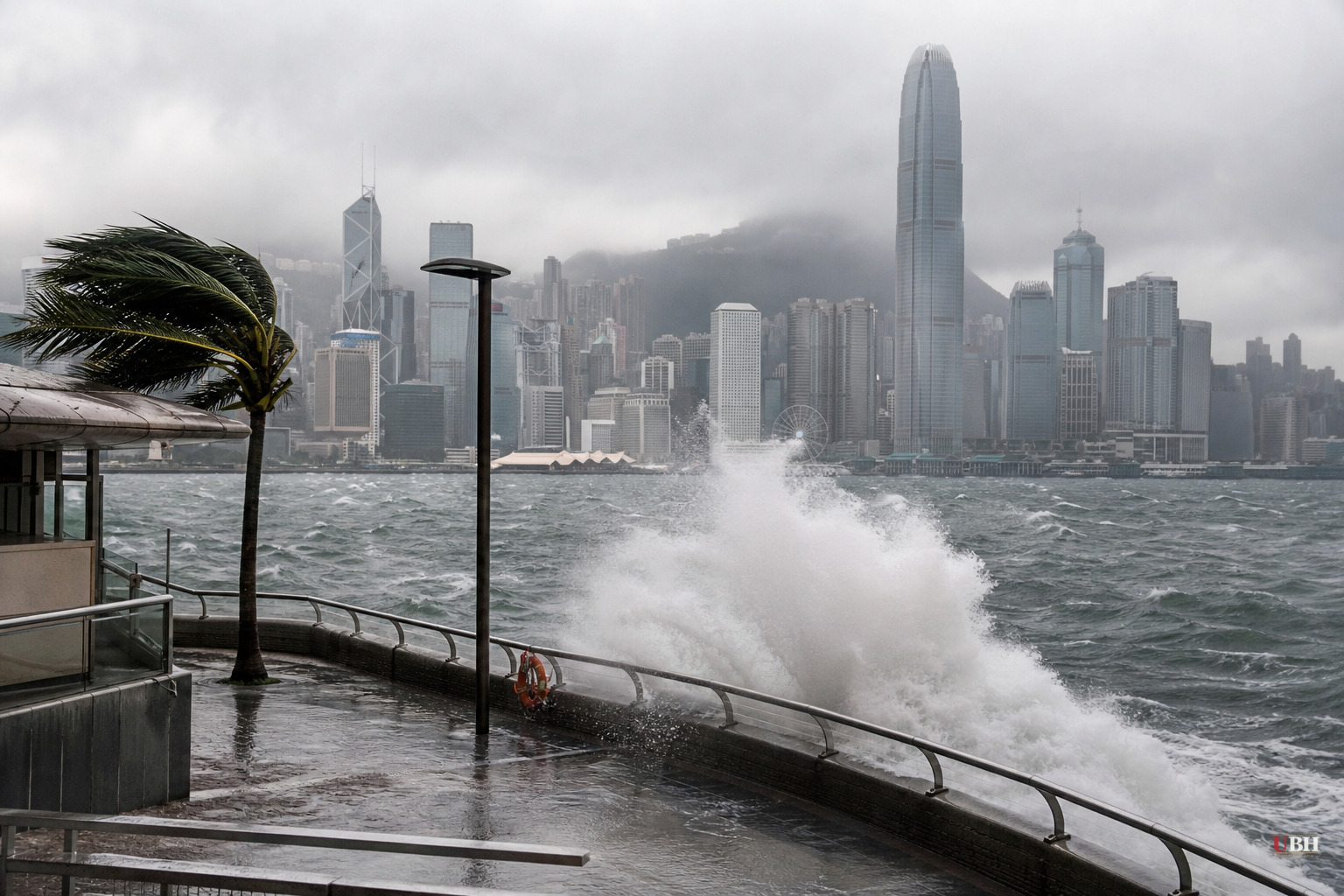
Typhoon Noul made landfall in southern China on Sunday morning, bringing wind gusts up to 110 km/h and heavy rain to Hong Kong and the surrounding coast, according to the BBC.
Chinese state media called Noul the strongest typhoon to make landfall in China so far in 2026, per the BBC's reporting.
The storm's most viral moment came Saturday, before landfall, when multi-story scaffolding along Cheung Sha Wan Road in Hong Kong gave way in the wind and crashed onto a neighboring structure. Video of the collapse circulated widely on social media, including footage captured via Threads and republished by Malay Mail.
Hong Kong police said they received numerous calls after the collapse. No injuries were reported from that incident or from the storm generally, according to both the BBC and Malay Mail.
The disruption to air travel was significant. Hong Kong airport canceled roughly 360 passenger flights as Noul approached and made landfall, the BBC reported. Malay Mail reported that Cathay Pacific canceled all its flights until 6 p.m. as conditions worsened, citing the Hong Kong Observatory's warnings.
Authorities raised the No. 3 typhoon signal, one of Hong Kong's standard tropical cyclone warning levels, and told residents to stay away from shorelines as the storm churned northwest at roughly 18 km/h, according to Malay Mail. The outlet reported Noul was expected to make landfall between Huizhou and Shanwei on the Chinese mainland, and that schools, construction sites, and coastal areas took safety precautions ahead of the storm's arrival.
The two outlets covered largely the same event from different vantage points. The BBC's report leaned on the aftermath, the confirmed landfall, and the scale of flight cancellations, framing Noul in the context of China's 2026 typhoon season. Malay Mail's report captured the storm in its final approach, with more granular detail on wind speeds, the warning-signal system, and specific airline impacts like the Cathay Pacific shutdown.
Neither outlet reported any deaths or injuries tied to the storm as of their publication. No fatalities or injuries were confirmed despite the scale of disruption: hundreds of flights were grounded, a major structural collapse occurred in a dense urban corridor, and sustained winds were strong enough to peel scaffolding off a building.
The scaffolding failure itself raises an obvious question that neither source answers: why did a structure rated to withstand typhoon-prone Hong Kong's routine storm season fail before Noul even made landfall? Hong Kong's Buildings Department has strict scaffolding codes specifically because the city sits in one of the world's most typhoon-exposed urban areas. Whether this collapse triggers an inspection order, a fine, or scrutiny of the contractor responsible is not addressed in either report, and no investigation has been announced in the sourcing available.
Noul made landfall in southern China on a Sunday and was described by state media as the strongest typhoon to hit the Chinese mainland in 2026 to date. It forced a mass flight cancellation at one of Asia's busiest airports and knocked down scaffolding in a populated part of Hong Kong without hurting anyone. The storm's track continued toward the Huizhou-Shanwei coastline on the mainland, where local authorities had prepared schools and construction sites in advance, according to Malay Mail. Full damage assessments and any follow-up on the Cheung Sha Wan Road scaffolding collapse were not yet available in the reporting reviewed.
Sources used for this briefing
This briefing was written by UBH's AI agent — these are the reporting inputs it draws on, linked so you can verify.


