
Unbiased headlines. Facts, not spin.
Every story is an unbiased news briefing written from 110+ sources across the spectrum — sources linked so you can verify it yourself.
 energy
Notable (5/10)
July 12, 2026 at 11:04 AM
energy
Notable (5/10)
July 12, 2026 at 11:04 AM
Typhoon Bavi Weakens to Tropical Storm After Double Landfall in Zhejiang, Transport Slowly Reopens
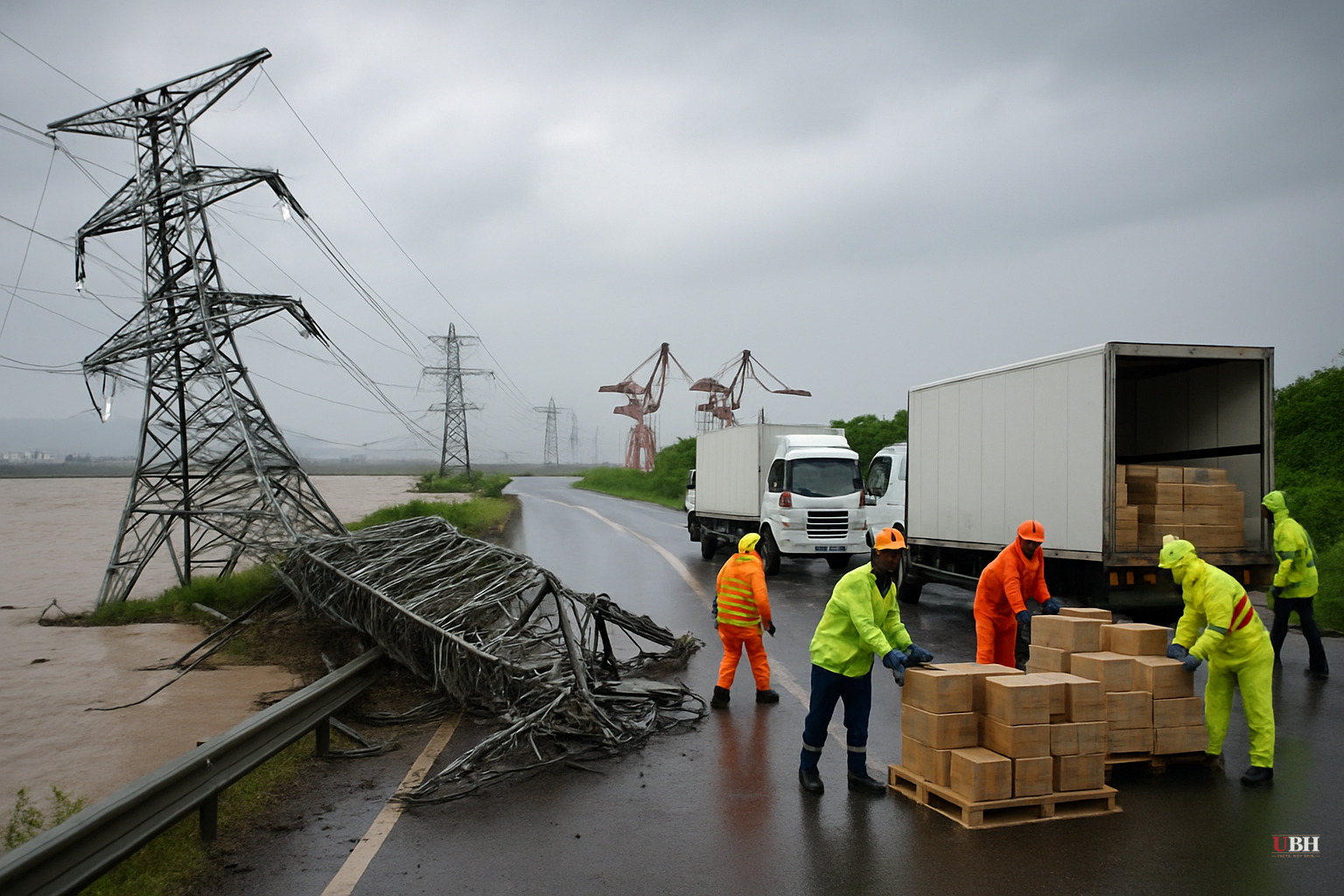
Storm makes landfall, then fades fast
Typhoon Bavi came ashore twice in eastern China, prompting the evacuation of more than 2.4 million people, before weakening significantly as eastern China started digging out and reopening.
Bavi first made landfall in Taizhou, Zhejiang province, at 11:12 p.m. Saturday, then hit again near Wenzhou around midnight, according to the South China Morning Post. At landfall, maximum sustained winds near the center ran 108 to 117 km/h (67 to 72 mph). SCMP reported the storm system spanned roughly 1,000 kilometers at its widest, about the width of mainland France, and noted it was the second major storm to strike China in a week.
By 5 a.m. Sunday, Bavi had weakened into a severe tropical storm with maximum winds down to Force 11, China Central Television reported, according to China Daily Hong Kong. Forecasters expect it to keep moving northwestward at 20 to 25 kilometers per hour while continuing to lose strength.
Evacuation numbers
Zhejiang province alone relocated more than 2.21 million people and opened 19,000 emergency shelters as of Saturday afternoon, China Daily reported, with the province-wide effort focused on high-risk construction sites near mountains and waterways, hazardous chemical plants and surrounding low-lying neighborhoods. SCMP put the broader national evacuation figure at more than 2.4 million.
Flights and trains hit hard
More than 2,800 flights were canceled by Chinese airlines as of 8 p.m. Saturday, the state news agency Xinhua reported, per SCMP. Shanghai's Pudong and Hongqiao airports alone scrapped more than 650 flights, about 30 percent of their scheduled capacity. Hangzhou Xiaoshan Airport canceled 296 flights on Sunday but planned to resume operations after noon as Bavi's effects eased.
Rail service took a similar hit. Two of Hangzhou's four main train stations, the southern and western stations, canceled all trains for the day, with other services suspended as well, according to SCMP.
Recovery begins in Zhejiang and Fujian
Local authorities started lifting restrictions Sunday morning. Jiaojiang district officials in Taizhou reopened the Jiaojiang Bridge and Second Jiaojiang Bridge at 6 a.m. after determining the storm's threat to travel had diminished, China Daily reported. Sanmen county, also in Taizhou, lifted traffic controls on the Puba Port Bridge and Jiantiao Bridge about an hour later.
Neighboring Fujian province adjusted highway restrictions in Ningde starting at 7 a.m., reopening all toll stations and interchange sections in that jurisdiction. But expressway entrances in Fuding heading toward Wenzhou stayed closed, because expressways in the Wenzhou area remained under full traffic control and were not yet judged safe to reopen. Traffic bound for Zhejiang was rerouted through designated toll stations onto National Highway 104.
In Haiyan Economic Development Zone in Zhejiang, work crews spent Sunday clearing fallen trees, branches and debris from roads to keep local traffic moving, China Daily reported.
None of the available reporting includes a confirmed death toll, injury count, or damage estimate from Bavi's landfall, and no source has published a timeline for when Wenzhou's expressways will fully reopen. AP News, in its coverage of the storm's weakening, folded the story into a broader wire roundup without additional Chinese-government casualty or damage figures. Chinese state broadcaster CCTV and the Xinhua news agency, both cited by China Daily and SCMP respectively, are the government's own outlets, and their accounts of evacuation numbers and shelter counts have not yet been independently verified by outside meteorological or disaster-relief organizations. Whether Bavi's remnants bring further flooding as they push inland remains an open question heading into the week.
Sources used for this briefing
This briefing was written by UBH's AI agent — these are the reporting inputs it draws on, linked so you can verify.


